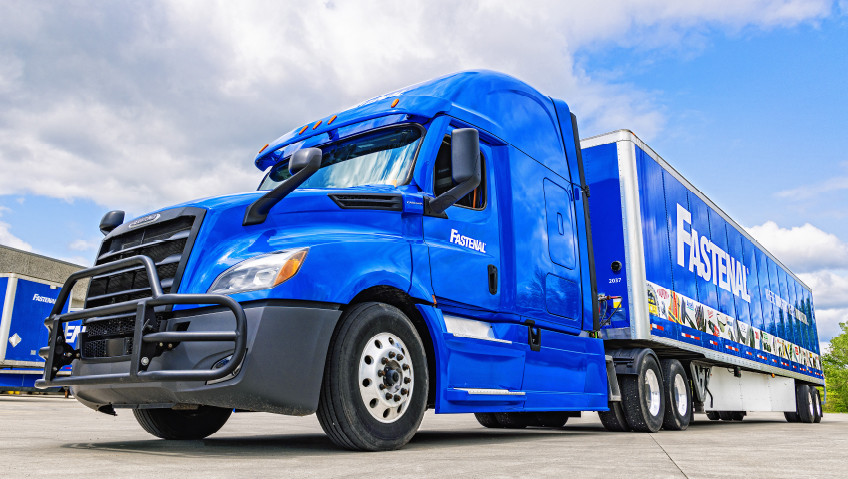
When Fastenal Company first opened its doors in 1967 in Winona, Minnesota, its founders had a modest but powerful ambition: to serve customers better and grow organically. They didn’t have a global blueprint, just a simple idea and a work ethic grounded in humility. Over the decades, those principles became the foundation of a company that would, unexpectedly but inevitably, grow far beyond its local roots.
Fastenal’s first Canadian branch, opened in Stoney Creek, Ontario in 1994, represents one of the most defining moments in that journey. It wasn’t a high-risk expansion or a bold bet; instead, it was a thoughtful response to demand. Many of Fastenal’s U.S. customers already operated in Canada and needed a partner who could match the consistency, speed, and reliability that had earned their trust. By “showing up where the customers needed them,” Fastenal embodied its own motto, Growth Through Customer Service, and laid the groundwork for something far bigger than just a branch.
From that unassuming start, Fastenal Canada has grown in both scope and sophistication. Today, the company has hundreds of in-market locations, a national distribution network, and a deeply embedded presence in Canadian manufacturing, construction, and industrial operations. Globally, Fastenal now operates in more than two dozen countries, employing over 4,000 team members outside the U.S., a testament to how the company’s original beliefs scaled across borders.
A model built on presence and partnership
In an era when many industrial suppliers are scaling back their physical footprints and leaning heavily into digital channels, Fastenal has followed a different path, one that blends high technology with deep local presence.
“While many brick‑and‑mortar companies are shrinking their physical presence and increasingly (or solely) relying on online platforms, Fastenal continues to invest in technology and focus on efficiency while being locally accessible,” says Tony Murphy, Senior Vice President of International Sales. Fastenal’s Onsite program, supported by branch locations spanning the entire country, allows the company to remain closely connected to customers and respond efficiently to their supply chain needs.
This philosophy shapes how Fastenal operates in Canada. Rather than detaching from customers, Fastenal embeds itself within their operations. Its Onsite program means entire Fastenal teams work inside customer facilities, helping manage inventory and solve logistical problems. This isn’t a transactional model; it’s deeply relational.
“Fastenal’s relationship with Canadian customers has evolved from a transactional approach to a deeply collaborative partnership model,” says Erik McCluskey, Regional Vice President. “Historically, the focus was on providing quality products and reliable service, but over time, the company has prioritized understanding the unique needs of customers across diverse markets. Today, partnership means acting as a true supply chain ally, delivering value through high service standards, data-driven insights, and customized solutions that help customers achieve operational efficiency and growth,” he explains. “This commitment reflects Fastenal’s broader strategy of fostering mutual success in an ever-changing industrial landscape.”
Fastenal’s proximity strategy is backed by a distribution system that is both robust and agile. Local branches across Canada don’t just hold inventory; they form a network that understands regional demand, respects local operations, and can respond quickly to emerging needs. In many customer sites across the country, Fastenal doesn’t just deliver products; it delivers insights and operational support.
Fastenal has deliberately chosen not to transition into a fully online model, instead prioritizing close, hands-on relationships with its customers. This approach is strengthened through its Onsite programs, which place dedicated teams directly inside customer facilities to provide tailored support and deepen operational integration. But Fastenal doesn’t stop at inventory. The team offers safety services, engineering support, manufacturing expertise, and industrial consultancy, all tailored to each customer’s needs. In industries that can’t afford downtime or misaligned parts, Fastenal positions itself as a strategic partner, not just a supplier.
People first: The Blue Team
One of Fastenal’s most potent differentiators is its workforce, affectionately known as the “Blue Team.” Not just order-takers, these are problem solvers and innovators who work side-by-side with customers to improve processes. “Another point that sets us apart is our people,” says Murphy. “Fastenal team members (‘The Blue Team’) are known for their problem-solving skills, entrepreneurial spirit, and collaborative approaches with customers to drive innovation and make continuous improvements within their business units.”
This isn’t mere talk. Fastenal promotes a culture of empowerment, giving its local teams autonomy in decision-making and investments. Hierarchies are flatter, and leadership is often homegrown, with many leaders in Canada starting in branch-level roles and working their way up. That growth mindset is baked into Fastenal’s internal development programs, wherein employees receive mentorship, cross-functional training, and opportunities to move across regions. The company encourages its people to think of their roles as entrepreneurial and to act as owners, solve problems, and lead change.
In its Canadian operations, this approach to leadership has paid off. Local teams influence branch strategies and contribute to Fastenal’s broader mission, and their success and dedication help Fastenal maintain a culture that is both caring and ambitious.
Building through community
Fastenal’s commitment to community is just as deep as its operational investments. The company doesn’t treat social responsibility as an afterthought; instead, it’s an essential part of how business is done. “The company believes that we not only exist to serve our customers and offer employment, but also to help those around us,” says Brian Widdifield, Marketing Manager.
Fastenal has always viewed the broader community as a key part of its ecosystem, not something that is separate from day-to-day business. The company encourages its teams to stay active locally, whether that means volunteering their time or supporting causes that matter in their area. This outlook traces back to the company’s founders and continues to be part of the culture at every level of the organization. Over the years, that commitment has taken shape through various community-focused initiatives, including programs like Blue Team Sports, the BK5K, and the more recent Blue Team Gives Back campaign, all of which help strengthen connections and support people where they live and work.
The BK5K is one of the most visible embodiments of this philosophy, an annual walk/run inspired by Fastenal’s founder, Bob Kierlin. Rather than compete against others, participants are encouraged to try to beat their own personal best, echoing Bob’s personal journey of self-improvement. Proceeds go to youth programs and community organizations, ensuring that the race’s impact extends beyond the finish line.
In Canada, the BK5K has grown into a beloved annual event. The third Canadian edition drew more than 250 participants and raised over $31,000 CAD for local charities. Even as the event has scaled, Kierlin’s original spirit, a focus on personal growth and giving, remains front and center.
Beyond the BK5K, Fastenal’s community commitment is visible through Blue Team Gives Back, which organizes local campaigns such as blood drives, volunteer days, and disaster relief. Rather than relying on a corporate foundation, Fastenal decentralizes giving; local branches decide how to engage, consistent with the values of their communities. This model fosters real connection and meaningful impact.
Milestones in Canada: three decades of beating expectations
Fastenal’s journey in Canada is marked by steady growth, strategic milestones, and deepening roots. When that first branch opened in Stoney Creek in 1994, it had just two employees and modest sales, but the vision behind it was expansive. That humble beginning would spark decades of expansion, and by 2019, Fastenal Canada was already reporting over 1,500 local employees, more than 250 in-market locations, and a network of vending machines serving customers across the country. This growth demonstrated not only operational scale but also the strength of the Blue Team and its ability to serve a diverse, complex customer base.
A pivotal moment came in 2014 with the opening of Fastenal’s high-tech distribution centre in Kitchener, Ontario. Built with automation and forward-looking logistics, the facility quickly became a backbone for Canadian operations. So strong was the momentum that within a few years, Fastenal expanded the facility by another 90,000 square feet to keep pace with demand.
Beyond infrastructure, leadership evolution has helped solidify Fastenal’s Canadian identity on a global scale. In July 2024, Jeff Watts, a longtime Canadian leader with deep Fastenal roots, was promoted to President and Chief Sales Officer. His ascent reflects more than just tenure; it signals Fastenal’s trust in homegrown talent and its recognition of Canada’s role in shaping the company’s future. Each of these milestones illustrates that Fastenal’s expansion in Canada was never accidental. It was intentional, strategic, and customer-driven.
Innovation at every turn
Fastenal has long positioned itself at the intersection of high-touch and high-tech. Its innovation framework is not about flashy gadgets, but about practical, data-driven systems that deliver value where it matters most: on the shop floor, in customers’ production lines, and in their financial planning.
The heart of that innovation in Canada is the FMI suite: FASTStock, FASTBin, and FASTVend. These tools transcend traditional inventory models by offering real-time usage tracking, analytics, and automatic replenishment. FASTVend machines offer vending-style access to safety and maintenance supplies, while FASTBin uses infrared or RFID to detect depletion and trigger orders. FASTStock, meanwhile, offers scanned stocking locations that are flexible and scalable.
Indeed, Fastenal is continuously enhancing its digital capabilities to meet evolving customer needs. Greg Mees, Regional Vice President of Fastenal Canada, notes, “Fastenal is actively rebuilding its P.O. Automation tool, which is a best-in-class solution for organizing and tracking inventory and assets in customer stocking locations.” This rebuild includes improved reporting, analytics, and integration with Fastenal Managed Inventory Technology, further cementing the company’s position as an innovative partner in complex supply chain management.
According to Fastenal’s more recent earnings reports, the appetite for these systems remains strong. In 2025’s first quarter, the company recorded more than 6,400 new weighted FASTBin and FASTVend signings, and total signed and installed devices surpassed 129,000 MEUs. That level of adoption illustrates not just customer trust in FMI, but Fastenal’s capacity to scale advanced systems globally.
In Canada, the benefits of these technologies play out in tangible ways. Onsite teams analyze data to improve stock cycles, helping companies reduce excess inventory and minimize unaffordable downtime, and distribution branches use analytics to optimize where inventory should be placed, improving response times while cutting transport costs.
Fastenal’s commitment to purposeful innovation is summed up in a company statement: “We seek to improve upon existing tools and apply new ones to further improve data across the entire supply chain, from sourcing, during transit, all the way to the customer facility.” This approach shows that technology for Fastenal is not just about being modern; it’s about being relevant and aligned with customer goals.
Building a sustainable future
One of those goals is sustainability, and at Fastenal Canada, this is integral to how the company creates long-term value. The company’s ESG (Environmental, Social, Governance) commitments guide its decisions, investments, and operations. In its 2025 ESG report, Fastenal highlights multiple streams of sustainability work, from waste reduction to energy management, across its global operations.
In Canada specifically, Fastenal plays a significant role in the Call2Recycle battery collection program. 2023’s ESG report notes that Fastenal’s Canadian distribution centres and branches collected massive volumes, making Fastenal one of Call2Recycle’s top partners. This work helps divert hazardous materials from the waste stream and underscores how Fastenal aligns environmental responsibility with operational logistics.
Another major initiative is the partnership with Trex through the NexTrex program, which recycles plastic film and other soft plastics, turning them into composite deck boards, contributing to Fastenal’s global waste diversion goals and supporting circular-economy principles.
On the facility side, Fastenal’s Kitchener distribution centre is working toward ENERGY STAR certification, a standard that would place it among the most energy-efficient facilities of its kind in North America. These efforts illustrate how environmental sustainability and business efficiency can go hand in hand. Moreover, Fastenal’s sustainability model doesn’t just focus on the environment, but includes labour efficiency, ethical sourcing, governance frameworks, and operational transparency. The company sees these efforts as value creators, reducing risk, building trust, and strengthening long-term customer relationships.
A culture that drives everything
Fastenal’s organizational culture, especially in Canada, can be distilled into one idea: people matter. The company’s success isn’t just about its systems or scale; it’s about its workforce, and Fastenal has cultivated a workplace culture rooted in respect, trust, and a genuine commitment to the well-being of its employees. Team members are encouraged to take ownership of their roles, explore opportunities for professional development, and embrace new challenges that help them grow both personally and within the organization. This culture of empowerment not only supports individual success but also strengthens the collective performance of the company, ensuring that employees are motivated and engaged with Fastenal’s broader mission and values.
This isn’t just rhetoric. Fastenal invests in internal leadership development, cross-regional moves, mentorship programs, and career pathways. Employees see themselves as part of a bigger mission and not just working for a supplier but building a partner ecosystem. The result is a workforce that is not only capable but proactive. Blue Team members identify inefficiencies, propose improvements, and often lead initiatives that drive genuine operational change. This closeness to the customer, combined with empowered teams, helps Fastenal maintain agility even as the company scales.
Facing the future: challenges and opportunities
Fastenal Canada at 30 is not resting on its laurels. The industrial supply landscape is in flux: global supply chains are under pressure, sustainability demands are increasing, and customers expect both agility and innovation. And Fastenal’s strategy for the future is shaped by these trends and by its own strengths.
First, Fastenal sees automation and predictive inventory management as core to its next phase. As more customers adopt FMI systems, Fastenal plans to deepen its analytics capabilities, offering even more precise forecasting and operational insights.
Second, the company is investing in sustainability infrastructure. As ESG disclosures become more important for both customers and regulators, Fastenal is aligning its operations to meet stricter environmental standards, reduce waste, and increase transparency. Its recent ESG report outlines investments in carbon reporting, safety, and supply chain resilience.
Third, Fastenal is doubling down on its people-first philosophy. The Blue Team model, empowering local teams and promoting from within, remains central to the company. In a world of automated supply chains and frictionless ordering, Fastenal believes relationships will continue to matter.
Finally, the company is expanding its community footprint. As it grows, Fastenal wants to deepen its impact, especially in Canadian communities. Whether through the BK5K, Blue Team Gives Back, or local volunteer programs, Fastenal views social responsibility as inseparable from business success.
After 30 years in Canada, Fastenal has become more than a branch network or a parts supplier. It’s a true partner to customers, to communities, and to its own people, with a journey reflecting a rare balance: scaling globally while staying rooted locally; innovating technologically without abandoning presence; and growing profitably without losing its soul.
Fastenal’s story is not just about building a business; it’s about building trust, capacity, and a shared future. As the company looks ahead, its guiding principle remains clear: one team, one goal, many countries. And nowhere is that more real than in Canada.