
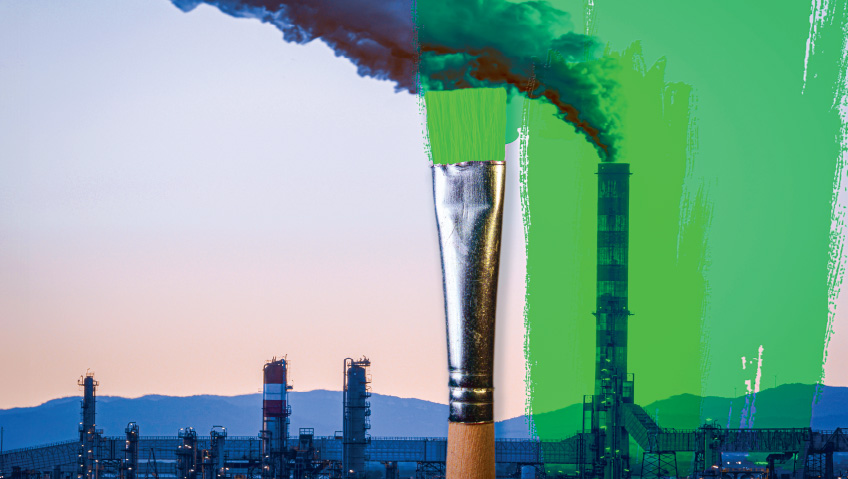
When homeowners and businesses put trash and recyclables on the curb, we tend to lose track of what actually happens to our waste. We trust that our garbage goes to landfill, vegetable peelings and expired food are composted, and recyclables like cardboard, plastic, and aluminum are processed and made into new products. And when we buy soap, shampoo, laundry detergent, cosmetics, and other products, many of us accept claims these products are “green,” “sustainable,” and “better for the planet” than their counterparts.
To appear environmentally friendly, some manufacturers use buzzwords and carefully crafted marketing slogans in their packaging, TV commercials, and other advertising aimed at eco-conscious consumers eager to do the right thing. It isn’t enough for dish soap to be merely effective; it should also be “biodegradable” or “green,” ideally coming in bottles made from recycled plastic. Some companies claim their products are made in factories powered by “sustainable energy” or are “net zero,” while laundry detergent is promoted as not just gentle on skin, but “hypoallergenic,” “eco-friendly,” “non-toxic,” and “free from chemicals and dyes.”
While these and other encouraging terms are popular and resonate with buyers, reports suggest some claims are not only wildly exaggerated, but downright false. ‘Greenwashing’ is defined by Investopedia as “the act of providing the public or investors with misleading or outright false information about the environmental impact of a company’s products and operations,” and has grabbed the attention of consumers, governments, and environmental groups worldwide. Described as “misleading” by the United Nations’ Climate Action, businesses misrepresenting themselves as good environmental stewards are not only fooling the public, but undermining “credible efforts to reduce emissions and address the climate crisis.”
In 2022, the United Nations high-level group on net zero released Integrity Matters: Net Zero Commitments by Businesses, Financial Institutions, Cities and Regions. The 42-page report is unapologetic about greenwashing tactics, and contains numerous recommendations about Net Zero Targets, Increasing Transparency and Accountability, and Accelerating the Road to Regulation. In the report, UN Secretary-General António Guterres states: “We urgently need every business, investor, city, state and region to walk the talk on their net zero promises. We cannot afford slow movers, fake movers or any form of greenwashing.”
Despite Guterres’ forceful words and those of other global experts, it appears not all manufacturers are listening. There is a big difference between companies stating they are “good corporate citizens” and actually putting words into action. Businesses of all sizes—from local shops to multinationals employing tens of thousands worldwide—continue to be caught greenwashing, making deceptive environmental claims about everything from manufacturing processes to product contents and packaging.
One of the most questionable claims centers on one word: natural. Some businesses take liberties with “natural,” which suggests products like soap and shampoo are pure, made from organic ingredients, and devoid of synthetics and harmful chemicals. For buyers, it isn’t enough to skim the bold marketing text; we must carefully review ingredients and question claims.
Even with increased legislation, public shaming, and recent rules introduced by the European Union (the “Greenwashing Directive”) aimed at preventing bogus claims and compelling manufacturers to support their eco-friendly statements, greenwashing continues worldwide. In fact, a 2020 European Commission and national consumer authorities study of websites analyzed green claims of manufacturers producing everything from cosmetics to clothing. A screening of 344 suspicious claims revealed that, in 42 percent of cases, green claims were “exaggerated, false or deceptive and could potentially qualify as unfair commercial practices under EU rules.” To make matters worse, 59 percent of cases revealed traders didn’t provide “easily accessible evidence” to support claims. And in 37 percent of cases, manufacturers made circumspect claims products were “eco-friendly” and “sustainable,” leading consumers to believe products had “no negative impact on the environment.”
As companies strive to increase their market share, cases of greenwashing grow. Faced with competition from rival corporations and increasing costs, many manufacturers have jumped on the green bandwagon to appeal to consumers and cut costs, sometimes with disastrous results.
In recent years, restaurants have come under fire for single-use products such as plastic cutlery and non-recyclable containers, which add to mountains of landfill worldwide. In 2018, fast food giant McDonald’s substituted plastic straws for new “recyclable” paper straws at over 1,300 locations in Ireland and the United Kingdom to “protect the environment.” The problem: unlike their plastic counterparts, the new paper straws soon became soggy, and were too thick to be recycled.
Other companies have come under fire for claiming products were recyclable and/or compostable, including coffee companies Keurig and Lavazza. Popular for its individual cups, Keurig claimed for years its single-serve K-Cup pods were recyclable; more often than not, they weren’t. The revelation wasn’t just a blow to the company, but also resulted in Keurig Canada being ordered to pay a $3 million penalty following an agreement with the Competition Bureau. According to the Bureau, K-Cup pods “were not widely accepted in municipal recycling programs,” save for British Columbia and Quebec.
Along with the penalty, the company was required to change its claim about pod recyclability, pay an extra $85,000 for the Bureau’s investigation costs, and donate $800,000 to a Canadian charity focused on environmental causes. Stated Commissioner of Competition, Matthew Boswell, “Portraying products or services as having more environmental benefits than they truly have is an illegal practice in Canada. False or misleading claims by businesses to promote ‘greener’ products harm consumers who are unable to make informed purchasing decisions, as well as competition and businesses who actually offer products with a lower environmental impact.” As recently as 2025, another coffee company, Lavazza UK, was forced to backpedal on claims that their “eco cap” coffee pods were compostable, after research revealed the pods could only be composted in an industrial setting, not by home users.
Even companies known for environmental initiatives have been called out for greenwashing, including IKEA. The world’s biggest consumer of wood, the Swedish-based business was cited for making children’s furniture from pine tied to illegal logging in Russia’s boreal forests. And the world of fashion is not immune from claims of greenwashing, with well-known retailers like H&M and SHEIN going under the microscope for statements about sustainability, social responsibility, and greenhouse gas emissions.
Although some companies are making efforts to live up to their claims such as Nespresso, which sends out complimentary recycling bags for its aluminum coffee pods, the green movement took a hit recently when Canada’s federal government, following pushback from lobbyists, cited “investment uncertainty” regarding greenwashing, stating these provisions are “having the opposite of the desired effect, with some parties slowing or reversing efforts to protect the environment.”
When it was passed in 2024, Bill C-59 introduced changes related to deceptive advertising, including greenwashing. This saw the Competition Bureau state: “While the supply of ‘green’ products has greatly increased, there has also been an increase of false or misleading environmental ads or claims, also known as greenwashing. This practice harms competition because it misleads consumers into believing they are making environmentally friendly choices when they aren’t.”
While some businesses expressed relief, environmentalists are worried companies will be less accountable with claims. The Canadian Association of Physicians for the Environment (CAPE) recently posted, “Tell the Prime Minister: Protect Canada’s anti-greenwashing rules.” An online submission page, it is aimed at the oil and gas industry, holding companies responsible and preserving Canada’s anti-greenwashing rules.
Citing “climate disinformation,” the message states in part, “When companies misrepresent the health and environmental impacts of their products, they obscure risks that directly harm people: worsening air pollution, extreme heat, wildfire smoke, heart and lung disease, and more. People in Canada need truthful, evidence-based information to protect their families and communities. Removing truth in advertising laws amounts to rigging the market to favour big polluters over genuinely green industries, undermining innovation and the energy transition.”
As the old saying goes, “If something seems to be too good to be true, it probably is,” and consumers need to question manufacturer claims to avoid being victims of greenwashing.