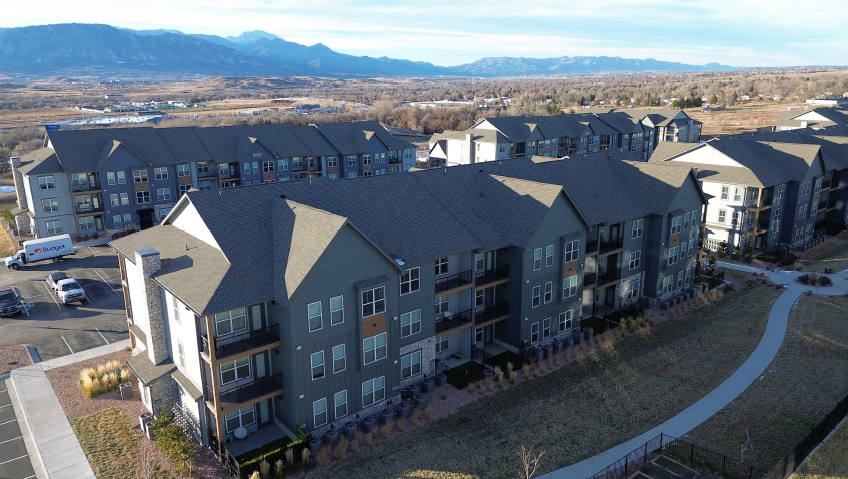
Sitting at the gateway between Colorado Springs and Pueblo, the City of Fountain has emerged as one of southern Colorado’s most dynamic communities for new business growth and strategic redevelopment. With a population that has surged over the past decade and a growing demand for goods, services, and workforce amenities, Fountain is embracing its fast-paced evolution with clarity and intentionality as a smart growth community.
At the center of this strategy is City Administration with the Economic Development Director, Kimberly Bailey, who has spent more than a decade helping guide the community through major planning initiatives, incentive expansion, Olde Town revitalization, and a renewed focus on transportation and infrastructure investment. Her tenure has closely aligned with Fountain’s transformation, from addressing aging rail crossings to implementing modern placemaking strategies and championing a business-friendly environment built on collaboration.
Fountain’s rise has not been accidental; according to Bailey, the city has been working in a deliberate planning structure that ensures accountability and incremental progress. “As a city, we started initiating strategic planning in three-year cycles,” she explains. Each cycle allows the city to identify new priorities and allocate resources where they will have the greatest long-term impact.
During the first cycle, Fountain’s Economic Development Department was tasked with creating a comprehensive incentive policy, one that would serve businesses of all sizes and support long-term economic vitality. Under Bailey’s leadership, the result was a robust portfolio outlining 27 incentive programs available at the local, regional, and state levels. What makes Fountain’s incentive strategy unique, however, is its broad eligibility and its emphasis on inclusivity. “The creative thing with our incentive packages is that we actually adapted it for small business and entrepreneurialism, because that’s a feeder channel for economic growth in a community,” Bailey says.
Programs range from façade improvement grants in Olde Town, designed to boost curb appeal and preserve historic character, to support for retrofitting older buildings with energy-efficient equipment. As a state where climate and energy policy remain top priorities, many Colorado businesses benefit from funding that helps them modernize and reduce their environmental footprint. Fountain has embraced this opportunity and positioned itself as a partner for companies navigating the transition.
For new and expanding businesses, Fountain offers a compelling array of incentive options tailored to local needs. These include tax rebates, infrastructure assistance, and grants tied to capital investment, job creation, and building improvement. The city’s approach is deeply collaborative and businesses are invited to work directly with both the city and El Paso County to identify which incentives they qualify for and how different programs can be layered for maximum impact.
The façade program and overlay zoning in Olde Town, for example, has helped multiple property owners modernize aging buildings and attract new tenants. By prioritizing the needs of both small businesses and large employers, Fountain ensures that economic growth remains diverse and well-supported. This collaborative spirit also extends to Fountain’s commitment to infrastructure, particularly transportation safety and accessibility, which Bailey sees as essential to maintaining business momentum.
Fountain’s story cannot be told without acknowledging the role of rail. Colorado’s freight network is integral to commercial trade and regional mobility, and Fountain has long been a key connection point—but that has also created challenges.
In 2014, Fountain voters passed the Moving Fountain Forward ballot measure, an initiative aimed at improving several of the city’s at-grade railroad crossings. These crossings had impacted traffic flow and noise levels for years. Through this voter-supported mandate, Fountain successfully addressed six major crossings and introduced improvements that are now nearing final certification. “We were able to address about six points of at-grade crossings to create a quiet zone,” Bailey shares. Once fully certified, this quiet zone will reduce train horn noise significantly across the community, a major quality-of-life upgrade for residents and businesses alike.
The city has not stopped there. In 2022, Fountain adopted its first Transportation Master Plan, positioning the community to compete for regional, state, and federal funding. That effort paid off quickly with the award of a Safe Streets for All grant in 2023. The grant allows the city to analyze intersections with high crash rates and identify traffic hazards. Bailey describes the transportation strategy not as a single project, but as a full-spectrum approach to long-term safety, mobility, and business accessibility.
Colorado’s emphasis on multimodal transportation also fits seamlessly into Fountain’s goals. “In Colorado, we like to use trails, bikes—anything other than a vehicle,” Bailey notes. This statewide lifestyle preference has encouraged the city to incorporate trail connectivity, bike lanes, and greenway expansion into its transportation priorities, making Fountain even more attractive to both residents and workforce talent.
And perhaps no part of Fountain has seen more dramatic transformation than Olde Town, the heart of the city’s earliest settlement and a district full of heritage buildings and local culture. When Bailey took her position in 2014, Olde Town was just beginning to build momentum following its Revitalization Master Plan, which established design standards and encouraged the rehabilitation of older properties. The incentive portfolio and overlay zoning allowances soon became a vital tool in accelerating the district’s progress. Businesses investing in capital improvements could access tax incentives, grants, and various other means of support, deepening the city’s partnership with property owners.
The results have been remarkable. Since COVID-19 pandemic recovery, Olde Town Fountain has welcomed over 14 new businesses per year, a level of growth Bailey describes as unprecedented for the district. Even with some closures, a normal part of any business cycle, Olde Town has become a magnet for new goods and services along with private investment. This surge demonstrates strong community demand and signals that Olde Town is well on its way to being an aspiring Main Street district in Colorado.
Urban renewal initiatives have further enhanced the district, with four blighted properties remediated and redeveloped into new job-generating businesses. Through a combination of historic preservation and targeted incentives, Fountain is restoring Olde Town’s unique character while preparing for its future generations’ lifestyle.
During the pandemic, cities across the country began rethinking how outdoor spaces could support economic resilience. Fountain seized this opportunity to implement a series of placemaking projects that continue to elevate the community today. “Cities and states got really creative and moved dollars into placemaking,” Bailey explains. Funding supported wider sidewalks, outdoor patios, greenway connections, and improvements within the Main Street district.
The city also partnered with Class I railroads to extend the urban greenway footprint and enhance walkable connections with a series of pocket parks along Ohio Avenue which shall contribute to the district’s charm and usability. These changes do more than beautify the area; they support commerce, encourage tourism, and strengthen Fountain’s identity as a lifestyle-oriented community.
Two major planning efforts, both recently funded by city council, will have significant influence on how Fountain grows over the next decade. The first is a revision of the Parks, Recreation, Open Space and Trails Master Plan, which helps align park improvements with development patterns and public accessibility. As new development contributes funding toward parks, the updated plan (2026) will ensure resources are directed where they will have the most impact.
The second is the city’s first Wayfinding Master Signage Plan, approved in 2025. This project will standardize the visual experience for residents, visitors, and workers moving through the city and guide them to business districts, amenities, trails, and key public facilities. When the new wayfinding signage is in place, it will make the districts easier to navigate while strengthening small business activity and reinforcing Fountain’s unique sense of place. Bailey notes that example renderings are already complete, with an implementation phase underway, signaling another step toward a more cohesive and welcoming community environment.
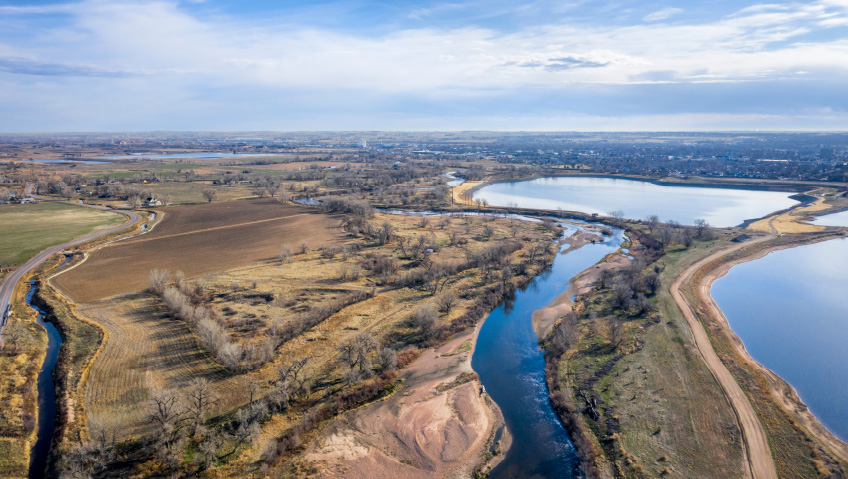
Fountain’s commitment to revitalization extends beyond business support and transportation planning. The city has also taken proactive steps to remediate environmentally challenged sites through the EPA’s Brownfields Program. During the pandemic, Fountain partnered with the City of Colorado Springs to secure a Brownfields Assessment Grant. This effort focused on properties along Fountain Creek, a major watershed running from Pikes Peak to the Arkansas River. Through the assessment, the city examined potential contamination risks affecting the natural resource and identified 35 parcels seeking evaluation to move infill land assets toward productivity in redevelopment.
From this work came the opportunity to pursue a 2024 EPA Brownfield Cleanup Grant for the former Lorraine School District property, an eight-acre site in Olde Town containing decades-old materials such as asbestos and lead-based paint. “We just received that award notice in May 2025,” Bailey says. Cleanup will take roughly two years, after which the site will be positioned for transformative redevelopment based on a mixed-use concept developed in an earlier study. With its central location and scale, the site represents one of the most promising revitalization opportunities in Olde Town’s next chapter.
Beyond its quality-of-life amenities and revitalization momentum, Fountain benefits from exceptional regional connectivity. The city sits near major freight corridors, including rail and highway systems, and is just six miles from the Colorado Springs Airport. These logistical strengths make Fountain an appealing choice for companies that depend on smooth transportation networks and reliable distribution routes.
Fountain also has access to a robust military workforce from five nearby installations, a significant competitive advantage. “They bring a tremendous workforce asset to backfill technical needs and support centers of excellence,” Bailey shares.
One of Fountain’s most unique assets is its publicly owned water and electric utility, which the city operates as a public service, not a private, profit-driven entity. “We own and operate our own utility and that can actually be very beneficial to business operations,” says Bailey. When companies look closely at what it will take to run efficiently over the long term, this element can play a major role in their final choice. The utility’s commitment to efficiency and alignment with Colorado’s renewable energy vision is exemplified through recent solar array projects and other system upgrades. In 2024, a 1.67MW solar smart-grid renewable energy substation was brought online and co-funded by the State of Colorado, marking City of Fountain as a leader project for other communities.
Fountain’s forward progress is grounded not only in strategic planning but also in continuous engagement with its business community. In 2025, the city introduced its inaugural State of Business Report, highlighting what matters most to local businesses and showing its commitment to working transparently with the community. The report builds on Fountain’s longstanding practice of meeting with local businesses, addressing challenges, analyzing supply chain opportunities, and supporting expansions.
With El Paso County as a top growth region along Colorado’s Front Range corridor, and the City of Fountain a part of that region, it’s preparing for the next planning cycle. The city’s vision is clear: a thriving, well-connected community rooted in historic character, strengthened by modern infrastructure, and energized by growing business opportunity. From Olde Town revitalization to better mobility, from public utilities to business incentives, Fountain is building a community where investment and opportunity go hand in hand.