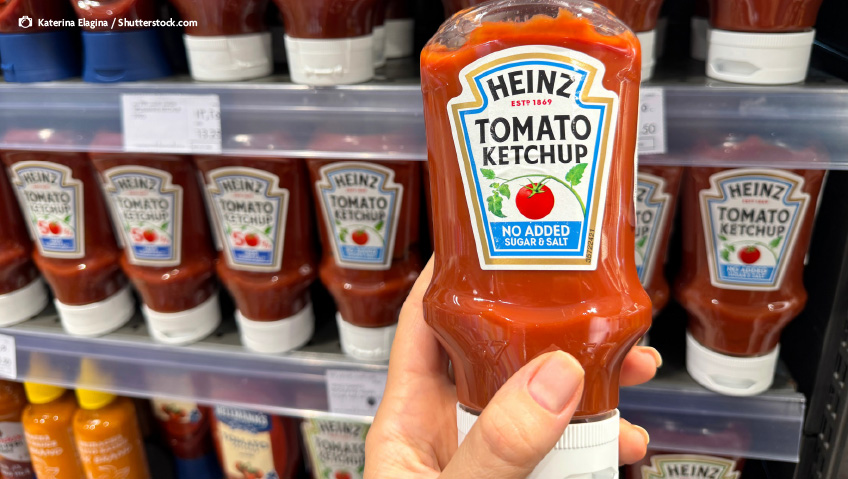
After announcing plans to split the company into two entities in September of last year, Kraft Heinz is pausing the idea with new CEO Steve Cahillane citing “very compelling” reasons to do so.
At the time, due to deteriorating conditions in the food industry, the company felt it was necessary to have one company focused on groceries and the other on sauces and spreads, but the challenges have been deemed “fixable and within our control,” which has resulted in the pause.
The company has failed to grow with expectations over the last decade of its formation, which was the result of a merger orchestrated by Warren Buffett’s Berkshire Hathaway and 3G Capital. “We busted through four or five levels of price points in a very accelerated fashion, and the consumer was left very disappointed in that,” Cahillane said on a post-earnings call of the company’s struggles with price hikes and consumer confidence in their products, instead drawn to healthier alternatives.
“Faced with the choice of continuing the separation and all the work that’s required there or shifting all resources against growing the business and the early opportunities that I saw, it became very compelling that we ought to pause the separation,” Cahillane told Reuters in an interview.
The pause is not indefinite, as it could move forward in the future, but there is no end date for the pause, which is expected to save the company $300 million USD in costs in 2026. “The company’s decision to table/postpone separation plans and instead accelerate reinvestment reveals deeper problems than previously acknowledged by the company,” said Steve Powers, analyst at Deutsche Bank.
“We support CEO Steve Cahillane and the Kraft Heinz Board of Directors’ decision, under Steve’s new leadership, to pause work on the company’s previously planned separation,” Berkshire Hathaway’s CEO Greg Abel said in a statement on Wednesday. “As a result, management can commit to strengthening Kraft Heinz’s ability to compete and serve customers.”
Cahillane outlined a strategy to restore profitability and growth, which includes a greater focus on marketing and research, innovation, and a $600 million USD investment to drive recovery in its U.S. business where many of the company’s challenges exist.
“To turn this around, we are increasing investments in R&D by approximately 20 percent in 2026 compared to 2025,” Cahillane said, adding that the product innovation would also circle nutrition and value, acknowledging that the company has fallen short by not providing better benefits for the higher price tags.