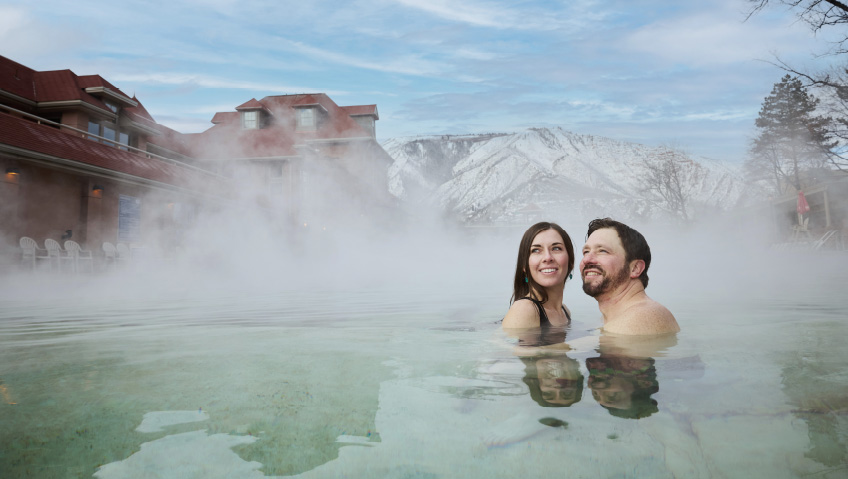
Long before Glenwood Springs became a hub for tourists and businesses, the Ute people used the mineral-rich hot springs known as “Yampah,” or “big medicine” for their spiritual and healing properties. In the 1880s, settlers, drawn by the springs and natural resources, established a settlement originally called “Defiance.” Within a few years, it was renamed Glenwood Springs, after the hometown of Sarah Cooper, wife of one of the city’s founding fathers, Isaac Cooper.
The town quickly evolved into a resort destination. In 1888, the Glenwood Hot Springs Pool opened, attracting travelers seeking rest and healing, followed in 1893 by the luxurious Hotel Colorado, a retreat that blended European-inspired architecture with mountain wilderness. The arrival of the Denver & Rio Grande Railroad and later the Colorado Midland Railway connected the town to Denver and beyond, boosting both tourism and commerce.
Over time, Glenwood Springs matured into a multi-faceted community. While tourism remains central, mining, coal, agriculture, and trade have diversified the economy, creating a town that combines natural beauty, historic charm, recreational access, and modern infrastructure.
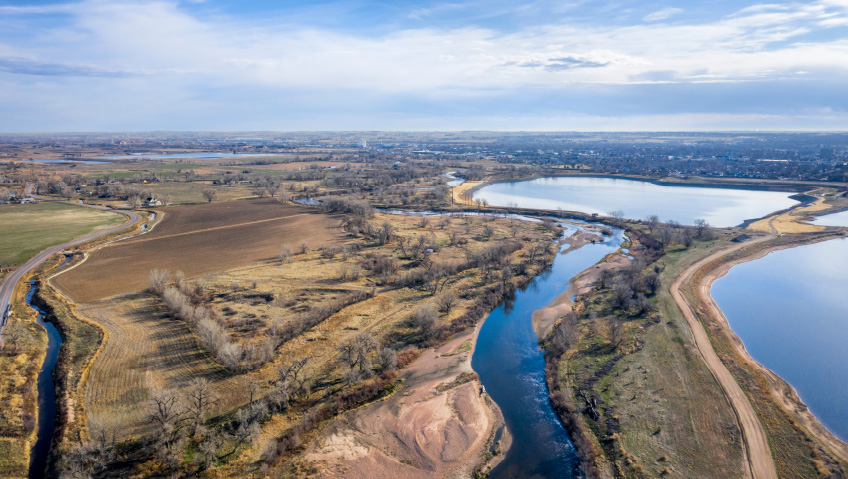
Today, Glenwood Springs leverages a strategic geographic position that few towns can match. Situated at the confluence of the Roaring Fork River and the Colorado River and at the crossroads of major valleys, the city acts as a natural junction between diverse economic zones.
A big impact
“We are in between the Colorado River Valley and the Roaring Fork River Valley. We have a very wide shed of people that come to Glenwood or come through Glenwood on a daily basis,” says Jacob Zook, Economic Development Specialist. Despite a resident population of only 10,000, the city’s reach and influence are far larger.
That influence is important to businesses. Glenwood Springs’ economy isn’t just driven by tourism; it also serves as a regional shopping hub, attracting residents from surrounding areas for goods and services. “It’s not just our 10,000‑person population; it’s the 40,000 people in adjacent towns who rely on our city for goods and services,” says Bryana Starbuck, Communications and Engagement Officer.
Further strengthening its connectivity, Glenwood Springs lies within reach of multiple regional airports and the railroad, all part of the historic rail corridor through the Rockies that still serves the community today. This confluence of geography and valley networks means that businesses established in Glenwood Springs gain access not only to the local population, but also to a broad regional customer base, including commuters, vacationers, and valley residents.
Although tourism—anchored by outdoor recreation—and heritage remain vital pillars of the city’s economy, Glenwood Springs has broadened its economic base significantly in recent decades and is looking to grow further, aiming to attract a major grocery store. “Small business operators are very attracted to Glenwood,” says Zook. “They want to come here, live here, start their business, and grow it.”
Beyond hospitality, several sectors contribute to the local economy. Healthcare, in particular, has grown rapidly and employment in the medical sector is now among the largest in the community. Government services, given that Glenwood Springs is the county seat of Garfield County, also contribute substantially to the city’s economic stability. The downtown commercial district reflects this blend, with retail stores and professional services sitting alongside cultural venues, restaurants, and offices, all serving residents, commuters, and visitors alike.
Of course, outdoor recreation remains a strong draw year-round. From fishing and rafting the Roaring Fork River and Colorado River, to biking and hiking on mountain trails, to skiing at nearby ski resorts, Glenwood Springs offers diverse attractions that support tourism, real estate demand, and local businesses. This mix of sectors—healthcare, services, tourism, recreation, retail, and government—lends the city a balanced economic profile, and that diversity helps buffer against seasonal fluctuations, making Glenwood Springs an attractive spot for entrepreneurs seeking a stable base with growth potential.
Never standing still
The city doesn’t just rely on geography and natural assets, however; its leaders have established deliberate programs to encourage investment and nurture small businesses. One of those tools is a revolving loan fund offering low-interest loans (with no fees) to entrepreneurs and small businesses. This makes early-stage investment more accessible, allowing new ventures to start or expand with lower capital barriers. The city also offers a sales-tax rebate program for certain business-related investments such as renovations, building permits, and system improvements. Such incentives reduce upfront costs for new businesses investing in Glenwood Springs and existing businesses looking to expand their operations.
Additionally, a separate organization, the Downtown Development Authority, supports the city’s downtown, offering matching grants for façade renovations, lighting upgrades, and even entertainment funding to add vibrancy to downtown nightlife and culture. And this commitment to supporting businesses doesn’t only apply to newcomers. “We’ve had businesses survive a pandemic, floods, and fires,” shares Trent Hyatt, Economic and Community Development Director. “That resilience speaks to the quality of life here and the willingness of our community to help each other.”
Moreover, the city has embraced data‑driven planning. By tracking commuter and tourist flows to see how people move through town and where they stop, the city can provide prospective businesses with concrete insights into foot traffic, patterns, and market potential. Taken together, this combination of incentives, community support, and strategic planning makes Glenwood Springs more than a picturesque tourist town; it’s a viable environment for business growth and long-term investment.
Amidst its many advantages, the city hasn’t rested on its historical laurels. Instead, Glenwood Springs continues to invest in sustainability and connectivity to meet the demands of a growing and evolving population. The city now offers a municipal community broadband network, providing high-speed internet access to residents and businesses, a major advantage for remote workers, small businesses, and modern enterprises that rely on digital connectivity.
On the environmental side, Glenwood Springs operates with a forward-looking mindset. The local electricity supply is 100 percent renewable, a commitment since 2019. The city also opened its own recycling center and expanded its commercial composting program, efforts that reflect a dedication to sustainability and responsible waste management. When it comes to construction and development, the city applies thoughtful standards where new projects combine aboveground and underground work to minimize disruption—water-wise landscaping is encouraged, and stormwater quality and resource conservation are prioritized.
Housing, a ubiquitous challenge in desirable mountain towns, has also been addressed proactively by Glenwood Springs. The city funds housing initiatives through a workforce housing tax on lodging and offers down payment assistance and rental subsidy programs, often paired with employers, to help residents live and work locally without being priced out. These efforts speak to a broader philosophy: growth should not come at the cost of community integrity or environmental quality. Instead, Glenwood Springs aims for balanced growth that supports businesses and meets resident needs while preserving what makes the city special.
Something for everyone
It’s easy to look at Glenwood Springs and see only mountains, hot springs, and tourism appeal. But beneath its scenic façade lies a city with serious economic potential, all built on a blend of history, geography, infrastructure, and intentional policy. “It’s a great place to live and a great place to play,” says Zook. That sentiment speaks to a place where natural beauty meets opportunity.
For small business owners and investors, Glenwood Springs offers a rare combination: access to a regional customer base beyond the local population, support for new and existing businesses, infrastructure suited for modern commerce, and a high quality of life that attracts both workers and residents.
For families and individuals seeking balance, a place where outdoor recreation, community, culture, and services coexist, the city delivers. From rivers and trails to vibrant downtown streets, Glenwood Springs offers the kind of lifestyle that many would call aspirational. And for the region at large, as a hub connecting valleys and communities, the city plays a key role in local commerce and economic resilience.
No community is perfect, and Glenwood Springs faces some of the familiar challenges of growing mountain towns. Housing affordability remains an issue, especially with the area’s appeal to newcomers. The city continues to push housing assistance and workforce support programs to help address this. Balancing development with environmental stewardship is another challenge, but by prioritizing sustainability and thoughtful construction, the city is committed to long-term ecological responsibility. Finally, growth must remain inclusive. Governance and development strategies must continue supporting both residents and small businesses, ensuring that economic success doesn’t come at the expense of community character or affordability.
If the city continues along this path, with thoughtful planning and community support, Glenwood Springs could serve as a model for how smaller towns, especially mountain towns, can evolve beyond tourism and seasonal economies into vibrant, resilient, year‑round communities.
Glenwood Springs’ story is one of transformation and adaptation. From sacred hot springs used for healing by Indigenous peoples, to a frontier settlement called “Defiance,” the town has reinvented itself several times over more than a century. Today, it stands as a regional hub where rivers converge, where valleys meet, where tourists, commuters, residents, and entrepreneurs cross paths. It offers more than natural beauty—it offers opportunity. It offers support. And most importantly, it offers a quality of life where work and play coexist.
For anyone looking for a place to build a business or a life shaped by both community and nature, Glenwood Springs might just be the hidden gem you’ve been searching for.