Cañon City, Colorado may not sit directly on the bustling I-25 corridor, but the city’s history and strategic vision have positioned it as a unique and increasingly attractive community for growth, innovation, and quality of life.
Known as one of the oldest cities in the state, Cañon City has roots stretching back to the days of early mining and the arrival of the railroad, creating a commercial hub in its region. Yet in recent decades, it seemed destined to lag behind the rapid growth seen along Colorado’s Front Range—that is, until city leaders and stakeholders recognized the need for proactive planning and strategic investments in infrastructure, development, and community programs.
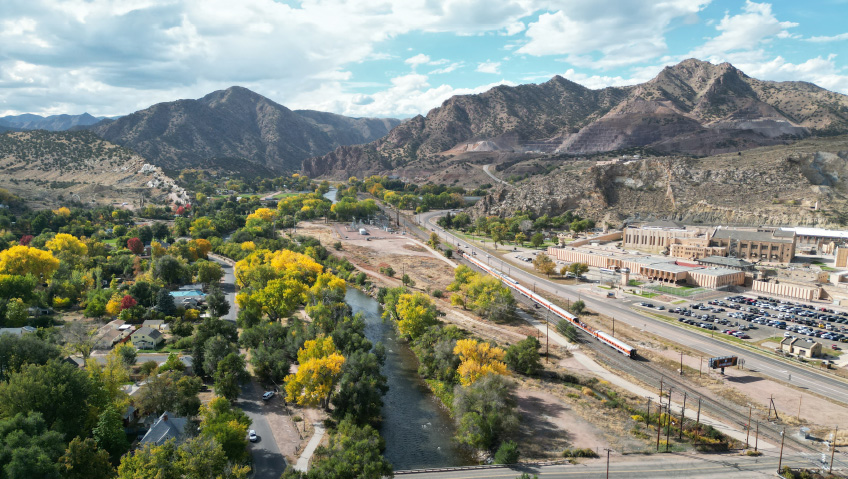
Rick Harrmann, Economic Development Manager for Cañon City, explains the city’s evolution with a perspective shaped by both its history and its future ambitions. “Cañon City was a very viable, important community to the creation of the state of Colorado,” says Harrmann. As one of Colorado’s earliest established cities, Cañon City played a significant role during the mining era as well as the formation of the Colorado territory prior to the incorporation of the State. The discovery of a key mountain pass along the Arkansas River that runs through Cañon City helped shape its development, and the combination of mining activity and the arrival of the railroads turned it into an important commercial center for the region and for the flow of goods to the West.
However, the advent of the interstate system in the 1950s, and the gradual shift away from rail transit, shifted growth along I-25, leaving Cañon City off the main commercial path. Harrmann describes the impact of that shift: “When I-25 went in, it effectively cut Cañon City off from the future growth of the state. We went through years of limited growth, and when you have limited growth compared to higher cost of living and CPI, you’re basically dealing with a slow decline of your economy.” Recognizing these challenges, city leaders began developing strategic plans in the early 2010s to guide revitalization, improve infrastructure, and foster community growth.
Key among these initiatives were the Downtown Strategic Plan, the Arkansas River Corridor Master Plan, and the Centennial Park Master Plan. Each sought to enhance the city’s sense of place and catalyze development. “The whole idea was that we need to make some changes here,” Harrmann shares. “We’re not supporting our own infrastructure; we need to make some changes that will catalyze growth in our community.” These plans became actionable strategies that informed infrastructure projects, pedestrian enhancements, and public-private partnerships, setting the stage for a new wave of development.
One of the city’s most significant successes in recent years has been the development of the Hotel St. Cloud, a four-star historic restoration on Main Street. The project, supported through the newly formed Urban Renewal Authority (URA) and tax increment financing, became a proof point for the potential of public-private partnerships in revitalizing Cañon City.
“While the city was starting to invest in itself, we realized that we also needed to invest in development through public-private partnerships,” Harrmann explains. “The Hotel St. Cloud was a key development that received tax increment financing. That success has really spurred outside interest and investment in the community.”
The city’s URA now supports multiple projects downtown, providing façade grants, life-safety improvements, and upgrades to HVAC and electrical systems in older and historic buildings. These efforts have breathed new life into a 150-year-old downtown, creating vibrant streetscapes with active sidewalks, patios for restaurants, and retail spaces ready for modern businesses. “We’re seeing a lot of vibrancy downtown right now, much more than there was 10 years ago when I moved here,” says Harrmann.
Beyond downtown, Cañon City has embraced ambitious development projects on the city’s outskirts. Four Mile Ranch, a 1,500-acre planned development district on the east side of town, represents a long-term effort to expand residential and commercial opportunities. Partnering with developers, the city is exploring a new, project-specific urban renewal area to support infrastructure through tax increment financing, potentially creating thousands of new homes and a significant increase in the city’s tax base. “We are partnering with these developments to come up with potentially 2,000 new homes in this community,” says Harrmann. “It’s really a huge project moving forward.”
Cañon City’s strategy is not limited to real estate and infrastructure; workforce development and economic innovation also play a central role. The Fremont Economic Development Corporation (FEDC) launched its TechSTART program to nurture tech-savvy professionals and entrepreneurs. Inspired by a Silicon Valley transplant, the initiative evolved from a small downtown incubator into a multi-faceted program connecting students, local talent, and high-net-worth individuals with opportunities in technology, engineering, and innovation. “TechSTART was created by FEDC and the efforts of a former Silicon Valley gentleman who moved here to get out of tech and realized there are people in town that are very tech-savvy,” says Harrmann. TechSTART has since expanded those early efforts into two campuses of the new Emergent Campus, an award-winning business campus and incubator system, a broader creation of the South Central Tech Sector Partnership, and was instrumental in helping establish Cañon City High School as the first rural school approved for the Pathways to Technology (P-TECH) program, an initiative that gives high school students the opportunity to complete their associate’s degree before they graduate.
The program has had a significant impact, fostering high school internships and collaboration with Pueblo Community College and local startups. One such example is 3 Rocks Engineering, which emerged from the early incubator space and now contributes to the city’s growing tech ecosystem. By engaging high school students in hands-on learning and career pathways, the initiative ensures that the next generation of professionals remains connected to the community while contributing to economic growth.
Harrmann highlights the broader significance of these initiatives, noting the synergy between innovation and quality of life in Cañon City. “When you operate a business here, you can focus all your effort on work, but your drive home is two minutes. You don’t have the hustle and bustle of larger communities. The pace and the kindness of the people here make a real difference,” he says.
Indeed, the city’s lifestyle offerings, including immediate access to the Arkansas River, trails, and outdoor recreation, enhance both personal and professional satisfaction. Residents and business owners alike benefit from a slower pace and strong community engagement, a rare combination in today’s fast-growing Colorado communities.
To further attract residents and businesses, Cañon City has invested in downtown, river, and trail connectivity, and conducted a housing demand analysis to demonstrate its potential to developers. A housing demand study assessed demographic trends, migration patterns, and affordability, providing developers with critical data often unavailable in smaller, rural markets. Harrmann notes that, as an older, rural community, Cañon City lacks up-to-date rental and home-sale data that developers are accustomed to seeing in urban communities. To bridge that gap, the city commissioned a full housing demand analysis and now shares it proactively with developers. The goal is to give them a clear picture of the local market and reinforce that Cañon City is a strong, viable place to invest.
This careful attention to both commercial and residential development has created a balanced growth approach, ensuring the city can attract a wide range of businesses and residents. Startups in manufacturing, contractor and construction services, software, and engineering find Cañon City an attractive location due to its lower costs, available space, and proximity to Colorado Springs, Pueblo, and Denver. “Cañon City really is the land of opportunity,” Harrmann emphasizes. “We want growth. We need growth. We want to work with you, the developer, the entrepreneur, the resident, to make that growth happen.”
And the city’s commitment to quality of life extends beyond economic and infrastructure initiatives. Cañon City has supported projects like innovative public-private collaborations and programs that enhance community well-being. The city also helped link the school district with a local startup home manufacturer, leading to the creation of a small on-site rental program that provides teachers with affordable starter housing. It’s a good example of how Cañon City is working to support both its workforce and its broader community, not just its business landscape.
Perhaps what makes Cañon City truly unique is the combination of historic charm and forward-looking economic strategy. While Cañon City still carries the character of its frontier roots, seen in its historic buildings and long-established families, it’s also becoming a place that attracts what Harrmann calls “economic homesteaders.” These are skilled individuals looking to build something of their own, whether in engineering, software development, manufacturing, or other entrepreneurial pursuits. This sense of opportunity, paired with the city’s strategic planning and investments, positions Cañon City as a model for small communities seeking sustainable growth in the 21st century.
The city’s efforts have not gone unnoticed. FEDC’s TechSTART initiative, and the Emergent campus and other related programs, have garnered national attention, demonstrating that even a small, rural community can be a hub for innovation and economic development. The synergy between historic preservation, modern infrastructure, and forward-thinking technology programs illustrates the city’s holistic approach to growth.
Cañon City’s story is a testament to the power of vision, planning, and collaboration. By leveraging public-private partnerships, investing in infrastructure, and fostering economic innovation, the city has turned historical challenges into opportunities for growth and vibrancy. Harrmann captures the essence of this transformation: “We’ve catalyzed placemaking, river and trail connectivity, and quality of life. Now it’s time for the market to discover all the good that’s happening here and help grow the community.”
For businesses, entrepreneurs, and residents considering Cañon City, the message is clear: opportunity awaits in a community that embraces innovation and prioritizes quality of life. With its proactive economic development programs and commitment to fostering a thriving downtown and surrounding neighborhoods, Cañon City is positioning itself as a dynamic, forward-thinking community in the heart of Colorado. As Harrmann notes, “The effectiveness and the efficiencies you can gain as a business owner by being in a community like this are really unmatched.”
Cañon City is a reminder that even smaller communities can have big ambitions, and with thoughtful leadership and collaboration, those ambitions can become reality. It’s a city honoring its past while building a future where business, innovation, and lifestyle converge, a city where opportunity truly meets quality of life.