A vibrant, multigenerational, and diverse community tucked away in the San Juan Mountains, the City of Durango, Colorado, offers a stunning array of natural beauty, outdoor activities, restaurants, galleries, and downtown events, supported not only by the city in a way that is economical, ecologically sound, and socially sustainable, but also by a hugely beneficial URA (Urban Renewal Authority).
“The City of Durango is lucky to have a URA, which is a fantastic resource for a town of our size,” says Tommy Crosby, Economic Opportunity Manager. “As a small rural mountain town in southwest Colorado, it really helps us punch above our weight when it comes to ensuring we have viable pathways for businesses to expand, to continue investing into our community and ensuring pathways for revitalizing and restoring parts of town that have been otherwise overlooked or under-invested in years past.”
At the City of Durango’s newly created Prosperity Office, Crosby helps connect the dots between economic goals and the financing tools that can bring projects to life. In close collaboration with the Urban Renewal Authority, he works to structure deals that deliver community benefits while supporting business growth and long-term investment. The biggest tool the URA offers is tax increment financing (TIF), he adds. By entering into TIF agreements with businesses, developers, or investors, Durango can use future sales and property tax revenue that a project will generate to fund development and investment today.
“It’s a fantastic tool. Their payback terms for that are simply paying their normal sales and normal property tax,” says Crosby. “It’s a creative financing tool that isn’t available everywhere, and the fact that we have that available in Durango is a great resource.”
Much like a snowcat, URA “grooms the trails,” he adds, so businesses, investors and developers see less risk. While it’s still up to them to make those turns down the ski run, the URA reduces that risk. “By helping businesses see where those rocks or cliffs are, the URA makes their trail down a little smoother and easier.”
Another tool Durango employs is the MidTown Peak Grant, which enhances the quality of the MidTown area, located on the north end of the historic downtown, providing an opportunity for businesses that might not qualify for those larger tax increment financing agreements. While those projects may be in the $100,000 to $500,000 range instead of the millions, it’s still meaningful and impactful, and Durango can try to meet businesses in the middle with a grant offering or resource for a final nudge of support to push them over the line and move forward with an alternative to a larger incentive agreement.
For example, one way the City of Durango was able to leverage the public-private partnership component of its URA program was through a URA plan area called the North Main Gateway, created after the city was approached by a developer interested in creating five single-family homes in a walkable part of town. The city asked the developer if they would be interested in pursuing a project with higher density, as these five single-family homes would likely fetch a price of $1.5 to $2 million.
“We’re up to bat against the big housing affordability challenges, like many towns in the West are facing,” Crosby says. “This developer was willing to work with us to find a pathway to delivering a housing development that, in the end, would deliver 22 townhome units, with about half of those townhomes carrying various degrees of a deed restriction.” Some of those restrictions had a price cap, while others had a local worker requirement, and the project wouldn’t have been possible without the support of the URA to incentivize developing some of the infrastructure costs.
Along with the URA’s ongoing investment in Durango, exciting upcoming news includes the city being selected to host the 2030 UCI World Mountain Bike Championships at Purgatory Resort from August 26 to September 1, 2030, a definite highlight. Projected to be one of the largest sporting and tourism events ever hosted in Southwest Colorado, the 2030 World Championships will bring global athletes, massive economic benefits, and lasting outdoor recreation improvements, helping to cement Durango’s legacy as North America’s mountain bike capital.
“It’s our shared commitment to harnessing the global spotlight to create enduring benefits that go beyond just the finish line of the UCI World Championship,” says Crosby. “We recognize this is a once-in-a-generation opportunity fueled by partnerships across the public and private sectors.”
Indeed, Durango’s vision sees the city investing in infrastructure resources and community assets that will make it a place where residents thrive and visitors feel welcome far after the event, he adds. “We’re focusing on building smarter infrastructure that helps meet the long-term community needs while amplifying local businesses and their capacity. We’re approaching this from a place of tourism resilience, not overwhelming our tourism capacity and resources. One of our biggest assets is our quality of life, and we want to make sure that is very much centered with our parks, trails, transportation, and public spaces.”
With 800 riders expected from more than 55 countries, the event should make a $10 to $30 million direct economic impact, along with millions more in local and state tax revenue. “We’re excited to bring this event to Durango, because it will be one of the largest sporting and tourism events ever seen in the area,” Crosby shares. “It also marks the 40th anniversary of Durango hosting the inaugural UCI Mountain Bike World Championships in 1990, so that will be a fun theme to lean into.”
Durango’s ongoing utilization of additional grant programs within the community is another exciting investment tool that the city has expanded rapidly in the last four years. In 2020, Durango invested roughly $60,000 worth of grant funds into the community per year, and following a 2021 Lodgers’ Tax increase, grant programs have grown over 10 times to more than $600,000 dollars per year in 2025, spread across a handful of categories.
The largest pool of grant funding is for the Lodgers’ Tax Arts and Culture Grant Program that funds about $500,000 of projects, programs, events, and experiences focused on arts and culture, including everything from traditional types of public murals and sculptures to behind-the-scenes support such as scholarships for youth art programming, or replacing the roof at the Durango Arts Center.
“We tried to be intentional about this grant funding being representative of the full spectrum of arts and culture, and we know that well runs quite deep in our community,” says Crosby.
Durango has also been intentional about weaving in creative business consulting with that budget, ensuring arts and culture organizations and individual artists and community organizations are investing in the infrastructure of their business without becoming overly reliant on grant programs. Outside of arts and culture, the Lodgers’ Tax Local Event Marketing Grant Program funds about $150,000 worth of projects each year.
“We are rich when it comes to our abundance of local events,” Crosby says. “This fund is a way to help those organizations ensure that not only are locals aware of them, but the folks who visit our community have a way to weave into the local fabric of our events that are occurring at least once a week. That’s been a great opportunity to help amplify the reach of those events locally, regionally, statewide, and even nationally.”
The last of the Lodgers’ Tax Grants is the Lodgers’ Tax Impact and Resiliency Grant, which ties into the sustainable tourism component of the work in Durango, for projects that help mitigate and steer some of the impacts of tourism.
“How can we be more intentional with educating our visitors who are coming to Durango to ride our trails, to camp, to raft our rivers?” Crosby says. “How can we show them what it means and what it looks like to be a responsible steward and visitor when coming to these magnificent, otherworldly places?” The Impact and Resiliency Grants have helped support that resiliency, whether it’s signage at trails or assisting restaurant partners in mitigating food waste, or, one of Crosby’s favorites, the DuranGoats.
“This herd of goats comes onto properties and chomps down on all of the potential wildfire fuel—small, low-lying shrubs—and can clear out a backyard or embankment in an afternoon.”
There is also the Re:New Grant, a resource offered to businesses for any sort of property improvement visible from the public right of way—updating signage, repairing sidewalks, repaving parking lots, replacing windows, repainting a building—that the city matches dollar for dollar up to $5,000. “It’s a great resource to help encourage businesses to lean into the sense of place and feel a little more pride in the façades of their business. It’s been a really successful program.”
In addition, the MidTown Peak Grant Program offered through the Durango URA also funds up to $300,000 worth of projects per year for larger redevelopment projects for property improvements visible from the public right of way, including larger development or redevelopment projects.
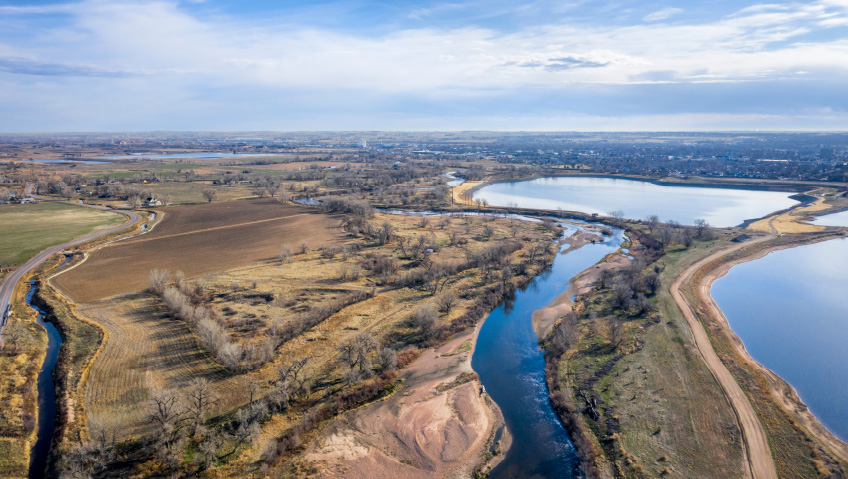
If all of this isn’t enough to encourage a visit to Durango, there’s a “Greatest Hits List,” Crosby says, including 100 miles of trails inside city limits, 300 miles of trails surrounding the city, the Animas River running through the heart of Durango for rafting, swimming, and fishing, and skiing just 30 minutes from town. There’s a new rope tow hill at Chapman Hill, the Durango Hot Springs, located within a 10-minute drive from town, and the historic Durango & Silverton Narrow Gauge Railroad that runs through the heart of the San Juan Mountains.
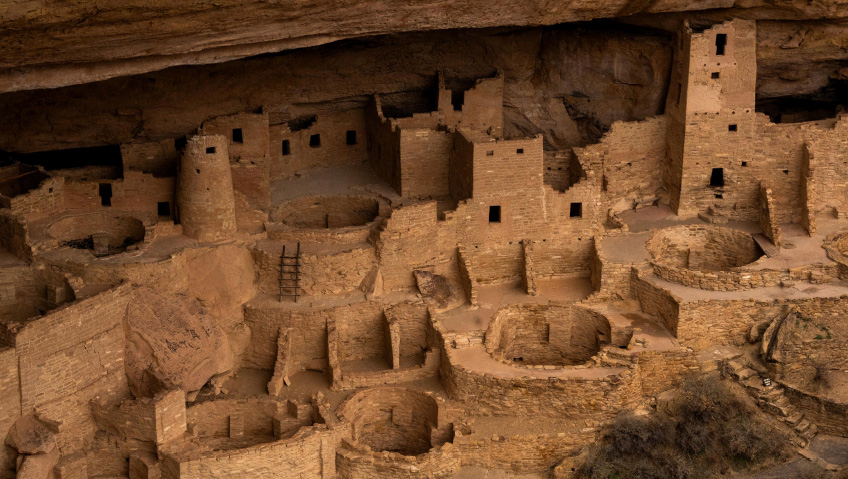
“I also can’t speak highly enough of our historic downtown shops and restaurants and art galleries,” says Crosby. “There’s an event nearly every single weekend: the Iron Horse bicycle classic over Memorial Day, the Autumn Arts Festival, our incredible weekly farmers market, tons of galleries and local public art, and Mesa Verde National Park less than an hour away,” he shares.
“It’s pretty easy to sell the highlights of what we have to offer to residents and tourists!”