
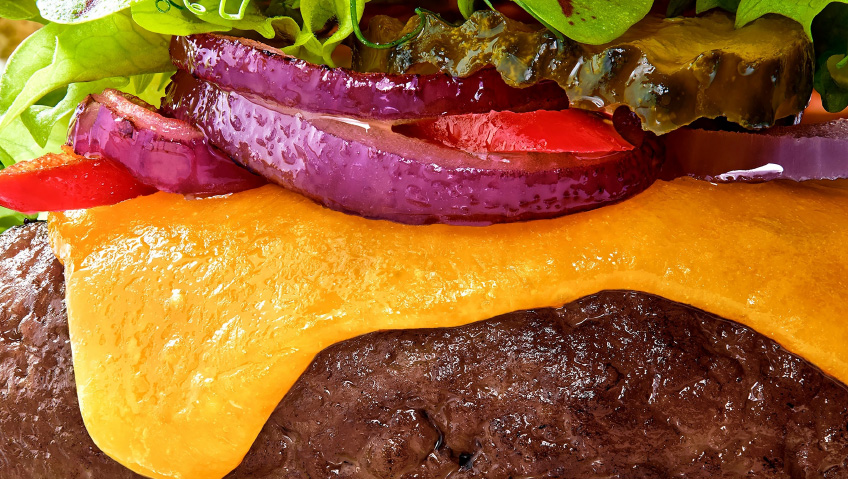
On August 5, 2013, a pair of taste testers at a London, UK press conference consumed what could be the most expensive hamburger ever assembled. The patty cost over $330,000 to produce, mainly because only a tiny portion of it came from a cow. Beyond some stem cells, the meat was grown in a laboratory at Maastricht University, Netherlands.
This first-of-its-kind synthetic burger was cooked by a chef named Richard McGeown. It was sampled by food critics Josh Schonwald and Hanni Rützler, who gave relatively positive reviews.
“There is quite some intense taste; it’s close to meat but it’s not that juicy,” stated Rützler, according to BBC News online coverage.
“I miss the fat; there’s a leanness to it, but the general bite feels like a hamburger,” added Schonwald.
The type of cuisine presented at the press conference goes by many names: cultured meat, in-vitro meat, clean meat, synthetic meat, cell-cultivated meat, or slaughter-free meat. As the name implies, cell-cultivated meat is derived from stem cells taken from live animals, and then grown into chewable portions in bioreactor tanks. It is a very different category than veggie or soy-based meat alternatives which are derived from plants.
Besides saving livestock from slaughter, cell-cultivated meat can reduce greenhouse gas emissions and speed the process of getting meat to market. Drawbacks include price, taste, texture, and public disdain.
Research and development for the burger served in London was paid for by Sergey Brin, co-founder of Google. This deep-pocketed source underlines the vast resources currently going into cell-cultivated meat. Such products are seen as a sustainable way of coping with rising meat consumption around the world.
“The Food and Agriculture Organization of the United Nations (FAO) anticipates that by 2032, global consumption of meat proteins will increase, as compared with 2020-2022, from 339 million metric tons of meat protein consumed to 382 million metric tons (13 percent increase). FAO attributes this potential increase in meat consumption to population growth and increased household incomes,” reads Cell-Cultivated Meat: An Overview published September 19, 2023, by the Congressional Research Service in the United States.
Creating cell-cultivated meat is a complicated process but can be reduced to some basic steps. First, a small number of stems cells—the building blocks for organ growth—are removed from a live animal such as a chicken, cow, or hog. Importantly, the animal is not killed during this process. Stem cells are then placed into bioreactors—large tanks that mechanically simulate the atmosphere found inside an animal body. Appropriate nutrients are also added during this stage. The stem cells diverge to form the basis of fat, muscle, or connective tissue—the main elements of meat. Cells are then separated and put through a procedure using scaffolding on which the meat grows.
“A scaffold is an edible material that supports the organization of meat cells into the desired shape, for example, a steak or mincemeat. The scaffold does more than just hold cells together. It also carries nutrients and helps them differentiate even further,” explains the article, Cell-based Meat and Other Cell-Based Foods posted December 3, 2025, on the European Food Information Council website.
If sparing livestock is the most obvious benefit of cell-cultivated meat, other advantages include a reduction in food-borne pathogens, improved food safety, and enhanced nutrition, as cultivated meat can be designed to have less fat and healthier attributes than traditional meat. Cell-cultivated meat requires drastically less land and water than farm-raised meat, and production is speedier and more convenient. It can take years for animals such as cows or pigs to reach maturity and be ready for slaughter. By contrast, the burger at the London press conference was cultivated over three months. As the technology improves, scientists will become even faster at developing meat.
Cell-cultivated meat could also solve storage problems in situations with limited space and minimal opportunity for resupply. Examples include long space missions, bunker situations during wartime, and isolated scientific or military bases. In such scenarios, meat products could simply be made on the spot so food supplies do not run low.
Cell-cultivated meat could be acceptable to vegans and vegetarians, and the concept might even broaden people’s palates. Using stem cells, scientists could in theory create choice cuts from endangered or rare animals without having to kill them. This in turn might put a dent in the exotic animal meat trade, which targets at-risk species to appease people’s taste buds.
As with any food products, regulatory approval based on stringent testing is required before this meat can be sold to the public. By mid-2025, four countries had granted such approvals, with a few other nations close to giving the okay.
Singapore proved to be a pioneer in this area, granting authorization for cell-cultivated meat sales in 2020, followed by the United States three years later. In July 2023, GOOD Meat and UPSIDE Foods began selling cell-cultivated chicken at Washington, D.C. and San Francisco restaurants, respectively. A year later, Israel approved the sale of cell-cultivated meat, followed by Australia in 2025. Legislators in the UK have also approved cell-cultivated meat, but only for pet food. Switzerland, Spain, and the Netherlands are poised to grant permission for commercial sales. In Canada, cell-cultivated meat is considered a novel food and subject to case-by-case health and safety assessments and approvals.
For all these regulatory and marketplace triumphs, however, there remains considerable pushback to cell-cultivated meat. The biggest hurdle currently is price; while the cost of making these foods has gone down considerably in recent years, it is still an expensive option. Part of the problem is that the kind of huge agribusiness infrastructure that supports the traditional meat sector is largely nonexistent.
The Congressional Research Service document points to a study that pegs the wholesale production cost of cell-cultivated meat at $28 a pound ($63 a kilo). To be profitable, such meat would have to retail at around $45 a pound (over $100 per kilo). Such prices might not deter dedicated foodies or wealthy environmentalists but would be extremely off-putting to average consumers.
Taste, texture, and an overall ‘ick’ factor also present major obstacles. The burger prepared in London initially had a pale appearance and bland taste. Beetroot juice and seasonings were added for colouring and flavour before the patty was presented to the food critics. But many people seem unwilling to even consider eating cell-cultivated meat, regardless of flavouring. Half of all respondents in a 2023 poll noted by the Congressional Research Service expressed little or no interest in consuming such products.
In May 2024, Florida Governor Ron DeSantis cited the ‘ick’ factor—along with off-the-wall conspiracy theories—in announcing a ban on cell-cultivated meat sales in the Sunshine State. Such products represent “the global elite’s plan to force the world to eat meat grown in a petri dish or bugs to achieve their authoritarian goals,” stated the governor. Yet while Governor DeSantis clearly is no fan, insect-eating, or entomophagy as scientists call it, has been an accepted dietary habit in certain parts of the world for thousands of years. Crickets, grasshoppers, ants, and beetles are commonly consumed in Mexico, Asia, and Africa.
Insects can be highly nutritious, are found in abundance, and might help address food insecurity, notes the paper Edible Insects as Future Food published September 2021 in the Journal of Future Foods. As with cell-cultivated meat, producing meals from insects rather than livestock could reduce water use and greenhouse gases while sparing animals from death.
For all that, bug-eating is generally regarded with intense distaste in Western nations, a fact readily acknowledged by the paper. Popular television programs such as Survivor and Fear Factor often feature gross-out contests where people are challenged to eat food items containing live insects, a taste trial portrayed as the ultimate ordeal. To some food pundits, such gruesome spectacles miss the point. Insects can offer another alternative to traditional, farm-raised meat, in that they can be ground into paste and turned into burgers, hotdogs, and sausages. Convincing Westerners to eat meat products made from creepy crawlies, however, might be a bridge too far.
Big Agriculture has been investing in insect-based food, but primarily as feed for livestock or pets. When it comes to human consumption, the big money is on cell-cultivated meat, not grasshopper burgers. The gamble is that once cell-cultivated meat becomes more commonplace, the public will become more willing to try it.
In June 2025, the United States Food and Drug Administration (FDA) approved the sale of cell-cultivated seafood made by a firm called Wildtype. Wildtype had previously raised $100 million in funding, some of which came from Cargill, one of the biggest agribusinesses in the world. Between 2010 and 2022 alone, roughly $3 billion of private capital was invested in cell-cultivated seafood and meat companies, estimates a group called the Good Food Institute. All of which suggests that, in a few years, grocery shoppers and restaurant patrons alike will have the opportunity to select poultry, fish, pork, or beef that was raised in a factory, not on a farm.