For an industry built on creating shared experiences, it makes sense that its trade association places connection at the center of everything it does. The International Association of Amusement Parks and Attractions (IAAPA) represents more than 10,000 theme parks, water parks, zoos, aquariums, and family entertainment centers across more than100 countries, along with the manufacturers and suppliers who build the rides, systems, and infrastructure that keep the industry moving.
Todd Andrus, Vice President and Executive Director of IAAPA North America, describes the organization’s purpose in simple terms. “Our mission really is about connecting,” Andrus says. “We bring the industry together. We create opportunities or environments for people to come together to network and learn best practices.”
That mission plays out across three core areas: networking events, education, and advocacy. IAAPA works with governments and industry stakeholders on policy issues affecting the attractions industry, from workforce development to emerging safety legislation around new technologies like drones. But it is the organization’s ability to bring people together physically, and to keep them informed, that Andrus points to most often as one of its defining strengths.
Robust regionalization
IAAPA operates worldwide, but its strategy for serving members has increasingly focused on strengthening its regional presence. Andrus oversees North America, encompassing the U.S. and Canada, while the organization also maintains dedicated Latin American, Asian, and European regions. On July 1st, IAAPA opened a new Middle East region, created to support what Andrus describes as a fast growing tourism and entertainment market. “We find that through regionalization, we get closer to our membership,” he says.
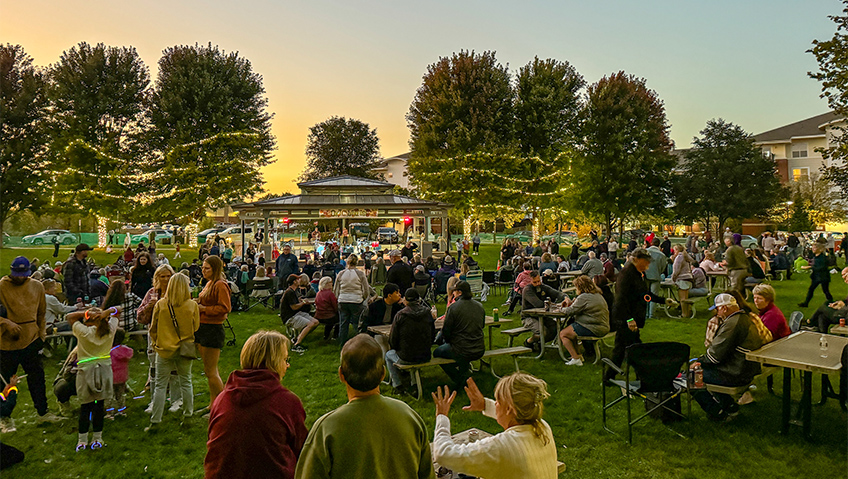
That regional structure shows up most visibly in IAAPA’s events calendar. The organization recently hosted a North American meetup at the Harley-Davidson Museum in Milwaukee, Wisconsin, drawing close to 100 industry professionals for tours, networking, and exploring event best practices. IAAPA also hosts regional expos alongside its flagship global event in Orlando, including a recent IAAPA Expo Asia in Hong Kong, creating opportunities for industry professionals to conduct business, build relationships, and participate in education tailored to the region.
Identifying industry shifts
Education runs through nearly all of these gatherings. IAAPA curates sessions using experts drawn from within the industry, covering topics ranging from safety and sustainability to marketing and food and beverage operations. The organization also runs monthly webinars—two to three each month—some of which are global in scope with others tailored to regional concerns.
One recent North American webinar series addressed a growing operational challenge of coordinated “social takeovers” in which large groups of teenagers target a specific attraction and overwhelm it. IAAPA produced both a webinar and a white paper on the issue, focused on helping operators recognize the warning signs and coordinate with local law enforcement before an incident occurs. For attractions professionals looking to formalize and advance their expertise, IAAPA also offers certification programs at both the professional and executive levels.
Andrus points to personalization as one of the clearest trends reshaping the attractions business right now. Ticketing platforms increasingly allow parks to tailor the guest experience based on past visits, offering targeted perks or front-of-line access, while some attractions have begun incorporating guests’ own likenesses directly into rides and displays.
A larger, more structural shift is happening alongside this trend. Many theme parks and attractions are working to own more of the guest journey, not just the time spent inside the gates. “They are looking to own the full funnel experience,” Andrus says, describing how operators now aim to manage everything from airport arrival through overnight accommodations, rather than ceding that part of the trip to outside hotels or booking platforms.
He cites several examples taking shape in the U.S. market. Nickelodeon is opening a hotel in Orlando with an accompanying water park, while a Mattel-branded theme park under development in Arizona will include its own hotel. Disney and Universal have run this model for decades, Andrus notes, but the approach is now spreading to a broader range of regional and mid-sized operators across the U.S. and Canada.
Shaping the future workforce
IAAPA employs approximately 150 people worldwide, and Andrus is candid about the qualities the organization looks for when hiring: direct, lived experience within the attractions industry itself, ideally paired with some history of involvement with IAAPA specifically.
Andrus’s own path illustrates the pattern. He brings 26 years of industry experience, having worked at SeaWorld, Busch Gardens, Merlin Entertainment, and Premier Parks, a North America-based attractions group. He spent six years volunteering with IAAPA, including helping curate educational programming for IAAPA Expo, before joining the organization’s staff six months ago. “I’ve always gone to Expo,” he says. “I helped curate our educational experiences that we showcased at IAAPA Expo. Having that kind of involvement is super important from an IAAPA perspective.”
Andrus also speaks to the industry’s broader role as a training ground for new workers. Attractions and parks are frequently a person’s first job, and the attractions industry treats that responsibility seriously. “We take great pride in that we’re shaping the workforce of the future,” Andrus says. He points to the soft skills a first job in attractions instills—showing up on time, engaging with customers, and staying approachable—as lessons that stay with workers well beyond their time in the industry, even for those who eventually move into other fields entirely.
Celebrating sustainability
Every IAAPA region maintains a sustainability task force made up of member companies tasked with advising the organization on best practice and helping guide the industry’s long-term approach to environmental responsibility. That work has produced tangible results. IAAPA Expo Europe, scheduled for late September in London, has been certified as a sustainable event, with the organization’s sustainability team working directly with the venue and exhibitors ahead of the show.
Andrus also points to a recent trip to Xcaret, an ecological resort in Mexico that combines multiple parks with several hotels on a single property, as an example of sustainability and guest experience working in tandem. IAAPA hosted its IAAPA Honors awards ceremony there, and Andrus came away impressed by the property’s approach to photography. Guests receive an RFID wristband at check-in, allowing them to scan stationed cameras throughout the park and have photos automatically routed back to their hotel room for review that evening.
“It just took that whole ‘taking your phone out’ aspect out of the picture, and you could be present,” Andrus says of the experience, noting how the technology let multigenerational travel groups, including relatives back at the hotel, follow along with a family’s day without anyone needing to stop and reach for their phone or camera.
Benefits of belonging
Asked what members gain most from their involvement with IAAPA, Andrus breaks it down into three areas: connections, insight into industry innovation, and education. The connections, he says, function almost like a standing professional support network. Because IAAPA brings together operators from non-competing markets from around the world, members can build relationships and speak openly about shared challenges with industry peers.
“I was able to pick up the phone and call somebody that I had met at an IAAPA event,” Andrus says, describing how that kind of relationship has helped him work through business challenges while working at attractions.
The organization’s expos also give members early exposure to new technology and equipment before it reaches wider adoption, while its education sessions, delivered in 45-minute to hour-long formats, cover practical operational ground in marketing, food and beverage, and safety.
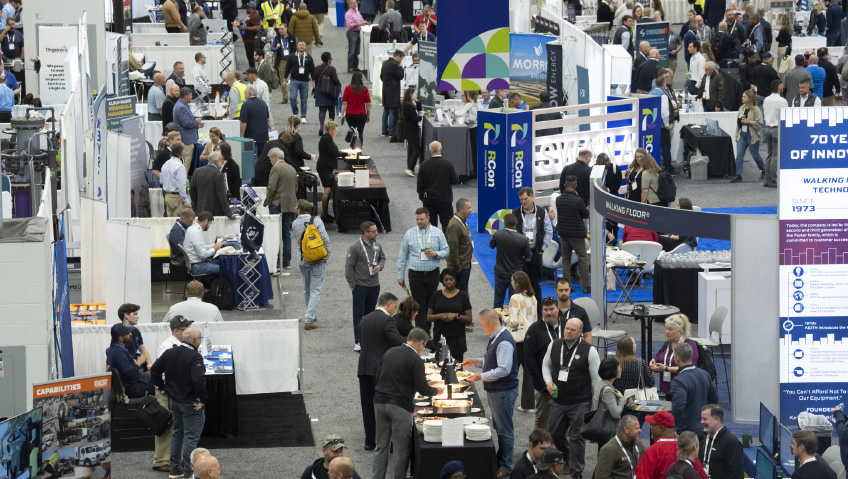
At the center of IAAPA’s events calendar remains its flagship global event, IAAPA Expo, in Orlando, scheduled for November 16th through 20th. This year’s event is set to be the largest in the organization’s history, with more than 40,000 attendees and over 1,100 vendors expected throughout the week. For the first time, IAAPA Expo will expand into the Orange County Convention Center’s West Building, a new hall, adding its west building, in addition to its existing north-south footprint and increasing total floor space by roughly 50 percent.
The education program is expanding alongside it. Andrus says this year’s Expo will include the most education sessions IAAPA has ever offered, with more than 20,000 attendees expected to take part in programming over the course of the week. “It’s really all designed for attraction professionals to be able to come in and move their business forward,” he says.
For an industry that depends on creating memorable, in-person experiences for its guests, IAAPA has built its own version of that model for the professionals who run it—bringing people together, keeping them informed about where the industry is headed, and providing a global network they can lean on when new challenges arise. As the attractions industry continues to evolve and expand its footprint, from full-funnel guest experiences to new hotel and resort partnerships, IAAPA’s role as a global connector and resource for the industry is positioned to grow alongside it.