
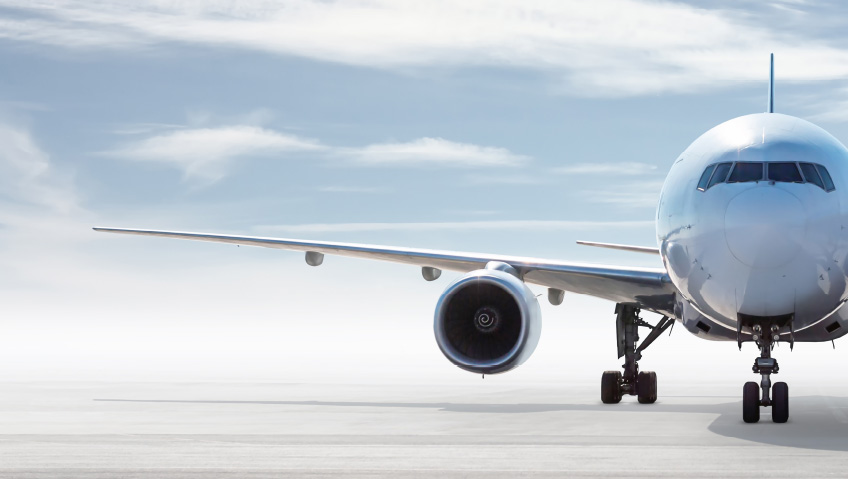
Every year, there are an estimated 40 million commercial flights worldwide, and airports of all sizes are adapting to the rising number of travelers by becoming more user-friendly than ever before…
When brothers Orville and Wilbur Wright made the first engine-powered flight near Kitty Hawk in North Carolina back in 1903, they never could have predicted how that day, Dec. 17, would birth the entire aviation industry. Long afterwards, Orville quipped, “After all these years of experience, I look with amazement on our audacity in attempting flights with a new and untried machine under such circumstances.” The bicycle shop owner was on the mark referring to their “audacity,” especially considering the first flight traveled just 120 feet at 6.8 miles per hour. Despite the flight lasting a mere 12 seconds, it changed the world forever.
For many, the short flight was a novelty. For others, it presented genuine business opportunities. In 1914, just over a decade after the Wright Brothers made history, Percival Elliott Fansler helped create the world’s first scheduled airline. A Florida entrepreneur skilled in marine diesel engines and electrical engineering, Fansler worked with airplane designer Thomas Benoist on an air service between St. Petersburg and Tampa. Dubbed SPT Airboat Lines, the flight cost $5 one-way, $10 return. Although the trip lasted just 20 minutes, it proved that aircraft could be routinely routed and scheduled like locomotives or ships.
Early airports were focused on government and military use, eventually expanding into transporting cargo and civilian passengers. While there are still countless small private and public airports worldwide, major cities such as Chicago, Montreal, London, Paris, Dubai, and Shanghai are home to “airport cities.” The 1930s saw the rise of massive, multi-terminal airports in cities like New York and Chicago to handle larger amounts of passengers.
By the 1960s and ’70s, airports were becoming larger, sleeker, and modernized. Some, like the San Francisco International Airport (SFO)—which turns 100 next year—started as airstrips in the middle of a field. Back in 1927, SFO served 19 passengers in its first month, according to the SFO website. “Today, as a major international gateway to more than 125 destinations, SFO is one of the nation’s most innovative and busiest airports, serving more than 53 million passengers per year.”
Over the decades, airports have evolved from places where we meet or drop off family and friends taking a trip to something much bigger and more elaborate. Tired food and drink options have been replaced by Starbucks, VIP lounges, and big-name celebrity-led restaurants from Guy Fieri, Wolfgang Puck, and Lynn Crawford. Don’t feel like a fast-food burger? No problem, since spots like LEE Kitchen at Toronto Pearson International Airport (YYZ) have Asian and French-inspired dishes to please practically every palate.
Instead of sitting on an uncomfortable chair while waiting for your flight to board, why not take advantage of a cozy sleeping pod, or get a massage at a relaxation station? Still a few hours until takeoff? Major airports like Singapore’s Changi Airport (SIN) and India’s Indira Gandhi International Airport (DEL) have movie theaters, while Hong Kong International Airport (HKG) is home to the world’s first airport IMAX theater. And although not every airport has an onsite fitness centre, some, like the Dubai Airport (DBX) and Qatar’s Hamad International Airport (DOH), boast gyms, saunas, steam rooms, pools, hydrotherapy tubs, and even golf simulators.
Becoming increasingly commercial, airlines came up with now-legendary taglines to convey warmth. One of the most iconic, “Fly the Friendly Skies,” a multi-million-dollar ad campaign created for United Airlines in the mid-Sixties, and resurrected in 2013 to appeal to today’s travellers.
Indeed, the economic impact of major airports is enormous. A 2024 report prepared for the San Francisco Airport Commission stated the award-winning airport was a major employer, handling 153,000 tons of cargo in 2024, worth $42.8 billion USD. Cargo operations alone supported about 97,000 jobs in logistics, warehousing, freight, and other related areas. All told, SFO was responsible for almost a quarter of a million jobs and added $52.5 billion USD to the U.S. economy.
There are almost 20,000 airports across the United States, ranging in size from the sprawling Denver International Airport (DEN) at 52.4 square miles to small local airports with basic amenities, like Wi-Fi and grab-and-go food.
As airplane travel grew and became more commonplace, airports worldwide have expanded to keep pace with more cargo and travellers. Jets have become larger, requiring new airports to be built to handle planes like the Airbus A380. At 73 meters in length and with a wingspan approaching 80 meters, the A380 carries over 850 passengers (in an all-economy layout).
But, although airports are often responsible for thousands of direct and indirect jobs and are essential to today’s travel and movement of cargo, citizens often oppose their construction. Citing loss of farmland, noise and air pollution, increased traffic, and other reasons, some airports have had expansions delayed or projects entirely halted.
Back in 1972, Canada’s federal government expropriated about 18,600 acres in the then-Township of Pickering, Ontario, planning to build an airport. Protests were immediate, and the proposed Pickering Airport was in limbo for over half a century. Finally, in early 2025, it was announced that most of the land would be transferred to Parks Canada with the goal of expanding the Rouge National Urban Park. “Following our Government’s engagement with community members, we’re thrilled to announce that an airport will not be built on the Pickering Lands,” stated Jennifer O’Connell, Member of Parliament for Pickering-Uxbridge, in a media statement at the time.
Located about a 40-minute drive from Pickering, Toronto is experiencing an airport controversy all its own. Politicians, the public, and businesses have repeatedly stated the need for Canada’s largest city to be “world-class,” with airports driving the economy, accessibility, innovation, and tourism. And while many support downtown airports, they have more than their share of detractors, especially local residents.
One of the most controversial is the proposed expansion of Billy Bishop. On Toronto Island and operated by the Toronto Port Authority, Billy Bishop Toronto City Airport (YTZ) services over 20 cities in Canada and the U.S. Several groups, including concerned citizens and No Jets T.O., have long opposed jet aircraft at Billy Bishop. Some reasons cited include more air, water, and noise pollution, traffic congestion and gridlock, and the potential cancellation of thousands of new home builds.
The Province of Ontario passing legislation in June to acquire City-owned airport lands made talk of expansion even more controversial. Opinions are mixed, with The Globe and Mail recently publishing articles about the benefits of a larger downtown airport. One recent editorial, Toronto’s island airport should be allowed to grow, stated it was unrealistic for anyone buying or renting homes near the airport (which was established in 1939) not to expect growth. “It’s not reasonable for them to demand the airport be frozen in time, or to limit its financial viability by preventing growth.” And while critics cite increased noise pollution, the editorial says smaller jets, like the Airbus A220, “are on par or quieter than regional turboprop planes that currently fly into Billy Bishop.”
The population of the Greater Toronto Area (GTA) is about 7.8 million, with 3.3 million residents in Toronto itself. The fourth-largest city on the continent, Toronto is a major economic centre. Owing to this, the Toronto Region Board of Trade strongly favours airport expansion. In late 2024, the Board stated that Billy Bishop serves over two million passengers annually and injects $2.1 billion into the local economy.
“From Bay Street executives to emergency medical flights, from Windsor and Thunder Bay, Halifax and New York, this airport connects our city to 20 North American destinations and supports more than 4,450 direct jobs,” stated the Board on its website. “In an era when Toronto’s productivity is faltering and our reputation for livability is under scrutiny, can we really afford to be tepid about such a crucial piece of infrastructure?”
While the future of Billy Bishop’s expansion is unclear, the value the world’s airports bring to travellers, shippers, and the overall economy cannot be underestimated. Yet the debate unfolding in Toronto also reflects a broader question facing cities around the world: how do we balance the economic benefits of aviation with the environmental, social, and quality-of-life concerns of the communities that surround these hubs?
More than a century after the Wright brothers’ 12-second flight at Kitty Hawk, aviation has become so woven into everyday life that it is easy to forget just how remarkable it is. Airports are no longer simply places where planes land and take off. They have evolved into economic engines, employment centres, shopping and dining destinations, and gateways that connect people, cultures, and commerce on a global scale. Every year, tens of millions of flights carry billions of passengers and vast quantities of cargo, making modern airports as essential to the global economy as seaports and railways once were.
As passenger numbers continue to climb and aircraft technology advances, airports will almost certainly keep evolving. Some will expand, others will modernize, and still others will face fierce public opposition. The conversation will continue to centre on competing priorities—economic growth, environmental stewardship, urban planning, and the needs of local residents. If history is any indication, airports have never stood still.