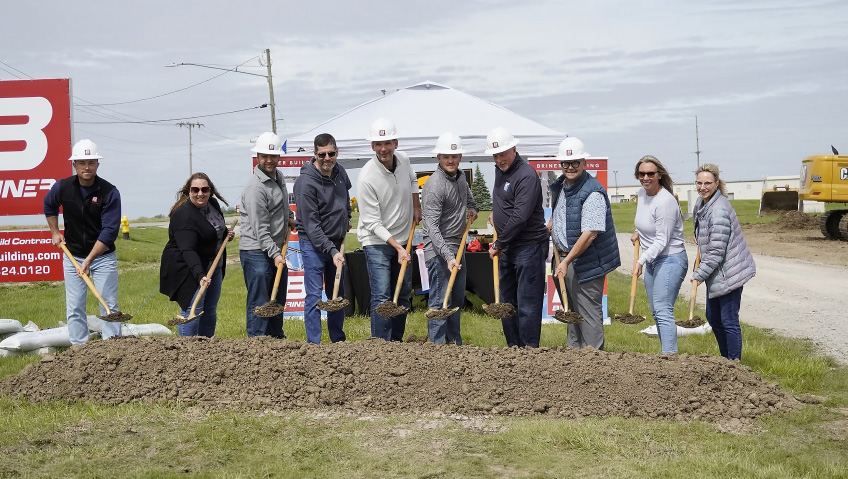
In Wells County, Indiana, humans matter. With its collective values firmly rooted in the health and well-being of its 29,800-strong population, this lovely, burgeoning region is creating its own prosperity through hard work, economic progress, and education. The result is growing, family-oriented communities that see the prosperity and longevity of local businesses as crucial to the area’s future prospects.
The county’s big picture growth strategy is achieved in various ways. In its efforts to draw and retain private investment, the Wells County Economic Development Corporation (WCEDC) focuses on continuous infrastructure improvements while actively reaching out to prospective new arrivals who are handsomely incentivized to establish themselves here. The cumulative outcome of the corporation’s economic development efforts has been a significant improvement in local utility supply, transportation infrastructure, and broadband connectivity.
With shovel-ready sites, Wells County’s location, infrastructure, and access to major transportation veins all contribute to its appeal as a future-forward location with the means and business savvy needed for further development.
Where business booms
Home to around 10,000 people, its county seat, the City of Bluffton, was once a gas boom town and one of the first to have paved roads, leading it to become known as “The Parlor City” for being “as clean as a parlor” during a time when most streets were commonly either dusty or muddy. Wells County’s other fast-growing towns include Ossian and Markle, amongst others. And while its communities are expanding at an impressive rate, the county really takes care of prospective businesses looking to relocate here by providing state-based, dollar-for-dollar cashback credits and a county-based relocation cost abatement and workforce assistance, plus low equipment investment taxation.
As a result, Bluffton, Ossian, and Markle have seen impressive changes over the past few years. Poised for the significant growth of its industrial park, workforce, and wages, the town of Ossian is proud of two new housing developments that are underway as a result of a powerful regional economic upsurge.
Moreover, the state’s fastest-growing town, Markle, is known for its beauty and higher wages. Markle also happens to be divided by the borderline of the counties of Wells and Huntington. The happy outcome is that, with fabricators relocating from Illinois and Michigan, much of Allen County’s growth is positively impacting Wells County.
In response to this economic boom, Wells County’s housing sector is also expanding. In particular, its section of Markle is experiencing high housing demand. With Wells County offering low taxes, a lower cost of living, and quality schools and amenities, the town of Markle has responded to the demand with a considerable housing development, of which phase one is already fully occupied. It is now moving into phase two of the project.
If you build it, they will come
In its early days, Wells County was under the management of Allen County before establishing itself as an independent entity in the late 1830s. While the town of Zanesville now also spans both counties, the friendly neighbors regularly join forces on regional advocacy and infrastructure.
Now, following the implementation of numerous well-executed strategies to develop its many sectors and overall infrastructure, leaders in logistics, agribusiness, and advanced manufacturing find Wells County an ideal location for their facilities. To accommodate growing demand from industry, Bluffton Industrial Park is working on a new 100-megawatt electrical capacity that will be rolled out in 2028 alongside its existing 249 acres of available land.
The county has also invested $16 million in its water supply and other infrastructure, with a specific focus on improving food production capacity. Ossian’s industrial park has had significant drainage improvements to improve the quality of its shovel-ready sites within five miles of local railway access, and the town also has large-scale electricity and natural gas infrastructure in place.
Of course, it helps that the local workforce has a longstanding reputation for being particularly industrious. Public statistics show just under 20,000 resident workers, of whom just under 15,000 live and work in the county, with nearly 2,700 commuters entering the county daily from elsewhere, actively contributing to the local economy.
As a result, forward-thinking businesses choose Wells County for its capable workforce, integrated and proactive leadership models, competitive overhead costs, and quality of infrastructure. Wells County is also superbly accessible. Situated right on Interstate 69, and connected to U.S. Highways SR1 and 224, the county has direct routes to all corners of the United States, within a day’s truck drive of around half the American population.
It also has international access to important ports on the Great Lakes at Indiana-Burns Harbor; in Toledo, around two hours away; and in Detroit, roughly three hours away. Its dependable rail service offers national connectivity, and Wayne County Airport, Detroit Metropolitan, Indianapolis International Airport, and Fort Wayne International Airport are all within a three-hour drive.
Amenities for all
Committed to creating quality of place, Mayor Scott Mentzer is leading with the idea that for communities to remain healthy, they must have access to what he calls good, safe, and affordable “third places”—places beyond work environments and home—where people gather and meet. “I think we’ve become isolated. And I’m trying to create momentum about breaking down that isolation and having people gather again, connect again, and create connectivity,” Mayor Mentzer says.
“The quality of our public places signals what we believe we deserve,” he adds. Based on this maxim, the county is continuously recreating itself in ways that make people want to stay.
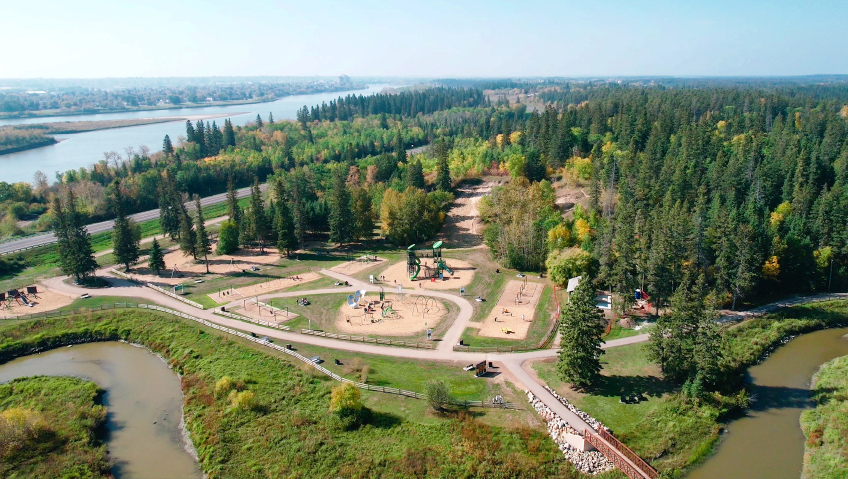
One such new landmark amenity is the Wells County Community Aquatic Park in Bluffton. As a county-wide effort, the park was funded by a number of visionary stakeholders and designed to be accessible to all demographics, with a design that is modern, fun, and packed with activities. The best part is that it is unbelievably popular, with attendance in the first weeks surpassing the previous year’s visitors’ volumes of its original 51-year-old swimming pool by 40 percent. This year to date, it has gifted 3,600 tickets sponsored by generous business owners to local residents.
The generous people of Wells County also ensure that every child has access to all its wonderful amenities and extra-curricular opportunities. The Wells County Foundation assists families in covering the costs of children’s participation in sport, the arts, and school activities, while other organizations with similar missions include Women in Leadership, The Women of Light, and the Wells County Chamber of Commerce.
Furthermore, the economic development team also endeavors to provide the local workforce with quality job opportunities. These efforts include preempting investors’ workforce needs and curating and developing local talent through workforce training and related partnerships in ways that complement prevailing industries.
Diversifying the economy
In the process, the team is looking to further expand the county’s economic prospects by diversifying its industrial profile. By focusing on providing suitable sites with high-volume water and power supply and other business resources, it aims to draw more companies serving the defense, agricultural technology, and aerospace industries.
“With our collaboration with local governments and utility partners, we have improved transportation, utility, broadband, and shovel-ready sites to keep supporting our growth,” says Jessica Beste, Director of Economic Development.
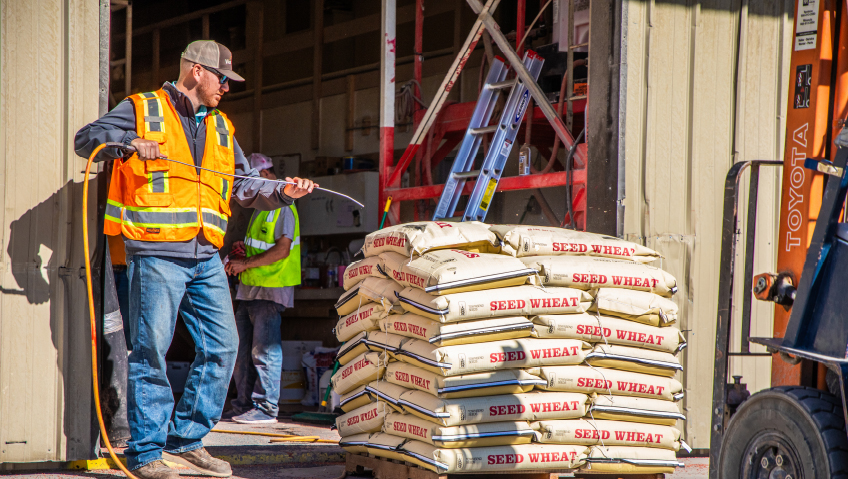
As a historically agricultural region, a considerable part of Wells County’s existing gross domestic product is derived from crops like wheat and soybeans and their subsequent food processing facilities and value-added agricultural products and services.
Thanks to its expansive technical education offerings, strong logistics and storage industries, and accessibility, alongside generational fabrication expertise, advanced manufacturing, precision machining, and cleanroom facilities, medical fabrication has also found a comfortable home here. From automotive OEMs and metal and plastic fabrication to wood and food production, Wells County is known for innovation and a proud tradition of craftsmanship.
Building the future
As the region continues growing, expediting housing development and redevelopment is a priority, as is providing affordable childcare in order to maintain its workforce as a family-oriented region. To this end, two three-year aid pilot programs assist families with childcare bills from state-registered providers. On the trishare plan, one-third of the cost is settled from regional Northeast Indiana funds, while employers cover one-third and employees another. On the coshare plan, higher-income employees equally divide the cost of childcare with their employers.
In the county’s bid to provide sufficient, quality affordable housing, the WCEDC collaborates with multiple stakeholders on work that dovetails with establishing its Skilled Workforce Pipeline. As part of this initiative, students from the school districts of Bluffton-Harrison, Southern Wells Community Schools, and Norwell Community Schools all receive a K-12 education informed by local business requirements to ensure that they develop the necessary academic and technical acumen they need before choosing from a selection of post-secondary institutions where they can further their studies.
“While industries evolve and markets change, one thing that has remained constant in Wells County is our culture of people who believe in building for the next generation. That commitment to innovation, stewardship, and community is what continues to make Wells County a place where businesses don’t just locate to, but they put down roots and grow. Wells County Economic Development (WCEDC) is proud of that,” says Beste.
As part of the development of adult learners and young students alike, the corporation has built alliances with local trade schools and colleges and the towns of Southern Wells, Norwell, and Bluffton Harrison, alongside Area 18 Career & Technical Education (CTE), which has proven tremendously successful over the past half-decade. The greater education system also accommodates employer engagement through curated training, apprenticeships, internships, and other means.
As Indiana’s biggest, this local CTE cooperative provides students with current, industry-relevant training and experience. High standards are maintained by interest groups engaging directly with industry and collecting relevant information, which is then processed and applied in coursework to ensure that student education remains relevant and in stride with the times.
A separate exploratory group gathers all manufacturers in Wells County to identify areas for improvement in employee education, and the CTE cooperative responds with relevant training for students and employees. This is followed by on-site, hands-on skills training in local manufacturing facilities.
The organization also gives students from eight high schools across Wells, Blackford, Jay, and Adams counties the opportunity to earn dual college credit and industry certifications toward their qualifications. There were 6,007 students enrolled in the program for the 2025-26 school year, with areas of study including Public Safety, Business, Agriculture, Health Sciences, Information Technology, Automotive Technology, Construction Trades, Precision Machining, Welding, and Advanced Manufacturing.
Beyond its school districts, Wells County benefits from Northeast Indiana’s wide choice of post-secondary institutions. These include Ivy Tech Community College, Indiana University Fort Wayne, Purdue University Fort Wayne, Indiana Wesleyan University, Huntington University, Manchester University, Indiana Tech, Trine University, and the University of Saint Francis. Considering the vast selection of study fields these schools collectively offer, Wells County residents enjoy incredibly high standards of education, especially for a rural community.
The WCEDC has partnered with Adams Wells Manufacturing Alliance (AWMA) to conduct convocation days, career exploration, and readiness with the area’s schools. WCEDC also hosts influencer tours and manufacturing day tours, and collaborates with AREA 18 to provide career readiness and internships, while the local Chamber of Commerce hosts career expos.
Northeast Indiana is not all about work, however. It also invests generously in the development of the arts, as proven recently when a combined $65 million in READI 2.0 Arts and Culture grants were awarded to nearly 50 statewide projects from Lilly Endowment funds. Sources claim that these projects are forecasted to earn the local arts economy just under $370 million. Northeast Indiana received just short of $11 million of the overall grant for six projects, one of which, the Parlor City Digital Projection, was initiated in the city of Bluffton. A permanent digital installation used as a regional arts and mapping tool is being projected onto the front of one of its oldest buildings. The project received $354,062 from the READI Award and cost around $478,000.
The WCEDC is clear regarding its vision for the future, and with so many incredible partners on board, the path ahead looks promising. As Beste says, “Wells County Economic Development Corporation believes economic development is about creating a future worth investing in. We are committed to supporting responsible growth, expanding opportunities, strengthening our workforce, and building communities where businesses succeed, families thrive, and future generations choose to stay, return, and invest.”