“Tarboro is small enough where everyone knows who you are but big enough for varied daily activities,” says Town of Tarboro Mayor, Tate Mayo.
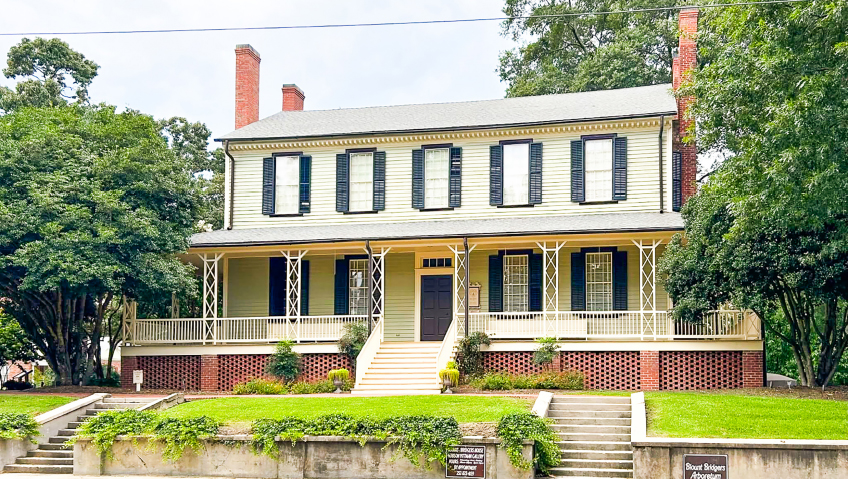
“We have a rich history that dates back to 1760 that makes itself apparent just by walking downtown and through our historic district. Hosting one of two original Town Commons in the United States, you can walk seven blocks from our Riverfront Park to the Town Common and feel right at home.”
One of Tarboro’s greatest strengths is the ability to maintain a genuine small-town sense of community, agrees Troy R. Lewis, Town Manager.
“People know their neighbors, local businesses know their customers, and there’s still a strong connection between our residents, our schools, our churches, our businesses, and local government,” Lewis says. “That creates a quality of life that is increasingly difficult to find. For residents, it means being part of a community where people are invested in one another.”
Tarboro’s economic history has long been tied to transportation and trade, developing along the Tar River and becoming an important river port during the 18th and 19th centuries. In many ways, transportation helped create Tarboro.
“Tarboro has a long history of trade dating back to colonial times when we utilized the river for trade,” says Mayo. “We were the furthest upriver port on the Tar-Roanoke River. With the advent of rail, the decline of river trade began and caused a greater shift to trade by rail.”
Today, a rail line that runs through town serves the town’s industries, with all rail capabilities greatly augmented in 2021 with the opening of CSX’s Carolina Connector Intermodal Terminal, allowing for goods to leave the town and make it to an inland port less than 20 miles away to be easily and speedily transferred to trucks or shipped by rail to the ports of Savannah, Norfolk, Wilmington, and Morehead City.
The Carolina Connector, located locally in Edgecombe County, allows containers to be transferred efficiently between trucks and trains. The facility was designed to improve connections to domestic and international markets and North Carolina’s ports. “For industry, that is a tremendous advantage. A manufacturer does not just look at the cost of land or a building anymore; they look at the entire supply chain,” Lewis adds. “They want to know how quickly raw materials can arrive and how efficiently finished products can reach customers and ports.”
Having that intermodal capability in the immediate region gives Tarboro and Edgecombe County a logistical advantage that many rural communities simply don’t have. There’s also a very strong industrial location within Tarboro itself at the Tarboro Commerce Center, a park that is home to Astemo, Prudential Stainless & Alloys, Piedmont Natural Gas, and Amazon, along with approximately 45 acres of pad-ready industrial property remain available for development. The Commerce Center is adjacent to U.S. 64, the future I-87 corridor, and is served by town water, sewer, and electric utilities. The Carolina Connector is within a short drive, giving Tarboro an immediately available site for companies that may not require the scale of the Kingsboro Business Park—rated by consulting firm Jones Lang LaSalle as the only shovel-ready and competitive megasite in the state of North Carolina—but still want excellent infrastructure and access to multiple modes of transportation.
“Kingsboro is one of the most important economic development assets in our region because one of the biggest factors in industrial recruitment today is speed to market,” Lewis explains. “Companies considering major investments don’t necessarily have several years to assemble property, extend infrastructure, complete environmental studies, and work through all of the other issues associated with developing a large industrial site. They want to know that a community has done its homework and is ready to move.”
That is where Kingsboro distinguishes itself, he adds. The Kingsboro Business Park is a CSX-served industrial site between Tarboro and Rocky Mount with infrastructure including water, sewer, electricity, natural gas, and telecommunications. Significant due diligence on the site has already been completed, and the site has highway, rail, and intermodal access.
For Tarboro, landing a major employer at Kingsboro would have impacts well beyond the site itself. It can create employment opportunities, increase demand for housing, support restaurants and retailers, create opportunities for suppliers and contractors, and strengthen the tax base throughout the region. Like many small communities, one of Tarboro’s biggest challenges is maintaining and replacing aging infrastructure while keeping services affordable for residents—water, sewer, electricity, roads, stormwater, parks, and public facilities all require continued investment. Construction costs have increased substantially, so communities must be increasingly strategic about how they prioritize projects and leverage state, federal, and grant funding.
“Housing is another significant challenge and one that is increasingly connected to our economic development efforts,” Lewis shares. “Tarboro has seen tremendous growth through infill development in recent years, which has been very positive for the community. However, a recent housing assessment identified a significant need for additional housing. We need to continue improving and expanding our housing stock at a variety of price points.” As the town continues to recruit businesses and industries and create new employment opportunities, having quality housing available for the people who will fill those jobs becomes an important part of the overall economic development strategy.
The greatest challenge is the perception of workforce availability, adds the Mayor. “Our workforce is here and very close around us, but this is a constant talking point around the tables of development. We draw a workforce from 11 counties here in Tarboro. If there is work to be had, there will be people to work those jobs.”
He explains that the Town of Tarboro is continually able to keep taxes, electricity, water, and sewer rates lower than any other community in proximity to it.
“One of our accomplishments has been continuing to invest rather than simply maintaining the status quo,” adds Lewis. “We have made significant public investments in our downtown and riverfront, including improvements designed to better connect Main Street with the Tar River.”
Those public investments complement significant private investment that has occurred downtown through projects such as Taps on Main, Granville Lofts, Riverview Lofts, the former Cherry Inn property, and other historic rehabilitation projects.
“I’m proud that we continue to look beyond individual projects and think about what Tarboro should be 10, 20, or 30 years from now,” says Lewis. “The challenge for a community like ours is to pursue progress without losing our identity. We have been successful in recognizing that historic preservation, quality of life, housing, infrastructure, and economic development can support one another rather than compete with one another.”
The town’s economic development in particular has been impressive, and the past two years have seen a number of developments, creating significant jobs and investment: from Amazon, a $15 million investment and 100 jobs; from Prudential Stainless & Alloy, a $10 million investment with 30 jobs; expansions including that of LS Cable & System, a $50 million investment and 85 jobs; Astemo’s $44 million investment with 52 jobs; and Madem-Moorecraft’s $2 million investment, bringing 37 jobs. “$96 million—or approximately 80 percent of this investment—has come from existing industries, highlighting that Tarboro is a great place for business and industry to be successful,” says Lewis.
Tarboro is also currently making “very active headway” into finding more developable land to establish a new industrial park. The town has seen a massive boom in housing supply, expanding the housing stock by around 300 units in the past few years, with over 300 more currently on the books to be constructed.
“We’re also currently placing a great amount of attention into revitalizing the downtown,” Mayo adds. “This includes a bulkhead at Riverfront Park, revitalizing the Courthouse Square, and currently, using grants to help businesses downtown revitalize their storefronts.”
The town also plans to continue improving and expanding its housing stock; a good example is a recently approved 191-unit single-family and multifamily subdivision.
Another major milestone is continuing to improve recreational facilities and public spaces and move forward with projects such as a new farmers market.
“Those may seem like smaller projects when compared with a megasite, but quality-of-life investments are increasingly part of economic development,” Lewis says. “When companies recruit employees, those employees want good parks, recreation, restaurants, housing, events, and attractive public spaces.”
Ultimately, the milestones he wants to see are sustainable growth, additional jobs, new housing, continued downtown investment, additional industrial development, and a stronger tax base, while Tarboro remains recognizably Tarboro.
As for special events and activities, the town has many to share, including its “huge” football culture. “Our Tarboro High School Vikings have won 10 state championships, and the people of our town are very proud of our school and team,” says the Mayor.
The town also hosts a great number of events downtown throughout the year, including a summer concert series, a bluegrass festival at Riverfront Park, carriage rides at Christmas, pop-up markets, and pickleball courts on the Town Common; there are an endless number of events for all interests in Tarboro, and the Christmas season in particular is a special time, with the Christmas Parade and the Downtown Christmas Crawl along with numerous other community activities, while the year begins with the New Year’s Ball Drop. As the weather warms, events such as SpringFest, Blue Ribbon Kids Day, and Happening on the Common bring residents and visitors together on the historic Town Common. The Tarborough Faire is a free, family-friendly Renaissance Faire, while the Downtown Summer Music Series provides live music and another reason for people to come downtown, visit local businesses, and spend time together.
“These events are very different from one another, and that variety says something about Tarboro,” Lewis says. “There are opportunities for families, music lovers, history enthusiasts, outdoor recreation, and people who simply enjoy getting together with their neighbors.”
The Tar River itself provides opportunities for fishing, boating, and paddling, and parks and recreational facilities provide year-round activities. “Taken together, these festivals, sports, traditions, and community gatherings are more than entertainment; they’re part of what creates a sense of place,” says Lewis.
The goal, he stresses, is not to become something different simply for the sake of growth, but to promote economic development and new investment while also preserving the qualities that make people want to live, work, and raise a family in Tarboro in the first place. “That really gets back to what makes Tarboro special,” he says. “We have a remarkable history, but we’re not interested in simply being a historic town that looks backward. We want to use that history and our sense of community as the foundation for what comes next.”
Tarboro can offer a company sophisticated infrastructure, rail and intermodal access, and proximity to major markets, while still offering employees the quality of life and personal connections of a small town. “That combination of historic character, community, quality of life, and modern economic opportunity is the story we want to continue telling about Tarboro.”