For decades, East Hartford, Connecticut, existed in the shadow of its larger neighbor across the river. Known as a blue-collar industrial community with a high mill rate and modest income levels, the town often struggled to define itself beyond outdated perceptions. Today, however, East Hartford is undergoing a profound transformation, one shaped by bold leadership and a renewed sense of civic pride.
At the center of this evolution is Mayor Connor S. Martin, now in his second term, whose administration is redefining what it means to live, work, and invest in East Hartford. Through ambitious revitalization projects and a deeply personal commitment to community well-being, Mayor Martin is steering the town toward a future anchored in accessibility and opportunity. “The main reason for wanting to improve quality of life is to give residents value in the taxes that they already paid for,” he says.
That philosophy of transparency and accountability has become the foundation of East Hartford’s transformation.
Quality of life is more than infrastructure or economic metrics in East Hartford. For Mayor Martin, it means access: access to leadership, access to information, and access to essential services. “I’ve always believed that government should come to the people, not the other way around,” he says.
That belief has taken shape through a series of initiatives designed to remove barriers between residents and town leadership. Monthly “Lunch or Dinner with the Mayor” sessions, in-person business visits, bi-weekly “Ask the Mayor” forums, and the widely viewed “Mayor’s Minute” updates ensure residents stay informed and engaged.
Beyond transparency, the town has invested heavily in making services easier to access, especially for East Hartford’s highly diverse population. As the second-most diverse municipality in Connecticut, language barriers once limited residents’ ability to access public services. That is now changing through the implementation of a comprehensive Language Access Plan, which integrates certified translators and real-time language line technology into town operations.
In parallel, East Hartford consolidated multiple family support services into the newly reimagined East Hartford Community Center. Social services, youth programming, WIC, crisis intervention, bilingual education services, and even children’s probate court are now housed under one roof, offering residents a centralized, dignified place to seek support. “These services are crucial to a family’s quality of life,” the Mayor notes. “We wanted to make them easier to access, more convenient, and more human.”
His approach to governance is shaped not only by policy goals, but also by deep personal experience. After losing his younger brother to an opioid overdose in 2020, he became a fierce advocate for harm reduction and prevention strategies. In response, East Hartford installed AED and Narcan boxes in public parks and recreational spaces, providing free, accessible life-saving medication within neighborhoods. “We want life-saving tools to be where people are—not locked behind doors at Town Hall.”
This initiative underscores a broader theme in East Hartford’s leadership approach: meeting residents where they are, both physically and emotionally.
Among Mayor Martin’s most ambitious undertakings is the revitalization of East Hartford’s Main Street, a corridor he calls “the heart of our community.” Historically vehicle-dominated and underinvested, Main Street had seen declining foot traffic and limited public life. The Mayor envisioned something different: a walkable, culturally rich downtown that fosters pride and connection.
The transformation is already underway. Seasonal festivals have returned to the town green, public art programming has launched on Bissell Street, and a growing roster of restaurants and cultural events is driving new foot traffic. Infrastructure improvements, including modern street lighting and enhanced streetscapes, are reshaping first impressions. Long-term plans envision an arts-focused downtown district featuring murals, sculptures, performance spaces, and interactive installations that celebrate East Hartford’s cultural diversity. “If we can create experiences, people will come,” says Mayor Martin.
Revitalization, he says, is not about erasing the past; it is about integrating it thoughtfully into the future. One of the most significant projects underway is the restoration of the Church Corners Inn, a historic structure at the gateway to downtown. Once plagued by neglect and social challenges, the building is now being transformed into 24 units of market-rate housing with ground-floor commercial space. “We found a way to preserve the building while making it code compliant. That was incredibly important to our community.”
Additional preservation initiatives include upgrades to the historic Center Cemetery, built in 1709, and renovations to the former Town Hall, now the Board of Education building. Through digital placards and QR codes, the town is transforming historic assets into engaging public amenities. “It’s about telling the story,” notes the Mayor. “When people understand where they are, they feel more connected to it.”
When Mayor Martin first campaigned for office, one issue consistently surfaced: perception. East Hartford was being defined by narratives that no longer reflected its reality. The solution was a comprehensive rebranding initiative anchored in a new tagline: Elevate Here.
This was not merely a cosmetic change. It was a strategic repositioning rooted in East Hartford’s evolving identity, one that embraces diversity and growth. “This brand isn’t about colors or fonts,” the Mayor emphasizes. “It’s about meaning. When I say you can elevate here, I must prove it.”
The tagline reflects the town’s commitment to lifelong support, from early childhood services and education to workforce development and senior care. “We will service you from when you’re a baby all the way to when you’re a senior,” he says. “That’s what a full-service community looks like.”
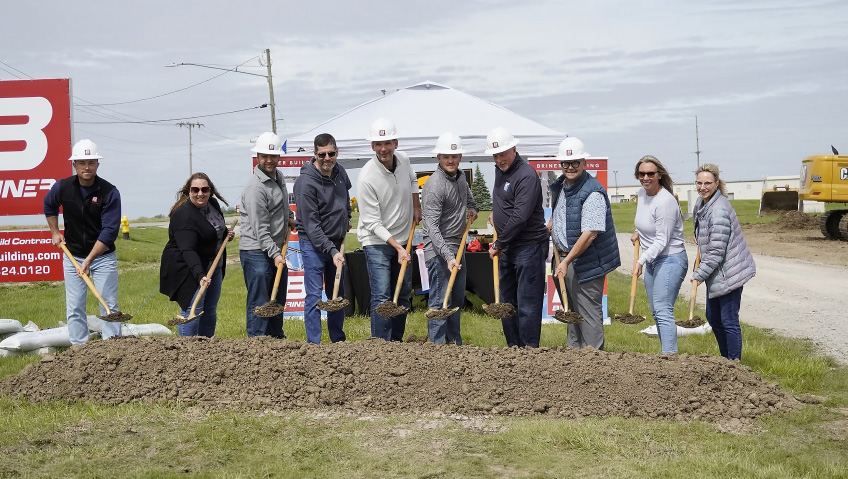
At present, economic development in East Hartford is unfolding at unprecedented scale. One of the most transformative projects involves the redevelopment of the former Showcase Cinema site into a 400-unit mixed-use housing development. After sitting vacant for nearly a decade, the property is finally poised for groundbreaking. Similarly, Silver Lane Plaza, an aging retail center that once thrived before regional mall competition diverted traffic, has been reclaimed by the town through eminent domain. Plans now call for a large-scale mixed-use redevelopment featuring retail, dining, commercial spaces, and owner-occupied housing.
These two projects are expected to redefine the Silver Lane corridor, especially as East Hartford leverages its proximity to Rentschler Field, the University of Connecticut’s football stadium and a growing concert destination. “We’re going to have 30,000 people here for major events,” Martin says. “My job is to make sure they stay here.”
Perhaps the most ambitious undertaking in East Hartford’s history is the $840 million, decade-long redevelopment of its riverfront. Currently underutilized, the riverfront is dominated by vacant office towers and disconnected public spaces, largely due to a 30-foot levee system constructed after devastating floods in the 1930s. But while the levee protects the town, it also isolates residents from one of Connecticut’s most valuable natural assets: the Connecticut River.
Plans include more than 600 new market-rate housing units, mixed-use retail and commercial development, restaurants and entertainment venues, integrated trails and green space, and enhanced river access and public programming, creating a fully connected, vibrant destination. “This isn’t just development; it’s transformation,” Martin explains. “We’re building an entirely new neighborhood.”
Early phases are already underway, including demolition of obsolete structures and conversion of vacant office towers into residential units. Over time, the riverfront is expected to become a regional destination, shifting East Hartford’s identity from pass-through community to place of arrival.
Yet while megaprojects capture headlines, Mayor Martin emphasizes that small businesses remain the backbone of East Hartford’s economy, driving daily commerce and local employment. To support their growth, the town has lowered permitting and inspection fees, strengthened partnerships with the Chamber of Commerce and the Small Business Administration, created a dedicated Small Business Liaison position, and initiated planning for a $2 million matching grant program designed to help entrepreneurs offset build-out and expansion costs.
Additionally, the town is fostering a new Main Street merchants association to promote collaboration and collective growth. “We’re changing the culture inside town hall,” Mayor Martin says. “We want to be known as business-friendly.”
At the heart of East Hartford’s transformation is a leadership philosophy rooted in service and accountability. “We’re a full-service community. We’re open for business. And we’re heading in a new direction,” says the Mayor.
East Hartford’s story today is one of momentum and intentional growth. What was once seen as a secondary municipality is fast becoming a dynamic hub of culture and opportunity. As cranes rise along the riverfront, storefronts light up along Main Street, and families access revitalized community services, the transformation is tangible. And for Mayor Connor S. Martin, it’s only the beginning. “I want people to finally see what East Hartford actually has to offer,” he says. “And who we really are.”