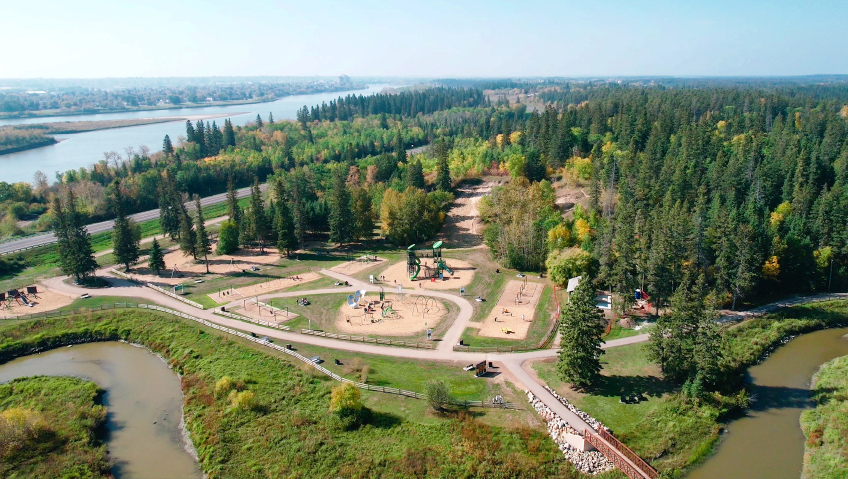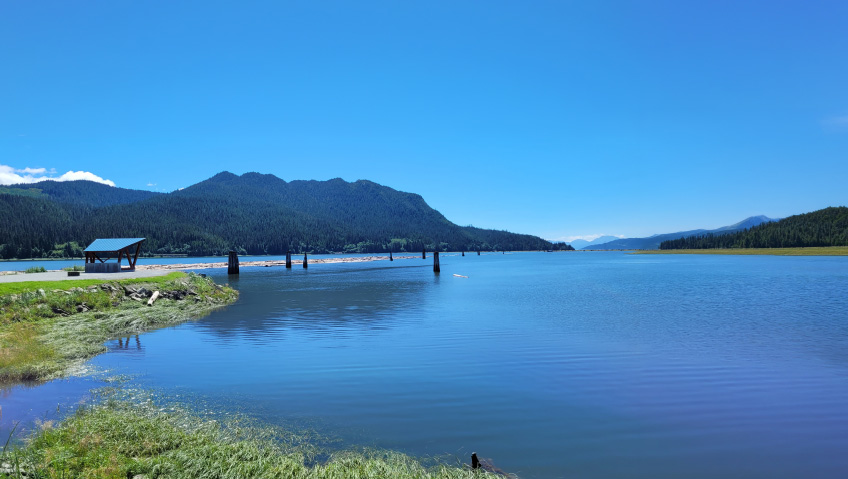
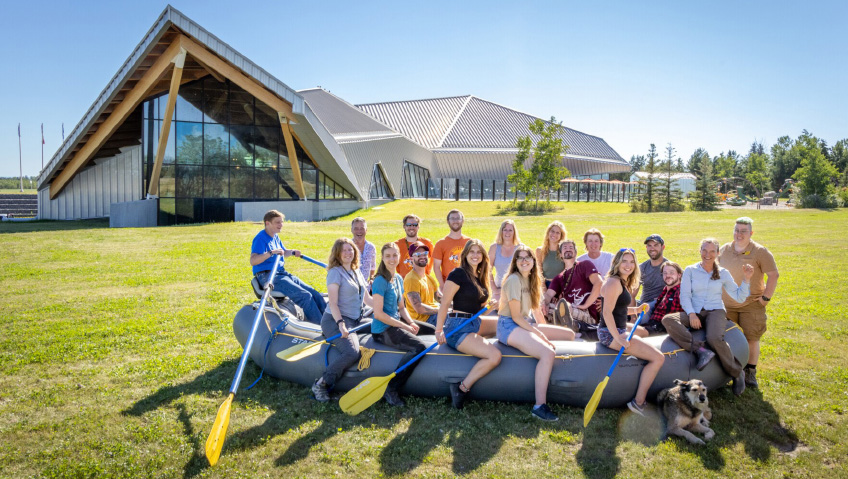
For those seeking the comforts of a small-town, rural lifestyle with access to urban amenities, the County of Grande Prairie offers a unique balance. With a population of over 26,000, a wide range of local attractions, services, and events, and proximity to larger centres, the County continues to attract residents, visitors, and businesses looking for both opportunity and quality of life.
Founded in 1951 as the first county in Alberta and located on Treaty 8 Territory, the County of Grande Prairie is home to a diverse mix of urban and rural communities. The region, originally inhabited by the Beaver and Cree First Nations, has a long and rich history, with archaeological evidence of human settlement dating back thousands of years. Today, it remains a resource-rich area where industries such as energy, forestry, agriculture, manufacturing, tourism, and retail continue to drive economic activity, supported by a strong sense of community and access to both indoor and outdoor recreation.
“The Northwest Alberta region is experiencing strong growth and momentum,” says Reeve Amanda McDonald. Ideally situated near the Montney and Duvernay formations, the County benefits from proximity to two of North America’s most significant natural gas plays. “With our natural resources, agriculture, and specifically our regional collaboration initiatives over the past four years, we’ve seen significant investment in all of the sectors we support.”
That growth is clearly visible across the region. Through collaboration within the Grande Prairie–Greenview Corridor, the area recorded 579 housing starts in 2025, representing more than 60 percent growth year over year and one of the highest rates outside Alberta’s major metropolitan areas. This increase reflects both population growth and continued confidence in the region’s economy.
“With our work alongside neighbouring municipalities, we’re seeing housing starts move in the right direction,” says McDonald. “We’ve seen population growth over the last four years, which is helping to support our infrastructure base and position us for continued growth.”
Alongside residential development, industrial investment continues to advance. New energy infrastructure projects have increased natural gas processing capacity, while planned pipeline expansion will further strengthen transportation capacity and improve market access across Alberta and into broader North American markets. The region is also exploring emerging opportunities, including growing interest in data centres, with municipalities working to ensure infrastructure and services are in place to support future development.
Forestry remains a key pillar of the regional economy. “On the forestry side, the three local mills are not showing any signs of slowing down,” says Rory Tarant, General Manager of Corporate Services. “They’re doing quite well and continue to support the area’s vibrant forestry sector.” Despite broader industry challenges, local operations continue to provide stability and employment across the region.
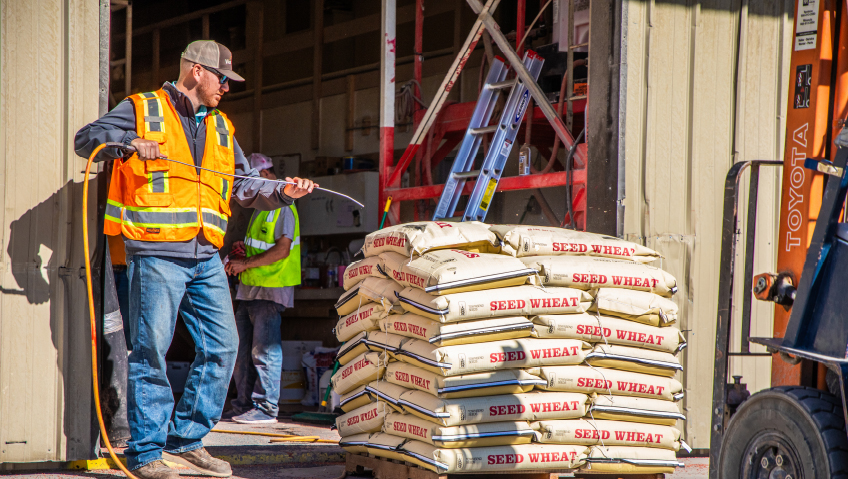
Agriculture also continues to play a significant role in the region’s success. With a strong contribution to Alberta’s canola production and a well-established agricultural base, the sector supports both local communities and the broader provincial economy. “We hope to continue seeing crops being exported and to see that value being felt throughout the region,” Tarant adds.
Supporting this level of economic activity requires strong and reliable infrastructure. The County directs nearly 70 percent of its capital budget toward transportation, recognizing its importance to both residents and industry. This includes maintaining almost 3,700 kilometres of roads, including 562 kilometres of paved roads, which support transportation and logistics across the region.
Major highway improvements completed in 2025 have strengthened connections across northwest Alberta, improving the movement of goods and supporting supply chains that extend across Canada and into the United States. The County also continues to advocate for future infrastructure, including the proposed Highway 40X Bypass, which would improve traffic flow, reduce congestion, and support long-term industrial growth.
As development continues, the County remains focused on ensuring that growth is both strategic and sustainable. “We want to make sure we’re making or supporting things that are going to be there for the long term,” says McDonald. “It’s not just about how fast we can do things, but whether we are doing it in the right place, at the right time, and in a way that supports long-term success.”
This long-term perspective is reflected in ongoing planning efforts, including updates to the Municipal Development Plan, which will guide land use and development across the County for years to come.
Workforce development is another key priority. Through Work NW Alberta, the County is working with neighbouring municipalities, industry partners, and educational institutions such as Northwestern Polytechnic to attract and retain skilled workers. Aligning training opportunities with industry needs remains an important part of supporting both employers and the future labour force.
Regional collaboration continues to play a central role in this work. Through Invest NW Alberta, the County works alongside the City of Grande Prairie and the Municipal District of Greenview to promote the region as a unified investment destination. “We’re focused on growing the region as a whole, recognizing that investment in any one of our municipalities benefits us all,” says McDonald. This coordinated approach ensures the region presents a strong and consistent message to potential investors while supporting shared growth.
While the region continues to experience progress, it has also faced challenges. In recent years, drought conditions, lower rainfall, and higher summer temperatures have increased wildfire risk across northwest Alberta. In 2025, major wildfire activity affected the region, including a fire that burned more than 26,000 hectares.
In response, municipalities work together through the Grande Prairie Regional Emergency Partnership, coordinating emergency response and strengthening preparedness across the region. The County has also expanded tools such as Voyent Alert, which provides real-time emergency notifications to residents, helping ensure timely communication during emergencies.
Industry challenges have also required attention, particularly in forestry, where tariffs have had an impact in recent years. “When our forestry partners reach out and ask for advocacy support, we’re there for them,” says McDonald, reinforcing the County’s commitment to supporting its key industries.
Despite these challenges, there is much to celebrate. The County of Grande Prairie is marking its 75th anniversary in 2026, an important milestone that reflects decades of growth, resilience, and community development.
“You can’t talk about tourism in Alberta without mentioning dinosaurs, and in particular, the renowned Philip J. Currie Dinosaur Museum,” says McDonald. Located at the Pipestone Creek bonebed, the museum is internationally recognized and continues to draw visitors from around the world. In 2024, researchers excavated a 600-pound Pachyrhinosaurus skull known as “Big Sam,” one of the largest ever discovered, further highlighting the global significance of the site.
Visitors to the museum can see researchers at work, including lead paleontologist Dr. Emily Bamforth and her team, offering a unique, hands-on experience that connects people directly to the science and history of the region.
With so many unique aspects to appreciate, it’s easy to see why the County of Grande Prairie draws both residents and visitors to the area. But for McDonald, it’s a little more personal. “I was born in Grande Prairie. My great-grandfather homesteaded in 1911. My parents live here. I live here. My kids live here,” she says. “Why would you come here? The resounding answer is that we just have everything, and if we don’t have it, it’s close. It’s something we’re very proud to be able to say.”
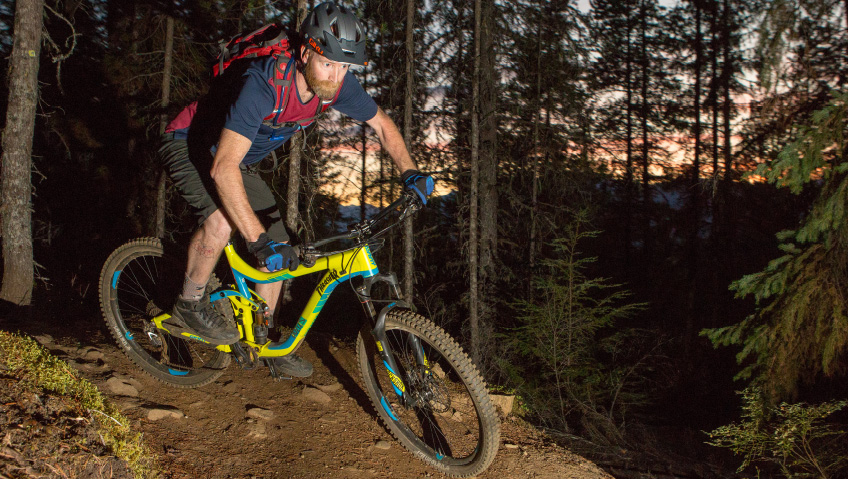
For McDonald, the appeal of the County is both professional and personal. With strong economic opportunities, access to outdoor recreation, and a high quality of life, the region offers something for everyone.
“This is a place where you can build a career, raise a family, and enjoy everything in between,” she says. “If you want to live in an urban centre, you can, and if you want to live on an acreage, you can. You can build the lifestyle that works for you while still having access to everything you need.”
With continued investment, strong partnerships, and a focus on long-term sustainability, the County of Grande Prairie remains well-positioned for the future.