
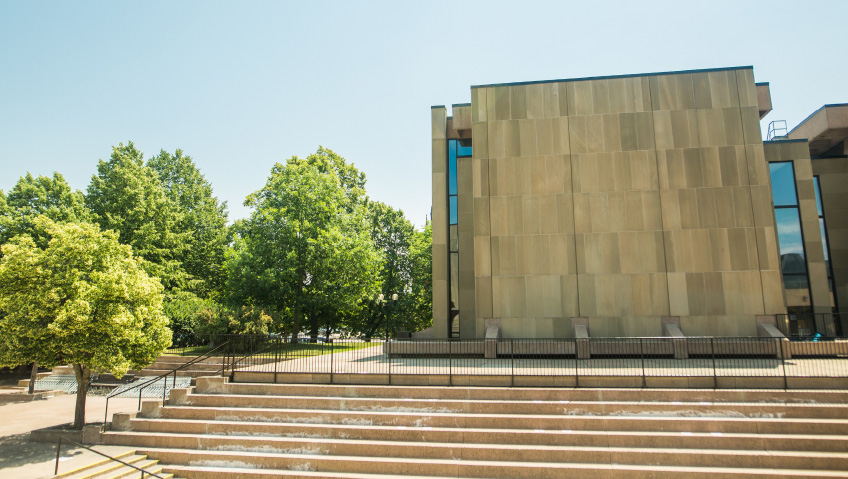
The Confederation Centre of the Arts has been a cultural and artistic hub for both the province of Prince Edward Island and Canada at large, for more than 60 years. Such a considerable lifespan means that the centre has undergone a lot of change over the years. Now, once again, it is getting ready to complete another key renovation—the largest in its history—that will set it up for even greater things to come and cement its place as a must-see monument to national history and culture.
This renovation project began in late 2018 when officials learned that the provincial library and archives planned to move out of the centre and its Charlottetown location, which kicked off a year-and-a-half consultation process on what to do with the new area afforded to the space. Feedback from stakeholders, patrons, Indigenous voices, and other sources communicated a desire for the centre to house more learning programs, more Canadian content creation, and more programs talking about its role as Canada’s national memorial to its founders.
The ensuing renovation, still ongoing, seeks to incorporate these suggestions as well as provide massive, much-needed structural improvements to the building. Physical work began in the fall of 2024 and construction began in the spring of 2025, with Chief Executive Officer, Steve Bellamy, saying that it should be largely complete by summer 2026 with a rough move-in date of October or November.
Bellamy explains that the impact of the renovation will be substantial across multiple fronts. Beyond the addition of more learning programs and a more nationalized focus to the centre’s output, the impact on the local economy will be significant. The centre currently operates on a $12.5 million annual operating budget with a $27 million annual contribution to the gross domestic product. 400 jobs have been created by the centre, producing over $16 million in labour income and over $6 million in tax revenue. Operations post-renovation will expand, providing an additional $2.5 million annually with an increase in economic impact of around $5 to $6 million. In short, the expansion will create more jobs, more programs for the public, and more capacity for the centre to be a corporate partner for meetings and conventions in the Charlottetown area.
Artistic Director of Performing Arts, Adam Brazier, says that the renovation will allow the centre to become the largest and most consequential arts hub east of Montreal. It “will become a bucket list location for performers, creators, and leaders,” he says, and will come with greater physical accessibility to the space thanks to a clearer entrance from the ever-busy Victoria Row, as well as a warmer visual welcome to anyone entering its doors. The growth and positive experiences to be enjoyed by all who interact with the centre post-upgrade promise to be significant.
Although it is front-of-mind for everyone working there, the ongoing renovation is not the only thing the centre has been up to in the last few years. First, an arts academy will be founded, from which its expanded learning programs will blossom. The academy will be able to expand the presently-offered artist training programs and provide new opportunities for short-term professional development for people in arts administration, cultural management, and in other arts and culture professions. Next, a new Arts Innovation Hub will provide facilities and resources for the creation of new Canadian content, in musical theatre, visual art, music, writing, dance, new media, and all forms of art.
Finally, the new Canadian Leadership Institute will house more programming for discussions about Canada including programs like the Symons Medal Presentation and Lecture and the Charlottetown Forum, along with other conferences and lectures on a variety of topics. According to Bellamy, the new institute will bring together experts, leaders, and the public to discuss issues important to Canada, with the impact of strengthening Canadian identity and culture.
Amidst these improvements and plans for the future, this is something of a fraught time for theatre, especially in Canada. Bellamy notes that both the pace of inflation and an increase in annual operation costs are outpacing the centre’s ability for its revenue streams to keep up. While it does receive government funding support of roughly one-third of its operating budget, the majority of its revenue is generated through sources including tickets sales, education programs, food and beverage, and donations and sponsorships, none of which have been able to match the pace of inflation. But the Centre is innovating and growing its revenue-generating programs in an effort to be more sustainable.
Brazier points out that the centre has had to reconsider its approach to programming due to ongoing tariffs imposed by the United States, and sadly, in times of financial uncertainty, disposable income purchases by the public toward entertainment like theatre are often the first things to go when it comes to tightening the belt.
These challenges will not be solved easily; however, everyone at the centre believes in the experiences it produces and the power of art, storytelling, and conversation to impact audiences. “There’s a spirituality to what we do,” Brazier says, in getting people together to watch others perform. Theatre is feeling the crunch in competing with at-home entertainment like streaming services, yet the performing arts have the ability to create community through the shared experience of live theatre—so it is all about making sure younger generations understand that power and take advantage of it. The Confederation Centre of the Arts often must take risks on the shows it stages and the decisions it makes during hard times, but Brazier says that the talent in Prince Edward Island is abundant. That level of talent is ultimately what has seen the centre through hard times again and again.
There is plenty to be excited about as the centre takes on these challenges and looks to enter a new era. In 2026, popular live shows like Come From Away and Anne of Green Gables: The Musical will be staged, along with an exhibit featuring the works of the late Prince Edward Island artist Erica Rutherford, curated by new Art Gallery Director, Pan Wendt, who was hired in December 2025. And later this year, the Symons Medal, one of the nation’s greatest annual honors, will be presented to Justice Rosalie Abella, who served on the Supreme Court of Canada for nearly 20 years.
The centre also looks forward to hiring the first director of its new leadership institute and establishing a new line of programming within it that will bring experts, leaders, and the public together for convening on important national issues ranging from economics, health care, national defense, and housing to reconciliation, immigration, Canadian identity, and culture.
It is an exciting time for the centre as it expands its partnerships within the local business community. The centre has been a keen partner with businesses across the corporate spectrum in terms of packaging, experiences, and event planning, and Bellamy believes that the centre stands as a reflection of the country, an important piece of the Canadian cultural identity. “Now more than ever, it’s important that Canadians understand one another,” he says, and this can be achieved through embracing activities that strengthen national bonds and allowing stories and issues from different communities to be better understood.