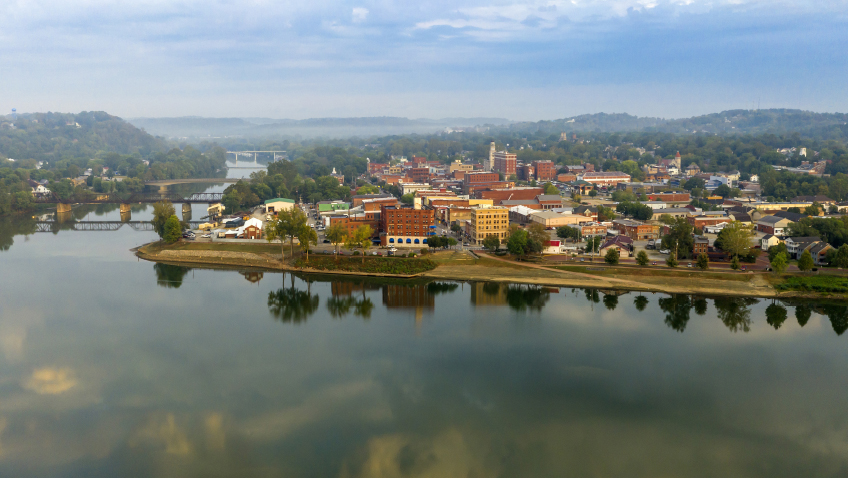
Located in Southeast Ohio, the Buckeye Hills region comprises a large geographic area—3,600 square miles—made up of eight counties: Athens, Hocking, Meigs, Monroe, Morgan, Noble, Perry, and Washington, which approximately 250,000 residents call home. The national significance of the area’s history and culture, fundamental to the State of Ohio, includes early exploration of Appalachia and the settling of the Northwest Territory, with Marietta, the earliest permanent settlement, established in 1788 and located at the meeting point of the Ohio and Muskingum rivers.
To enhance the quality of life for those living in the region through its four divisions—Aging & Health, Home Care, Community Development, and Planning—the Buckeye Hills Regional Council (BHRC) builds thriving communities by collaborating with elected leaders in the eight counties. To provide communities and individuals with the resources needed to accomplish their objectives, BHRC also collaborates with local, state, and federal partners, assisting communities throughout Southeast Ohio in obtaining funds and putting into action initiatives that benefit the area and its citizens.
Buckeye Hills has seen tremendous expansion and service diversification since its modest beginnings with only a few employees in 1968. In 2025 alone, BHRC facilitated investments of more than $73.1 million, with 6,110 individuals receiving Older Americans Act services and 3,840 households receiving improved water and wastewater service, while 39 local community projects were completed and 1,166 individuals received in-home care.
Through the Home Care and Aging & Health departments, Buckeye Hills has provided $610 million in services to the area since its founding and contributed nearly $1 billion to area communities through its Planning and Community Development departments.
Additional accomplishments include 2,989 older adults in Southeast Ohio receiving vouchers to purchase fresh local produce from more than 40 local farmers and markets through the Senior Farmers Market Nutrition Program; 54 homes repaired or receiving accessibility improvements through the Housing Assistance Grant Program and PASSPORT Medicaid Waiver Program; and 122 acres of green space and stream corridors protected and enhanced through $1.1 million in funding from the Clean Ohio Green Space Conservation Program.
A more recent development includes supporting the State of Ohio’s establishment of the Ohio River Commission, which adds a new avenue of access to the assets of communities via the Ohio River and a catalyst for growth through logistical freight and newly developing commerce and industrial sites. Many organizations saw the benefit of establishing a state-level entity through the Ohio Department of Development, with local leadership appointed to the Board of Trustees, to guide the mission toward improving the use of the region’s great Ohio River asset.
According to Jesse Roush, who serves on the Board for the Ohio River Commission and is CEO of the Southeastern Ohio Port Authority, Washington County and the surrounding region, built on the Ohio River, has had an influence that still runs through everything done today.
“Our legacy in energy, from oil and gas to modern generation, combined with a transportation network anchored by the river, laid the groundwork for a durable industrial base in plastics, polymers, and advanced metallurgy,” he explains, adding that this same foundation has fueled an entrepreneurial culture that has impacted globally relevant sectors, including high-end laboratory equipment manufacturing. “From our roots as a pioneer river town to where we are today, our story is one of adapting our assets into persistent industrial strength and opportunity,” says Roush.
“The creation of the Ohio River Commission reflects something many of us have recognized for a long time: the Ohio River is one of our most underutilized assets,” says Roush of the potential to transform communities by strengthening an already robust transportation network and unlocking new opportunities for sites positioned along the river. “What excites me most is the ability to better connect our assets to global markets by reshaping regional supply chains, while creating momentum for new commerce and industrial development. If we get this right, the river becomes not just part of our history, but a defining driver of future growth.”
Growth is certainly something to celebrate, adds Executive Director, Chasity Schmelzenbach, with BHRC securing close to $200 million in investments throughout the region in the past 18 months to build out infrastructure, revitalize the downtown, and move forward with some travel and tourism investments.
Home to numerous family-owned, multi-generational businesses, including a second-generation coal mine operator that is now moving into other energy assets, Buckeye Hills also boasts a second-generation local oil and gas producer that does tremendous amounts of philanthropic work.
“It’s also worth noting we are demographically some of the oldest parts of the state—not only from a historical perspective, Marietta being Ohio’s first city—but we’re also home to the two oldest counties in the state,” says Schmelzenbach. “The population there is older than any other part of the state, and we have the Area Agency on Aging also under our umbrella. While we’re trying to provide economic impact and things for younger people to do, we’re also tooling our communities to be attractive to retirees.”
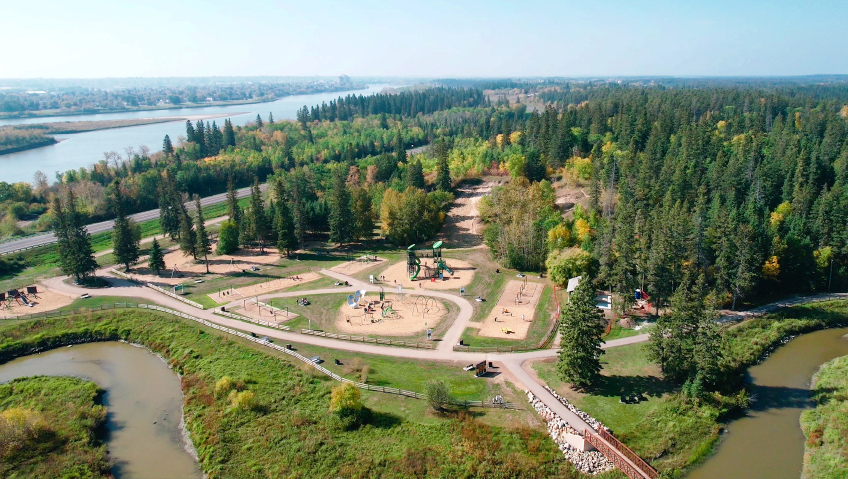
This includes focusing on helping communities obtain adaptive items as the population ages. When putting in a walking trail, for instance, BHRC often partners with Developmental Disabilities organizations that include exercise stops along those trails so people 60 and older, as well as those with developmental disabilities, have a full complement of items to take advantage of along the way.
Meanwhile, recent Appalachian Community Grant investments are improving downtowns, parks and outdoor areas, and healthcare investments in the area. “The Appalachian Community Grant program is making a visible impact across our region, particularly along Marietta’s historic riverfront, where new investment is building on our heritage to enhance vibrancy and economic activity,” Roush says. “These projects, paired with one of the strongest regional healthcare systems and a growing outdoor recreation economy, are elevating our quality of life and making this a more attractive place to live, work, and stay.”
A wonderful example is the continued buildout of the Baileys Trail System, with 88 miles of world-class trails currently in operation and another 88 planned. The Baileys is “built for all skill levels of cyclists, hikers, runners, adaptive athletes, hunters, and nature enthusiasts,” with two trailheads currently open—the Chauncey-Dover Park Trailhead and the Doanville-York Trailhead—and a third to be constructed in Buchtel.
Another project is the Athens County Port Authority (ACPA) spec building, located within the Bill Theisen Industrial Park just outside of The Plains (Athens). Starting in 2023, the ACPA competitively bid the construction of the building under an EDA (U.S. Economic Development Administration) grant and awarded the bid to Setterlin Building Company, says Kate Dunn, MPA, Senior Planner. The building itself has been completed, and the ACPA is in the process of attracting manufacturers to the location with assistance from OhioSE and JobsOhio. The ACPA partnered with Buckeye Hills Regional Council to assist with administering the grant.
What can Southeast Ohio expect in the future in terms of resilience and economic growth? Buckeye Hills Regional Council is in charge of drafting and updating a Comprehensive Economic Development Strategy (CEDS) that includes the eight counties in collaboration with local leaders and citizens as an Economic Development District designated by the EDA. The latest version of the CEDS, which looks ahead to 2030, is titled Buckeye Hills Forward: A Regional Economic Plan. To create good jobs, diversify the economy, and promote economic growth, this comprehensive economic development strategy is a locally based, regionally driven planning process and document that allows the region to identify its strengths and weaknesses while bringing together a wide range of partners.
This revised CEDS was approved by the EDA on July 19, 2025, and represents a common vision for the future based on community goals, ideas, and perspectives.
During the next five years, BHRC is also committed to prioritizing and initiating the plan’s projects in close collaboration with local governments, businesses, nonprofits, economic development organizations, and citizens; advancing important projects; looking for state, federal, and private funding; and assisting communities in realizing their ideas, providing data, planning, mapping, and grant support.
In addition, Schmelzenbach personally always looks ahead. “I’ve always got goals,” she says, which includes setting Southeast Ohio apart for residents, tourists, and businesses. “We have a very strong work ethic in the Appalachian culture that exists here. Any company with the desire to seek a place where they can find a workforce dedicated to a beautiful setting with lots of opportunities would love this part of Ohio.”
For those willing to work alongside “very willing” partners, there are great assets to be found in the rivers and transportation. “We’re looking at creating an entire outdoor economy for this part of the state because we believe it lends itself, both in blue ways and green ways,” says Schmelzenbach. “We have tremendous amounts of investment being put into the state parks dotted throughout the region, and we’re home to one of the national parks, Wayne National Forest, bordered by our rivers and highways.”
Another key milestone involves elevating the Ohio River’s presence as a nationally recognized Marine Highway, positioning the river as critical infrastructure that fuels the broader U.S. economy, says Roush. In fact, success through the Ohio River Commission should translate into increased public and private investment that reactivates underutilized riverfront assets and strengthens the area’s multimodal network.
“From there, the focus is on turning that momentum into real outcomes, job creation, site development, and expanded industrial opportunity tied directly to the river,” he adds. “If we execute on this vision, the river becomes a catalyst not just for our region, but for Ohio’s economy as a whole.”
There is also a growing energy sector comprising active shale drilling operations within the Marcellus and Utica basins, coupled with strong partnerships with the companies that operate there.
“We’re also adjacent to some of the major investments going into Piketon and that area around nuclear. We’re very near a lot of these large investments in Ohio and West Virginia, and we’re the beautiful green space on the fringe that offers great work-life balance,” says Schmelzenbach. “Our role in some of these investments is supply chain businesses in a beautiful bedroom-type community.”
Along with its many impressive natural features and attributes, there is, of course, another vital characteristic that continues to draw residents, tourists, and businesses to this area: its people.
“This is a region rooted in a deep sense of place, where pride in community and a world-class work ethic show up every day across our workforce,” says Roush. “We’re welcoming, accommodating, and consistently punch above our weight in supporting local initiatives and investing in what matters. For residents, tourists, and businesses alike, that combination creates a place that’s not only authentic, but built to last.”