If you’re searching for a dynamic, forward-thinking municipality with a thriving family-oriented community, look no further than the City of Prince Albert, a recreational haven with all the conveniences of a large metropolis, including access to the arts, entertainment, and distinctive cultural experiences, and a wide range of professional sports organizations and dedicated and enthusiastic non-profit organizations.
Located only a short distance from Lake Country, Prince Albert is a centre for infrastructure, health services, education, and retail, while also serving the mining, forestry, and agricultural resource sectors in northern Saskatchewan. Part of Treaty 6 territory and home to First Nations including the Dakota and Métis Nations, the Woodland Cree, Plains Cree, Swampy Cree, and Dene, Prince Albert has one of the largest percentages of Indigenous people in Canada, embracing a variety of cultures and welcoming to all.
Exciting plans for the city include a downtown revitalization project, along with addressing the water and sewer infrastructure challenges that come with a city more than 100 years old.
“Our downtown already has unique stores and great restaurants, as well as a lot of heritage architecture,” says Ellen Pearson, Economic Development Planner. “We’re looking at taking this opportunity to not only upgrade the infrastructure but also enhance streetscaping and improve accessibility to bring more people downtown.”
Additionally, after 60 years of the downtown being a one-way street, Prince Albert will return to two-way traffic. “We really want to create that vibrant and economically diverse downtown where pedestrians, drivers, and anyone taking transit can find their way very easily,” Pearson says, adding that the tender for that project has been awarded and design work is underway. “We’re excited about taking the next step to make the downtown revitalization project a real thing.”
There are plenty of reasons to venture downtown, whether to experience an array of restaurants, local businesses, museums, galleries, and arts and culture events, or visit post-secondary institutions including the University of Saskatchewan, First Nations University of Canada, and the Gabriel Dumont Institute of Native Studies & Applied Research.
“Our combination of educational resources and economic strength makes our region very attractive for new development and investment,” adds Michael Nelson, Planning and Development Manager. “Our city does feel that it’s a really valuable area, and that’s where our council has also implemented a construction incentive for renovations and projects in the downtown as well.”
These include development incentives for new commercial construction and renovation across the entire city, as well as additional incentives specific to developments in the Downtown Business Improvement District. Further incentives to support housing are currently being developed.
One of the most exciting economic development opportunities in Prince Albert is the sale of the former pulp mill site to the BMI Group, a Canadian company with a proven track record of redeveloping legacy industrial properties into thriving multi-user industrial hubs. BMI has indicated the site will be repurposed as a multi-tenant industrial and logistics campus, leveraging existing industrial infrastructure. There is rail access, connectivity, and significant power capacity on site, as well as a large amount of water.
“They have their own water treatment plant on site as well,” says Nelson. “This represents a transformation opportunity not only in Prince Albert but for northern Saskatchewan. Rather than relying on a single industrial operator, the vision is to attract a diverse mix of businesses.”
Boasting more than 2,000 acres, the site has direct rail access and up to 130 megawatts of available power to make it one of the most significant industrial redevelopment opportunities in Western Canada, aligning well with Prince Albert’s long-term growth and economic diversification.
This ongoing project is currently looking for a variety of tenants and groups in an effort to bring in a diverse hub in the future. “We want to see continued investment in the property that generates stable, quality jobs,” says Pearson. “We want to encourage the development of industries that provide long-term economic benefits for the community.”
Another exciting local venture is the Prince Albert Victoria Hospital expansion, which is scheduled for completion in 2028 and continues to be one of the most significant public infrastructure projects in Saskatchewan. With construction now surpassing the 50 percent completion mark, the project remains on schedule and is delivering a modern healthcare facility that will serve Prince Albert and the entire north half of the province.
The new acute care tower will increase capacity by about 40 percent, growing inpatient beds from 174 to 242 and adding larger emergency and operating rooms, dedicated pediatric and maternity spaces, a new mental health unit, expanded intensive care services, a rooftop heliport, and the region’s first MRI. Beyond healthcare, the project is creating economic benefits through construction, employment, local procurement opportunities, and improved capacity to attract and retain healthcare professionals.
“It’s going to help strengthen Prince Albert’s role as a healthcare hub for northern Saskatchewan and support long-term community growth,” says Nelson. “It’s just such a huge project for our community. Completing that and knowing we’re continuing to be the centre for the entire North in providing healthcare and services is a really big accomplishment.”
All of these unique projects are highly anticipated within the community and are set to benefit not only Prince Albert but the province as a whole. But, with development comes the challenge to create adequate, affordable housing.
“Given that we’ve got the hospital project and the redevelopment of the pulp mill site underway, we completed a housing needs assessment in 2025, just to see where we were sitting with housing needs in the community,” says Pearson. “Housing supply is a challenge in communities across Canada, but this housing needs assessment gave us the data to understand what that means for Prince Albert. It showed that we don’t have enough affordable housing to begin with, and with the expansion of the hospital and redevelopment of the mill site, in the next 10 years, the demand for housing is going to continue to grow. We need to make sure we’re building enough housing to support that growth.”
The housing strategy also identified the importance of working with local partners to help meet the city’s housing needs. Peter Ballantyne Cree Nation is starting construction on the Eagle Ridge housing development on their urban reserve, a five-storey building with 54 residential units and underground parking, with a blend of market and affordable housing opportunities. “Many of our Indigenous partners have purchased property in Prince Albert, and we’re looking forward to seeing new construction projects being pursued in the coming years,” says Nelson.
The housing strategy and action plan also gave the city a roadmap for how to address gaps and discrepancies to make housing easier to build in the community. “In the next few years, things will hopefully be moving on the housing front,” adds Pearson.
All of these community initiatives were undertaken with the input and approval of the city’s residents, who have a personal understanding and appreciation of what the area has to offer. “There were community meetings, so we heard at that time what people wanted for the downtown,” says Pearson. “A lot of that was taken into consideration when the recommendation was put to council to switch to two-way traffic and increase sidewalk spaces for more outdoor patio space, walkability, more accessibility, and to make our downtown easier to visit. That feedback from the community, businesses, and residents was factored into the decision,” she says.
With the University of Saskatchewan’s Prince Albert campus now located downtown, being mindful of the influx of students and staff at that facility is also an important consideration.
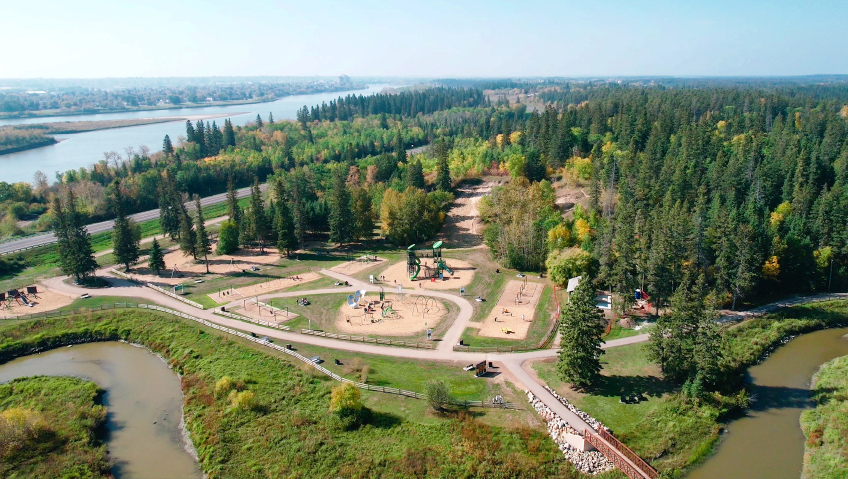
“Prince Albert offers a unique combination of urban amenities, economic opportunity, natural beauty, and northern accessibility,” says Nelson. Located at the gateway to northern Saskatchewan, the city serves as a regional centre for healthcare, education, services, retail, and businesses. Residents and visitors enjoy access to world-class outdoor recreation, including Prince Albert National Park and the 1,200-acre Little Red River Park within the city limits itself. The city also hosts vibrant cultural and family-oriented community events throughout the year, including the annual Pine Needle Mountain Bike Festival, various music festivals, and the Downtown Street Fair that takes place each summer.
Another project of note is the completion of the Lake Country Co-op Leisure Centre, which opened in 2025 and is the largest recreational infrastructure project in Prince Albert’s history. The aquatic centre features a 25-meter competitive pool, diving boards, wave pool and lazy river, water slides, and a hot tub. Not only can it host regional and provincial swim competitions, but it has also expanded access to aquatic programming with the largest selection of swimming lessons and certification courses ever offered.
The other half of the Leisure Centre includes the twin arenas—two NHL-sized rinks, increased seating, and expanded dressing room facilities to accommodate tournaments of all sizes. “It’s a huge asset to the community,” Pearson says. “Since opening, it has not only brought so many more tournaments and team events to our city but also expanded the capacity of things like swimming lessons in our community and allowed more people to take advantage of those programs.”
Nelson also wants to stress that Prince Albert is always open to welcoming innovative and diverse industries and business opportunities. “If anyone’s interested in learning more about our city or about investing, please contact us,” he says. “We have new and different construction incentives. We have renovation incentives. We have downtown incentives, and we’re working on more housing incentives in the next few coming months as well.”
In short, the city offers myriad opportunities for those looking to invest.
“For businesses, Prince Albert offers strategic access to northern markets, strong transportation connections, and a young workforce,” says Nelson. “These strengths continue to make Prince Albert an attractive place to live, work, and invest and build a future.”