For companies considering their next investment, location is about more than finding the right building or piece of property: it’s about finding a community with the infrastructure to support the operation, access to talent and markets, and partners who understand that the relationship with a company should extend well beyond the initial location decision. “That is the approach we have built in Monroe, North Carolina,” says Teresa Campo, Director, Office of Economic Development.
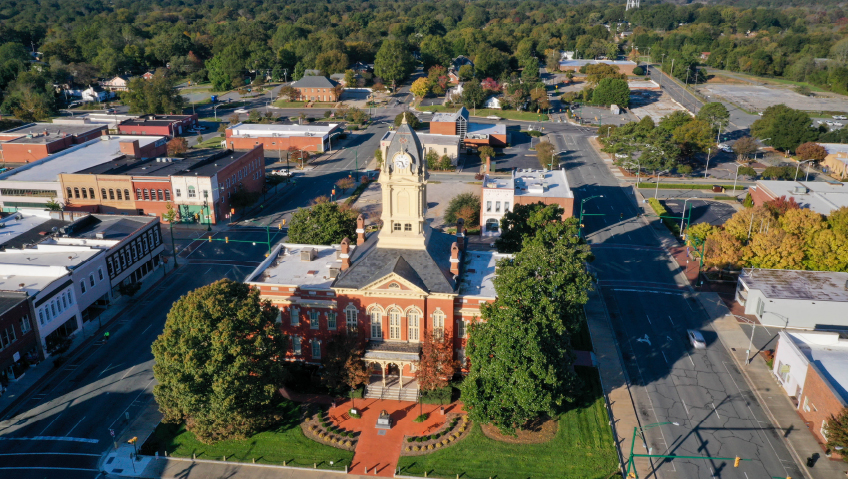
Located within the Charlotte metropolitan region, Monroe has established its own identity as a center for manufacturing, industry, and employment. Companies benefit from access to the greater Charlotte market while operating in a community with an established industrial base; transportation connectivity through I-485, U.S. 74, and the Monroe Expressway; Charlotte Monroe Executive Airport; and the infrastructure necessary to support business growth.
“One of Monroe’s greatest advantages is our ability to work directly with companies as they navigate the development process,” says Campo. “The city is a one-stop development shop including planning and zoning, permitting, engineering, fire, and stormwater. Monroe also owns and operates its electric, water, sewer, and natural gas systems.”
While Monroe maintains an average 10-day turnaround standard for complete commercial permit submissions, speed alone does not define good economic development. It’s also about having access to people who will answer questions, identify potential obstacles, and work toward solutions.
“That is the Office of Economic Development’s opportunity to serve,” Campo stresses. “When a prospect comes to Monroe, we want to understand the entire project, not simply how many acres or square feet the company needs. We want to understand its utility requirements, transportation needs, workforce, investment, timeline, and plans for future growth. That allows us to ask a much more important question: What does this company need to be successful here?”
Answering that question requires partnership, and Economic Development strives to connect businesses with the right resources, whether bringing city departments together around a development issue, connecting an employer with South Piedmont Community College and the Centralina Workforce Development Board, or helping a company become part of the broader business community through organizations such as the Union County Chamber of Commerce.
“We place that same emphasis on our existing industries,” says Campo. “A project announcement is important, but it’s only the beginning of the relationship. The true measure of a business environment comes in the years that follow as companies hire employees, invest in equipment, expand production, and respond to changes in their industries.”
SEECO (Southern Electrical Equipment Company) is one example of a recent successful partnership that came about when its existing footprint became a constraint on its growth in Charlotte and in Indian Trail. “We knew we needed more space, but we didn’t want to just move into another building and find ourselves having the same conversation again in five years,” says Advisory Board Member, Christie Panto. “We wanted to make a decision that would give SEECO room to grow for the next 10, 20, and 30 years.”
The opportunity in Monroe allowed SEECO to consolidate operations into one much larger facility, with both the land and flexibility to improve the way people, operations, inventory, and equipment work together. “The Monroe facility gave us approximately 109,000 square feet in a new facility that we could make work for our operation, rather than trying to make an older, more expensive building work around us,” Panto says. “We wanted room to expand, and we wanted opportunities nearby that could support additional growth down the road.” Monroe made sense for practical reasons: the cost, the facility, the land, and the opportunity to grow.
Monroe was also a reasonable geographic compromise, offering a location with good access to major roads for those who wanted to commute while also being a community where employees could choose to live if they wanted to relocate closer to work with good schools and overall affordability.
Working with local officials and economic-development partners was nothing but positive and productive, Panto adds. “It was one of the nicest surprises of the whole experience. We had great cooperation from the City of Monroe, Union County, the Chamber, and our local education and workforce development partners,” she says. “There was a genuine interest in understanding what we were trying to accomplish and figuring out how everyone could help make it happen. We found a partnership with this community that understood the importance of growing manufacturing. When one of us succeeds, we all do.”
While SEECO came to Monroe because the business case made sense, what they found was so much more. “We didn’t necessarily anticipate how much we would appreciate the community itself,” Panto says. “Don’t underestimate the value of finding a community that actually wants you there.”
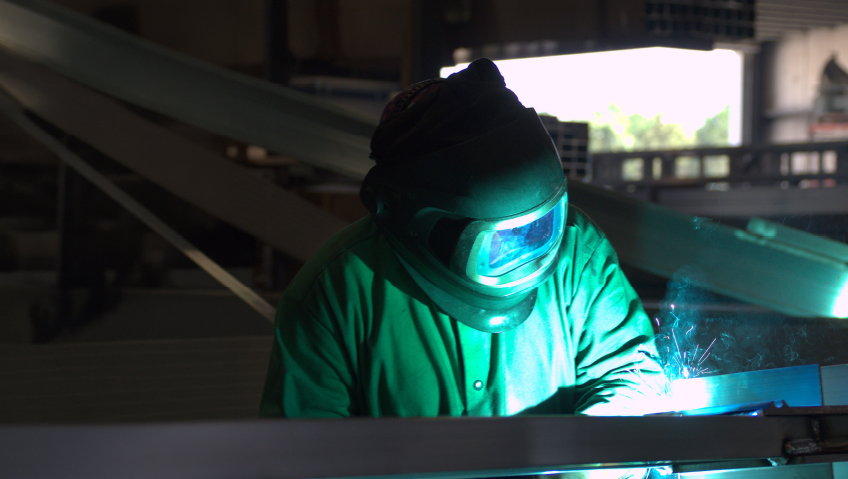
While SEECO is a new partnership, MacLean Power Systems’ Monroe Operation—previously known as ITEC, a manufacturer of instrument transformers essential to the modern electrical grid—has been a proud part of the local community for more than 20 years. “Monroe is where we have built our team, expanded our capabilities, invested in our operation, and created opportunities for employees to create rewarding, long-term careers,” says Greggie Mull, Human Resources Manager. “Our growth has brought increased investment in machinery and equipment, employee development, and workforce training. We have also gained additional training resources through our partnership with South Piedmont Community College.”
MacLean’s workforce includes employees from diverse backgrounds and a broad workforce that includes people from the Charlotte area, Lancaster and Pageland in South Carolina, and other surrounding communities, an important strength of its operation. Additionally, the Monroe Expressway has improved transportation routes for shipping products and made it easier to reach potential employees across the region, important connections for a company committed to operating, investing, and hiring in Monroe for the long term.
As the Monroe operation has grown, connection to the community has grown with it, Mull adds. “While many local residents still know us as ITEC, we are proud to be part of MacLean Power Systems and remain committed to investing in Monroe and the surrounding region.”
MacLean relies on local talent to manufacture products and values partnerships with organizations such as South Piedmont Community College, which helps develop the next generation of skilled manufacturing professionals. Continued collaboration among employers, educational institutions, economic development organizations, and other community partners will help Monroe remain a place where manufacturers can invest, grow, and succeed.
“For our Monroe operation, modern manufacturing requires continued investment in technology, stronger and more efficient processes, and increased opportunities for employees to develop their skills,” says Mull. “Local education and workforce-training partners are an important part of that continued progress.”
That partnership between education and manufacturing plays a key role in Monroe. In fact, South Piedmont Community College views its manufacturers as true partners in workforce development, working directly with local employers to understand workforce needs, identify skill gaps, and respond with the right training solutions—from curriculum programs and short-term credentials to customized training.
“We also support manufacturing apprenticeships and help employers strengthen their recruitment and talent pipelines,” says South Piedmont Community College President, Dr. Stacy Waters-Bailey. “We are committed to being a trusted, reliable partner to our manufacturing industry.”
As speed and responsiveness are critical in today’s economy, South Piedmont Community College works directly with employers to quickly develop customized workforce solutions that address their specific needs. In many cases, this means moving from identifying a workforce challenge to launching training within days.
“Our goal is to remove barriers for our local manufacturing partners and help them respond quickly to changing business demands,” says Waters-Bailey. “Our employers have a direct voice in shaping what we do. Through advisory committees, employer surveys, and ongoing conversations with industry, we listen closely to what businesses are seeing and experiencing.” This feedback helps to continually refine programs so graduates are prepared for the jobs and technology that employers need today and will need tomorrow, benefiting not only employers but also students, as they can be assured that they are receiving industry-relevant training at South Piedmont Community College.
To that end, the college works hand-in-hand with industry to deliver both credit and short-term, non-credit programs that provide students with the technical expertise, practical experience, and durable skills area employers value, says Waters-Bailey. “Our goal is straightforward: to ensure our students are ready to contribute, grow, and lead in the workforce.”
When it comes to the independent business-community voice, the Union County Chamber of Commerce champions business growth throughout Monroe and Union County through advocacy, economic development, and collaboration, striving to maintain the region’s momentum by strengthening relationships between businesses and partners in government and education.
“Monroe’s diverse industry base makes this work easier by creating opportunities for talented individuals in nearly any industry imaginable,” says President and CEO, Clayton Whitson. “The Monroe area is unique in that business, government, nonprofit, and education partners collaborate with a goal of mutual success.” That collaborative spirit, coupled with the geography that places the Chamber in proximity to a major metro, access to ports and rail, and an ever-growing workforce base, gives companies a real strategic advantage in the marketplace.
The Chamber places a large emphasis on relationships with businesses, Whitson adds. As new businesses enter the market, the Chamber connects with the community in a variety of ways, particularly with the existing business network through Chamber programming. “We tailor our programming to continually provide content that will address areas of ongoing need for our employers, such as environmental health and safety or workforce development,” he explains. “Getting professionals connected to these groups provides peer support for current and future needs and strengthens ties to the community.” The Chamber then communicates needs and opportunities to community partners involved with business retention and expansion efforts.
“North Carolina has always had a business-friendly reputation, and that doesn’t happen by accident,” Whitson says. “The Chamber’s advocacy and public policy work with governmental units at every level to ensure we’re creating an environment where our companies can thrive and continue to provide economic opportunities for our friends and neighbors. Our businesses understand this value and actively provide feedback to guide our public policy work.”
Finally, working to establish that Monroe has access to a regional workforce system, not merely the labor force contained within the city limits, the Centralina Workforce Development Board understands that workforce development starts by understanding exactly what an employer needs and then connecting that employer to the appropriate resources.
As labor markets cross municipal boundaries, workforce professionals can engage companies during recruitment as well as after they locate, and employer needs—occupations, skills, wages, recruitment timelines, and training—should drive the workforce response. “The Centralina WDB and its local NCWorks Career Center in Monroe provide talent recruitment and retention services for employers and career advising, training, and placement services for career seekers,” says David Hollars, Executive Director, Centralina Workforce Development Board. “We work with local partners in developing a regional talent pipeline through the MonroeWorks initiative with the city.”
The Centralina WDB is also actively involved in Our Future in UNiSON—addressing career pathway development and increasing the number of individuals with post-secondary degrees, certificates, and certifications—and with Union JobReady and the Chamber’s Workforce Development Committee in developing strong career guidance, knowledge, and work-based learning opportunities for students in the local middle and high schools.
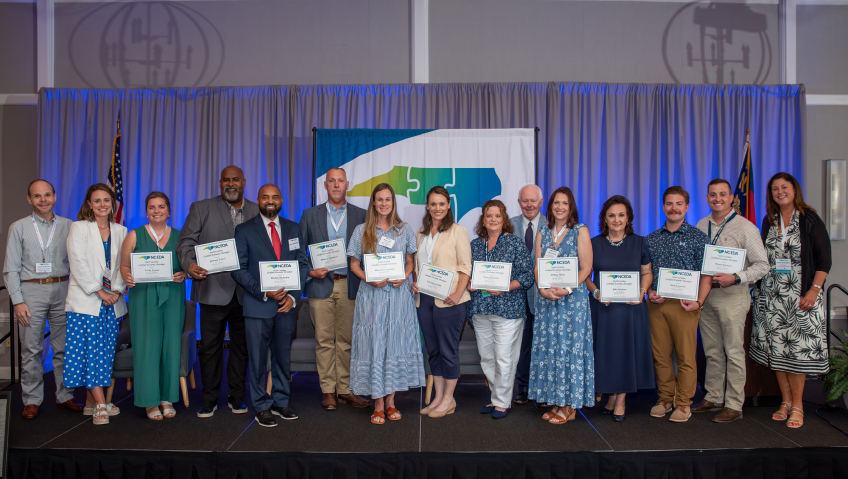
“These companies and organizations demonstrate different parts of our partnership,” says Campo, adding that SEECO offers the perspective of a manufacturer that recently chose Monroe, while MacLean Power Systems provides the perspective of an employer with approximately two decades of area experience. “Our Chamber, workforce, and education partners demonstrate the network that supports businesses before and after a location decision.”
For Monroe Economic Development, the responsibility does not end when a company selects a site or opens its doors, she adds. “We want to be there for the next expansion, the next workforce challenge, and the next opportunity. We want businesses to choose Monroe, and to have every reason to choose Monroe again when it’s time to make their next investment.”