
In Trumbull County, people are known for their work ethic and common-sense approach to resilience. For Nicholas Coggins, Director of Economic Development at Trumbull County Planning Commission, the people of the Mahoning Valley in Northeast Ohio personify perseverance, and it is easy to see why. Despite facing significant setbacks, Trumbull County has been involved in the automotive industry since its earliest days and today, its steel industry remains strong, providing the county with the financial buoyancy needed to blend economic and community development for harmonious and lasting growth.
Cross-county collaboration, administrative efficiency, and attractive tax abatements all make Trumbull County a desirable location for new businesses and legacy names looking to relocate to an affordable, business-friendly environment.
Thanks to outstanding accessibility, quality infrastructure, and a well-respected workforce, Trumbull County has paved the way for continued robust industrial expansion. As one of the area’s most active growth acceleration drivers, the Trumbull County Planning Commission collaborates with a host of partners to build positive change and prosperity.
With the Mahoning River as the life-giving force of this freshly up-and-coming region in Northeast Ohio, Trumbull County’s population is well supported by the bounty of nature. Statistics showed around 202,000 residents in 2020, with an estimated 27,000 children of school-going age spread across the 22 school districts of 24 townships, five cities, and six villages. To ensure that children have the futures they dream of, the quality of education is maintained under the watchful eye of the Trumbull County Educational Service Center. And thanks to concerted efforts to regenerate good future prospects, the population has seen its first growth since the 1970s over the past two years.
But not all the county’s arrivals are new. Many are folks who are returning to their home county after leaving as youngsters in search of better prospects. A part of the Youngstown–Warren OH Metropolitan Statistical Area, it is common to see familiar faces who left years ago coming home to share in the success of a county that is overcoming past economic hardships one new venture at a time.
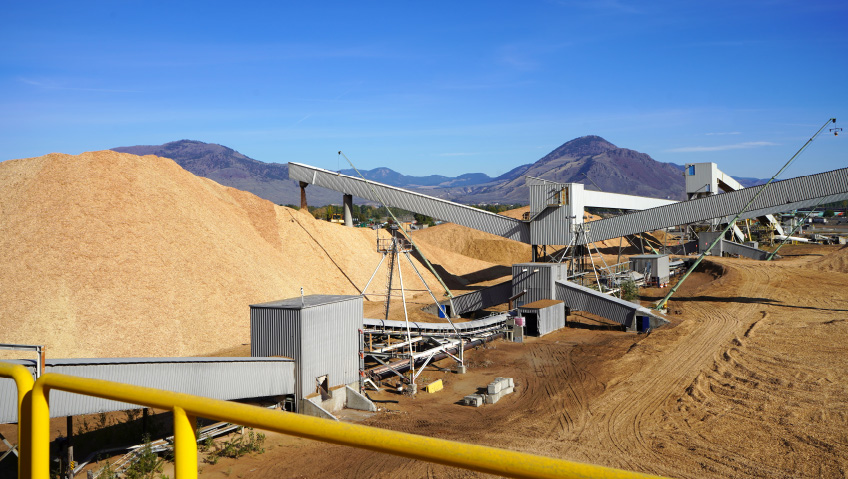
Regardless of economic tides, Trumbull County has always been rich in natural resources. Thanks to significant iron ore and coal deposits, and despite an industry crash in the late 1970s, this remains steel country. As such, the county has played an important role in the national gross domestic product through its presence in the automotive industry.
Trumbull County was part of the Connecticut Western Reserve with Warren, Ohio, the County seat, being the Historic Capital of the Western Reserve. The county’s steel industry played a pivotal role in America’s national war efforts during World War II. “We were one of the largest steel manufacturing areas in the world and supported the war effort,” Coggins says.
Back then, the resulting industrial soot that settled on everything from trees to porches became known as “pay dirt” in recognition of the economic security the money earned from steel afforded the county and its people. Its glory days continued until the sense of security ended abruptly on Black Monday, a historic day, September 19,1977, when many factories went out of business, ending staff contracts and long legacies.
The economic hardship that followed is remembered to this day, with statistics showing up to seven people per day leaving the Mahoning Valley as recently as a decade ago. Despite this dark time in the county’s history, its steel industry remains strong now with big names like Liberty Steel Industries, Vallourec, Youngstown Steel, Youngstown Tube, Wheatland Tube, and others forming the backbone of its reviving economy.
The county’s successful revitalization efforts include welcoming new businesses to the region while further developing the workforce. It is also transforming brownfield properties into viable income generators with the support of JobsOhio and Lake to River. Together, the partners also develop bespoke incentives for new and existing businesses, driving prosperity and building the population.
There are also zoning-related tax incentives that businesses investing in improvements can benefit from. Moreover, in an effort to improve capital expenditure burdens for investors, qualifying newly built commercial and industrial structures stand to garner tax abatements spread over a decade. “Tax increment financing is specifically done when you have infrastructure needs,” Coggins confirms.
Other partners include, but are not limited to, Eastgate Regional Council of Governments, Trumbull Couty Land Bank, Trumbull Neighborhood Partnership, the Board of Trumbull County Commissioners, the Western Reserve Port Authority, and the Business Resource Network, a job and family services coalition supporting new arrivals and existing businesses in procuring staff and resources while providing expansion support. In the process, professional teams from different agencies and departments partner to identify and secure the funding necessary to clean and restore brownfields that formerly housed steel mills and other high-impact industrial businesses.
Trumbull County’s affordable housing market and the quality of life provided by its ample amenities like beautiful parks and trails mean that some residents choose to live here while working in nearby counties. To accommodate everyone, “Our office actively goes after community development block grant funds and works with our land banks to try to improve our housing stock,” Coggins says.
The county’s tourism office is equally motivated, bringing new visitors into the area who often become residents. “We want to make this a place where people not only come to get a paycheck, but they want to live, they want to stay, and they want to bring their families. Our tourism bureau does a fantastic job putting out marketing material to attract people not just to visit, but to visit and then find a reason to stay,” he adds.
Beyond good schools and affordability, another of Trumbull County’s greatest draws is the number of authentic dining experiences the region offers. From Arabic food to its Italian Food Trail, the place is packed with genuinely good food cooked by restaurateurs from a range of nations.
Other innovative businesses have made a name for themselves as local landmarks. One of these is Past Times Arcade in Girard, which opened in a former grocery store. This open-range, all-day gaming arcade, with over 600 pinball machines, offers 1,041 games from across the decades at around a $20 entrance fee for unlimited fun—an achievement that landed it in the Guinness Book of World Records. It has proven to be a national favorite with visitors arriving from across the country. Past Times has proven so popular with young and old alike, it will celebrate its third anniversary on June 1st this year.
Significant investments have also been made in developing the Museum of Science Fiction & Fantasy Arts (MoSFA) in Warren. The museum was co-founded by John Zabrucky, a Hollywood prop master who decided to make his collection of more than 500 original high-tech props accessible to the public when he returned to his hometown. The museum is being established in partnership with the Trumbull County Historical Society.
Community development efforts are also proving fruitful with the arrival of new employers. Among these, the county recently welcomed a data center manufacturing plant and a 592,000-square-foot Kimberly-Clark distribution center, an enterprise that could soon employ up to 500 people. Investments are also being made in climate protection with economic development incentives secured by Trumbull County Planning Commission. TJX’s HomeGoods also recently brought more than 1,500 new jobs to the region.
Then there is Foxconn EV System LLC, which took over GM’s former Lordstown fabrication complex, hailing back to the days of Packard, an automobile fabricator that operated from 1899 to 1956. Despite GM’s replacing Packard many decades ago, the county still pays homage to its pioneer fabricator at the National Packard Museum in Warren. Intricately intertwined with the Trumbull community, GM leaves deep footprints in the collective memory. Having indicated plans for creating a considerable number of new jobs, Foxconn is likely to expand the facility’s existing footprint.
As planning professionals, Coggins and his team are well-versed in assisting developers across the county in easing legal and municipal processes, as each township, city, and village has a unique set of laws and rules to abide by. “We’re familiar with those people and we actively attend our township trustees’ associations, our city mayor’s association,” says Coggins. “They know us, and we can work with them and help ease that transition.”
Cross-entity collaboration does not end here. Trumbull County is known for its townships’ partnering with cities for the purpose of economic development. The resulting capital improvement plans are typically run on money from taxes paid by local investors in economic development districts, instead of being funneled into general city funds. “The Tax Increment Financing (TIF) focuses on property tax, while the Joint Economic Development District (JEDD) is derived from income tax. It makes sites more attractive, because now we have this improvement plan, and the taxes that you’re paying anyway are going to pay for major improvements needed for your facilities,” Coggins explains.
Enabled by the Ohio Revised Code, the system appears to be most popular in the state’s south around Cincinnati, Columbus, and Dayton. “We’ve started using it to try to help our development, help our growth, because it’s been successful in the south.” By using the income tax from local labor, such areas can provide large businesses like Kimberly-Clark with quality infrastructure. “We are already looking at improving multiple roads, and that facility hasn’t even opened yet. We’re just using the income tax dollars from the construction workers,” Coggins continues.
Trumbull County’s efforts are a proud continuation of the county’s industrial legacy. Its busiest industrial area, the Golden Triangle Industrial Area, was a result of the industrial revolution and the area’s powerful steel and manufacturing capabilities. The area has been evolving since the 1900s—organically and out of necessity. Today, Golden Triangle offers what Coggins refers to as “the largest primary metal manufacturing subsector in the state of Ohio.” As a result, it still offers well-paying employment despite historic setbacks.
The natural outcome of these extensive reinvigoration strategies is an improving housing market, with new development breathing life into an area where homes are typically older. Four new developments by the same company have seen new lots in individual development complexes become available for purchase in Girard and Niles, while three more developers are also doing business here. Another project is entirely sold out in Howland Township, while a sister project in Liberty Township is halfway sold. With grant money awarded by the state and the Housing and Urban Development Authority, new infrastructure is being installed for each new residential settlement.
Securing $15.5 million in grant funds for industrial, urban, and community regeneration, site and infrastructure improvements, and low-cost housing between 2020 and 2023, this formidable team of seven, working alongside partners like the Port Authority (which provides capital leases), JobsOhio (which provides funds from the state), the regional council of governments, and others, continues to fight the good fight. And, as it scouts for more supply chain partners and other operators to settle here as tourism also expands, the Trumbull County Planning Commission’s message is clear.
As Coggins says, “Trumbull County is open for business. We have a team of professionals that is going to find you whatever we can to make your projects move forward.”