180 feet beneath the ground floor of the decommissioned Niagara Parks Power Station in Southern Ontario, a 2,200-foot tunnel offers visitors a stark reminder of the power of hydroelectricity.
For decades, the tunnel served as an exit channel for water used to generate electricity. Today, tourists in raincoats can walk its length and emerge at a platform to view the Horseshoe and American Falls at close range. While inoperable today, electricity generated at the plant once illuminated communities in Ontario and neighbouring New York State.
Hydropower is the official term for electricity produced by flowing or falling water. Given that North America is blessed with abundant lakes, rivers, and other waterways, it is no surprise that hydropower is such a common energy source. In 2022, hydropower accounted for 64 percent of all electricity generated in Canada—up from 59 percent in 2005—and six percent of electricity generated in America, although the U.S. figure was once much higher. The future of hydropower seems assured, especially in Canada, which has over 500 generation stations and strong interest in the sector.
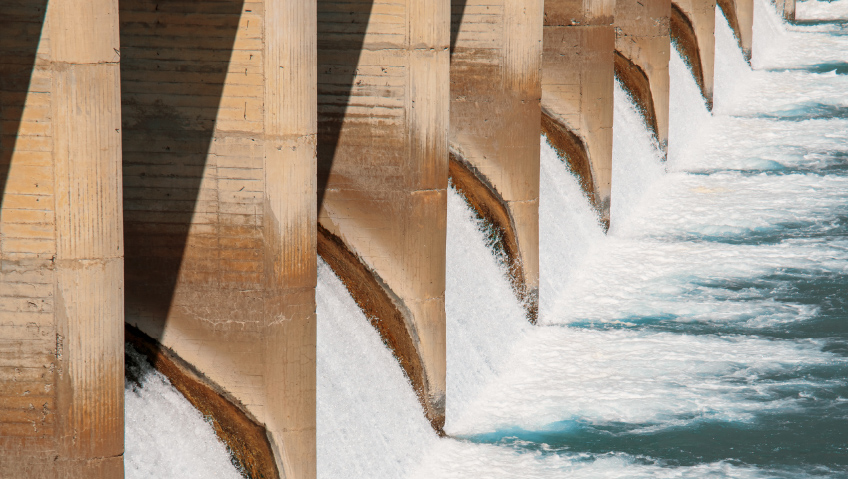
The concept behind hydropower is simple. Flowing or falling water is fed through a pipe called a penstock to spin blades on a turbine. This spins a generator, converting the action into electricity. After serving its purpose, the still-clean water is directed out of the plant.
Hydropower plants can be built at existing rivers and waterways or near manmade dams and reservoirs. These sites generate electricity in a non-polluting fashion at a low cost in the long run. A well-built hydropower station can last for decades and utilizes a renewable power source that is available in vast quantities.
While water power has been used for millennia to turn water wheels to grind grains into flour, hydroelectric power is a more recent development. It took technical innovations such as turbines, dynamos, generators, and alternating current transmission to make hydropower a practical reality.
Canada’s first hydraulic generator was installed at Chaudière Falls on the Ottawa River in 1881 by the Ottawa Electric Light Company. British Columbia got its first hydropower plant in 1888, with Newfoundland establishing its first plant a decade later. Unsurprisingly, Niagara Falls, which straddles the Ontario/New York State border, became an early epicenter of hydropower activity. Originally called the Canadian Niagara Power Company generating station, the facility opened in 1905 and produced electricity for over a century before it was decommissioned.
The famous Sir Adam Beck I Generating Station, the largest of its kind on the planet for a time, became operational in 1921. Today, the Adam Beck complex can generate roughly 12,300 gigawatt hours of power each year using water above the falls. Once it has been run through the turbines, this water is released back into the lower part of the Niagara River.
The provinces of Quebec, British Columbia, Manitoba, and Newfoundland and Labrador currently generate between 94 and 98 percent of their electricity from hydropower. These provinces also host some spectacular hydro sites such as the James Bay Project, a massive complex in northwestern Quebec. Construction work for the latter began in the early 1970s, with the first phase costing over $13.5 billion and requiring the diversion of major rivers to create dammed reservoirs.
The Robert-Bourassa generating station, a centerpiece of the James Bay Project, is today among the world’s largest hydro plants. Completed in the early 1980s, it measures nearly 500 meters in length with the installed capacity to produce over 5,600 megawatts of electricity.
The province of Quebec has invested heavily in hydropower and aims to increase capacity to four gigawatts by 2035 through upgrades and new builds. Other provinces have big plans as well. Newfoundland and Labrador, for example, wants to build a new powerhouse at the Churchill Falls Hydroelectric Generating Station. Based on the Churchill River in Labrador and completed in 1974, this complex is already one of the biggest underground hydropower stations on the planet. Once this and other initiatives are completed, the province hopes to boost its already impressive 7,280 MW annual output.
While hydropower accounted for only 27 percent of electricity generated in Ontario in 2022, the province is eager to increase this total. The Ontario government has announced $2.6 billion in funding to refurbish and expand a dozen hydro stations, including the Sir Adam Beck complex in Niagara Falls.
The federal government in Canada is equally bullish about hydropower, offering billions of dollars for clean energy programs—including hydroelectricity—and investment tax credits for the sector.
In the United States, the first commercial hydropower plant was opened in California in 1893. Other major U.S. milestones include the massive Tennessee Valley Authority project, a New Deal initiative of the 1930s to control river flooding that also entailed building dams and establishing hydropower plants to bring electricity to poverty-stricken regions. And the majestic Hoover Dam—one of the famous structures of its kind in the world—was finished in 1936 on the Colorado River abutting the border of Arizona and Nevada. The following year, hydropower generators at the Hoover Dam site began generating electricity.
The Hoover Dam was soon surpassed by the even vaster Grand Coulee Dam which is based on the Columbia River in Washington State. Finished in 1942, the Grand Coulee Dam is now the largest hydropower producer in the U.S., with a summer capacity of 7,079 megawatts.
This era was something of a golden age for hydropower in the United States. By 1940, hydropower was generating roughly 40 percent of all electricity in America. Over the decades, this percentage dropped significantly due to the introduction of other electricity production sources, such as nuclear power.
In 2022, the United States generated a total of 4.23 trillion kilowatt hours (kWh) of electricity, of which hydropower accounted for six percent. With 2,252 generation plants in total, the American hydropower sector is largely centered in western states. In 2023, a quarter of America’s conventional hydroelectricity was generated in Washington State, followed by California with 13 percent, New York with 12 percent, Oregon with 10 percent, and Alabama with four percent. Washington uses hydropower to generate nearly two-thirds of electricity used within the state, while Idaho and Oregon also rely heavily on hydropower for their own electricity needs.
Hydropower in the U.S. has received a boost from federal legislation such as the Infrastructure Investment and Jobs Act of 2021 and the Inflation Reduction Act of 2022. Both statutes contain tax credits and other provisions to incentivize the hydropower industry to upgrade its fleet and build new plants.
For all that, hydropower has been on a decline in America. “We expect U.S. hydropower generation will increase by 7.5 percent in 2025 but will remain 2.4 percent below the 10-year average in our May Short-Term Energy Outlook. Hydropower generation in 2024 fell to 241 billion kilowatt hours (BkWh), the lowest since 2010; in 2025, we expect generation will be 259.1 BkWh,” states a May 19, 2025 “In Brief Analysis” posted by the U.S. Energy Information Administration.
In a similar fashion, “We expect hydropower generation in the Northwest and Rockies region to be 125.1 BkWh, which is a 17 percent increase compared with 2024 and four percent less than the 10-year average,” continues the analysis.
Part of this decline can be blamed on weather conditions. While some regions of the U.S. have experienced excessive rain in recent years, other areas have endured droughts and lower than normal rainfall. The paucity of precipitation means there is less water available for electricity-making purposes.
There are other drawbacks to hydropower as well, including flooding and the forced relocation of residents to make way for dams, reservoirs, and power plants. Cree and Inuit peoples were outraged when the Quebec government announced the James Bay Project without consulting them first, although negotiations did eventually take place. This anger is understandable, given some communities had to be moved and over 11,500 square kilometers of wilderness was flooded. When Phase II of the James Bay Project began in the late 1980s, opposition from First Nations groups was particularly fierce.
Dam overflows and collapses can cause catastrophic death and destruction as well.
Going forward, hydro proponents are working hard to ensure their projects are as safe as possible and implemented in collaboration with people living in the affected areas.
The Ontario government “is committed to consulting with Indigenous communities and honouring existing agreements related to hydroelectric development,” states Made-in-Ontario Northern Hydroelectric Opportunities, a 2022 report.
Some advocates dream about taking existing infrastructure a step further and using hydropower to create hydrogen for energy applications. They suggest placing electrolyzers—devices that split water into oxygen and hydrogen—near hydropower plants. Doing so would “provide access to the main inputs needed (electricity and water),” for hydrogen production, notes U.S. Hydropower Market Report 2023, from the U.S. Department of Energy—in other words, using clean energy to produce more clean energy, based on the raw power of water.