
Stanly County, North Carolina is a booming region that is eager to attract new companies, residents, and retirees. Situated in the south-central part of the state, the county features a growing population, a pro-business attitude, and “a really strong industrial heritage. Our main asset here is our strategic location just outside of Charlotte,” says Elizabeth Underwood Kazimir, Director of Economic Development, Stanly County Economic Development Commission (EDC). “We’ve got room to grow and the lowest tax liability in all the Charlotte region. We combine access to a major metropolitan area with a more affordable cost of doing business.”
In addition to these assets, there is a “close-knit business community here where relationships really matter. Handshakes go a long way. You just won’t find that in other locations. We want to build an economy that creates opportunities for current residents and employers and future generations as well,” she adds.
Approximately 69,000 people live in Stanly County, according to recent U.S. Census data, up from 62,494 residents in 2020. The median household income was $60,704 in 2024. The county is located roughly one hour from the Charlotte Douglas International Airport and is close to the Charlotte metropolitan area, which has an overall population of nearly three million people.
As Kazimir points out, there’s plenty of land available in Stanly County for companies looking to set up or expand. In particular, a pair of municipally owned sites, Riverstone Industrial Park and Albemarle Business Center, are primed for new tenants. Riverstone is a 24-plus-acre greenfield site with easy access to Interstate 485 and an abundant supply of natural gas (courtesy of the Piedmont Natural Gas Company, Inc.).
The Albemarle Business Center is a 282-acre Class A industrial park fronting North Carolina Highways 24 and 27 and United States Route 52 (a national highway stretching over 2,000 miles across the central and southeast regions of the country). Zoned for heavy industrial, the Center offers sites ranging from five to over 120 acres and can accommodate buildings reaching one million square feet in size.
These two sites represent “really important recruitment assets for us. We’ve also got all different types of private property options as well,” notes Kazimir.
Property and sales taxes in Stanly County are low, as are utility and construction costs, and companies thinking about putting down roots in the county can take advantage of various incentives including tax breaks, training grants, and a streamlined licensing and permitting process. “Our role is to understand what the company’s needs are. Then we can identify some eligible programs. We do have a very aggressive performance grant policy here in Stanly County. It’s very much dependent on a company’s size and scope,” Kazimir explains.
There is a common denominator to all the EDC’s work: “The goal here is to reduce the barriers to investment for companies,” she adds.
The main industries in Stanly are manufacturing (employing 4,730 people, according to DataUSA, health care/social assistance (employing 4,179 people), and retail trade (accounting for 3,385 jobs). Top employers in the area include the Michelin Aircraft Tire Corporation (a Michelin branch specializing in tires for airplanes), Fiberon (a composite decking manufacturer), Auria (a facility that produces engineered systems for vehicles), and Clayton Homes of Albemarle (a retail sales center for mobile and modular residences).
The county hopes to lure more companies within the metal/welding, aerospace/defense, and agri-business sectors. “Those are kind of the big three we actively go after and target to recruit,” says Kazimir.
Outside recruitment has been matched by initiatives aimed at bolstering the local economy. A new Trades Facility recently opened at Stanly Community College, for example. The Trades Facility is now called the Brown Building, in honor of Richard Lane Brown III, a revered state politician who was instrumental in launching Stanly College in 1971.
Comprising 31,600 square feet, the Brown Building features state-of-the-art equipment and classrooms to train students in plumbing, air conditioning/heating/refrigeration technology, and engineering, among other programs. “While other communities are struggling to find employees and workers in the trades, we are actively training the next generation,” notes Kazimir proudly.
The Brown Building has been in operation for less than a year, “so we’re not able to see the effects of it quite yet, until we get some graduates. I’m very excited for it and think it’s a huge case for workforce development in Stanly County and a great reminder of what can happen when we put our resources together,” she continues.
Stanly Community College has an array of other programs including accounting, animal science, information systems, business, math, marketing, and more, and the county is also host to Pfeiffer University, a four-year institution founded in 1885, with a main campus in the community of Misenheimer and a branch in Albemarle. Pfeiffer University offers undergraduate academic faculties of business, education, humanities, natural and health sciences, nursing, and social and behavioral sciences. Graduate-level courses at Pfeiffer U include a renowned Master of Science in Physician Assistant Studies (MS-PAS) program. This program covers a range of healthcare-related fields such as surgery, emergency medicine, orthopedics, internal medicine, mental health, women’s health, and more, and many of its graduates go on to take jobs within the state.
“It’s really wonderful. They’re doing great things there and supplying North Carolina’s rural doctors,” says Kazimir. “A lot of our North Carolina PAs are going to rural environments after graduating, which is really great to see.”
The EDC promotes Stanly County with marketing campaigns, by attending trade shows, and by networking with site selectors looking for new industrial properties. The goal isn’t just to lure private businesses; Stanly County is also touted as an excellent destination for retirees. Pleasant weather, ample recreational opportunities, and a laidback ambiance are some of the county’s charms. As such, “retirement is part of our broader quality-of-life conversation,” says Kazimir.
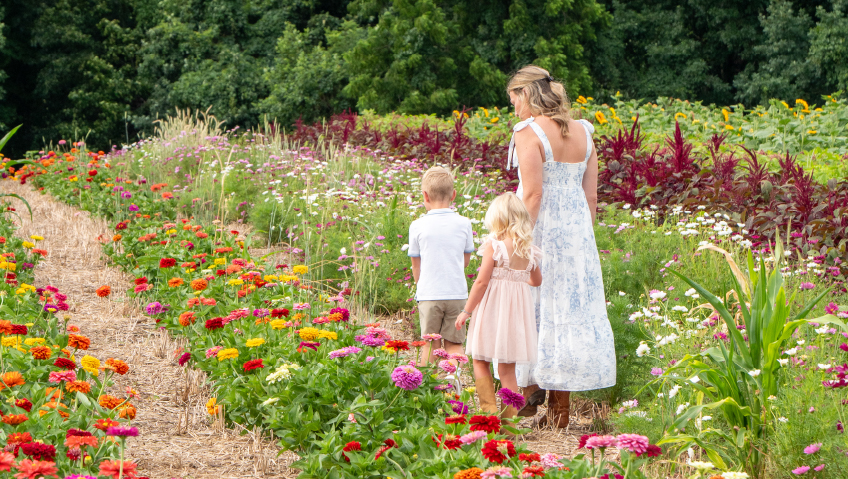
Stanly County features a warm Mediterranean climate and plentiful forests, hills, vineyards, golf courses, and equestrian centers. Lakes Tillery and Badin offer swimming, fishing, and boating opportunities while the nearly 50-mile-long Rocky River Blueway is well-suited for kayaking and canoeing.
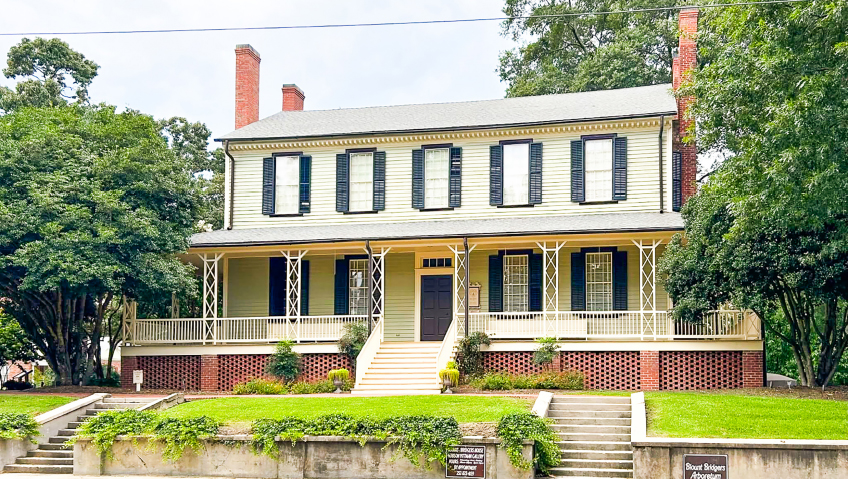
In addition to being welcoming to retirees, Stanly County is a family-friendly place, says Kazimir. The cost of living is low and houses are affordable (the median value of an owner-occupied home is $242,400). Prospective buyers can choose from an assortment of housing stock ranging from lakefront homes to Victorian houses, working farms, and country manors. The mean commuting time for Stanly County workers, meanwhile, is a little over 28 minutes.
Residents also benefit from a low crime rate and the lively Agri-Civic Center. Open since 1989, the Agri-Civic Center can seat 1,050 people while a lobby can fit 200 guests for private events. The Center has played host to live shows, graduation ceremonies, conferences, and wedding receptions.
Other county attractions include Juneberry Ridge, a huge site with over 400 acres of trails for cycling, mountain biking, and hiking, clay target shooting facilities, a conference center, cottages, and fishing ponds, among other amenities. Juneberry hosts a summer series of concerts, boasts a rainwater harvesting network, and uses renewable energy systems.
Recent community events in Stanly County include the 2nd Annual Still Runs Harvest Hootenanny (a celebration with classic cars, food vendors, and live music) and “Sonatas in The Sanctuary,” an afternoon devoted to classic music performances at an Albemarle church. Albemarle is also the site of the Badin Road Drive-in Theater, one of the only remaining sites of its kind in North Carolina. This drive-in still lures big crowds with regular film screenings.
The county also played host to the Historic Badin Hardaway Pow Wow, a two-day celebration of regional Indigenous tribes. The area that today is Stanly County was once occupied by members of the Cheraw, Tuscarora, and Keyauwee tribes. Following European settlement, Stanly County was formed in 1841 and named after a prominent 19th century North Carolina politician, John Stanly.
The population rose from under 7,000 people in 1850 to 15,220 by 1900. Growth continued and by 1990, approximately 52,000 people called Stanly County home. Farms in the area raised cotton, corn, wheat, and livestock, while industry grew apace.
While Stanly County is on an upward trajectory, it still faces challenges, particularly when it comes to the availability of buildings that can accommodate prospective businesses. As Kazimir explains, the county needs more speculative industrial development to meet the needs of companies looking to establish or expand operations. Addressing this gap will be important to translating the region’s advantages into continued investment and job creation.
While Kazimir would like to see Stanly County beef up its building inventory, Stanly County has a compelling foundation on which to build. Its strategic location near Charlotte, competitive business costs, available industrial land, and commitment to workforce development position it to pursue new opportunities while strengthening the industries already established in the region. At the same time, its affordable housing, recreational amenities, and close-knit community offer an appealing quality of life for families, retirees, and the skilled workers who will help shape its future.
By bringing together economic opportunity and a welcoming place to live, Stanly County is working to create an environment where businesses can thrive and residents can build lasting futures. For Kazimir, the region’s appeal is clear: “We’ve got something really special here in Stanly County. A hidden gem if you will.” With continued investment and a focus on sustainable growth, this hidden gem may not remain hidden for much longer.